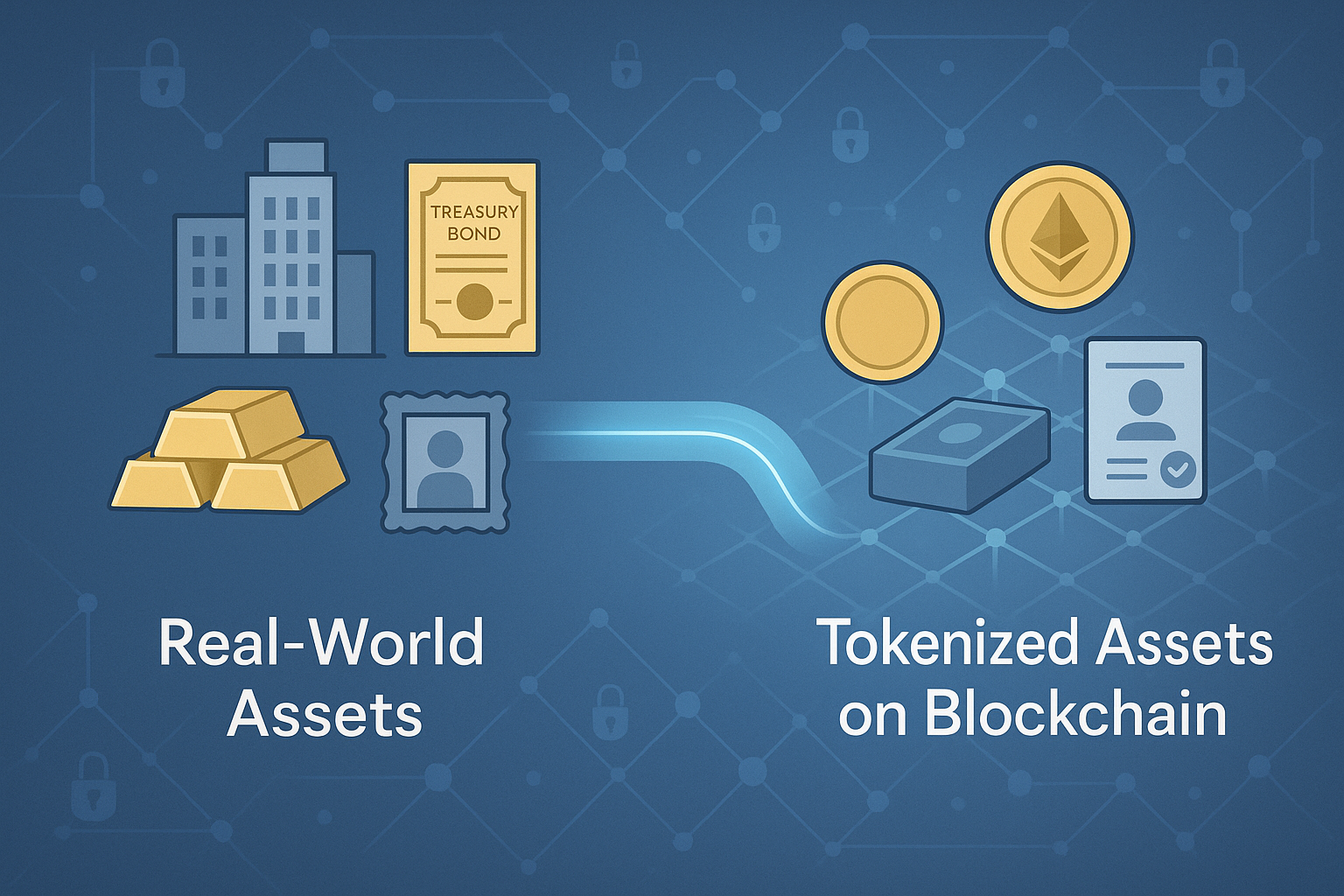
Real-world asset (RWA) tokenization is one of the most significant shifts happening at the intersection of traditional finance and blockchain technology. From real estate and gold to government bonds and fine art, physical and financial assets are now being converted into digital tokens — and the implications for global investing are enormous.
What Is RWA Tokenization?
RWA tokenization is the process of converting physical or traditional financial assets into digital tokens on a blockchain. These tokens represent ownership, value, or specific rights tied to the underlying asset.
Once tokenized, these assets can be traded, divided into fractions, or used within decentralized finance (DeFi) platforms — much like cryptocurrencies. The key difference is that each token is backed by something tangible in the real world.
For example, instead of buying an entire commercial property worth crores of rupees, an investor can purchase a token representing just 5% or 10% of that property. This makes high-value assets accessible to a much wider pool of investors.
Key Benefits of Real-World Asset Tokenization
Tokenization bridges the gap between traditional finance (TradFi) and decentralized finance (DeFi). It brings liquidity, transparency, and round-the-clock market access to asset classes that were previously slow, expensive, or restricted to institutional investors.
- Liquidity: Fractional ownership allows investors to buy or sell portions of an asset, such as 10% of a property, without needing a full transaction.
- Accessibility: Anyone with an internet connection and a crypto wallet can participate — not just large corporations or wealthy individuals.
- Transparency: Every transaction is recorded on a public or permissioned blockchain, reducing fraud and increasing trust.
- Efficiency: Smart contracts automate processes like dividend distribution, ownership transfer, and compliance checks, cutting costs and time.
- Programmability: Rules around ownership, transfer restrictions, and revenue sharing can be coded directly into the token.
How Does the RWA Tokenization Process Work?
The process of tokenizing a real-world asset typically follows these steps:
- Asset Selection: Choose a real-world asset — a commercial property, treasury bond, gold reserve, or artwork.
- Legal and Compliance Setup: Establish legal ownership documentation and create a compliant structure (such as an SPV or trust) to support the token.
- Token Creation: Develop a digital token using standards like ERC-20 (fungible) or ERC-721 (non-fungible) that represents the asset or a share of it.
- Issuance on Blockchain: Deploy the token on a blockchain network such as Ethereum, Polygon, or Avalanche.
- Secondary Trading or DeFi Integration: List the token on marketplaces or integrate it into lending, staking, or yield farming platforms.
Examples of Tokenized Real-World Assets
Several platforms are already offering tokenized versions of traditional assets. Here is a look at some notable examples across different asset categories:
| Asset Type | Example Projects / Platforms |
|---|---|
| Real Estate | RealT, Propy, Landshare |
| Treasury Bonds | Ondo Finance, Franklin Templeton |
| Gold and Commodities | Paxos Gold (PAXG), Tether Gold (XAUT) |
| Fine Art | Particle, Masterworks |
| Private Equity | Securitize, Tokeny |
Why RWA Tokenization Is Gaining Momentum in 2025
The RWA tokenization space has seen a sharp rise in institutional and government interest in 2025. Several major developments are driving this growth:
- BlackRock and JPMorgan have backed tokenized treasuries and credit market products, lending significant credibility to the sector.
- Governments in Singapore, Hong Kong, and the United States have launched regulatory pilots to explore tokenized financial instruments.
- DeFi protocols are integrating RWAs to offer stable, real-cash-flow-backed yields — an attractive alternative to volatile crypto assets.
- Investors are increasingly seeking low-volatility blockchain products that offer the benefits of decentralization without extreme price swings.
The Future of RWA Tokenization
Experts project the RWA tokenization market could reach over $10 trillion by 2030. The long-term impact is expected to be wide-ranging:
- Capital markets could be restructured to allow faster, cheaper, and more inclusive participation.
- Assets that were historically illiquid — like private equity stakes or fine art — could be traded around the clock on global platforms.
- Investors from emerging markets, including India, could access global investment opportunities that were previously out of reach.
As regulatory frameworks mature and blockchain infrastructure improves, RWA tokenization is positioned to become a foundational layer of the global financial system — connecting the physical world with the digital economy in ways that benefit both retail and institutional investors.