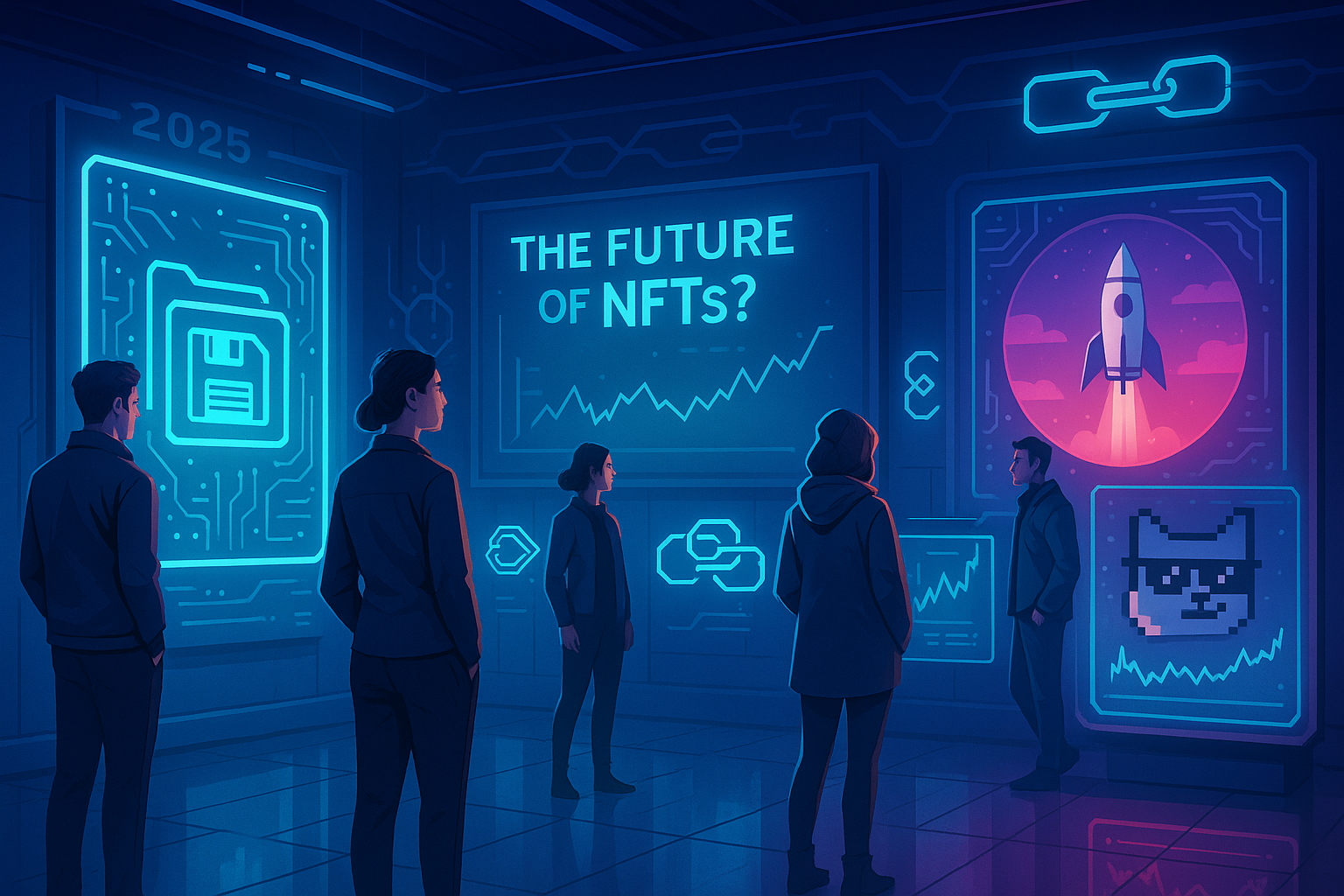
NFTs once dominated headlines. Digital art sold for millions, celebrities launched their own collections, and virtual land became a hot commodity. But as 2025 unfolds, many people are asking a fair question — do NFTs still hold real value, or were they just a short-lived craze? The answer is more interesting than a simple yes or no.
What Exactly Is an NFT?
NFT stands for Non-Fungible Token. In simple terms, it is a digital certificate of ownership stored on a blockchain. When you own an NFT, you hold proof that a specific digital item — whether it is artwork, music, a game character, or a collectible — belongs to you.
Unlike Bitcoin or Ethereum, which are interchangeable (one Bitcoin equals another Bitcoin), each NFT is unique. Think of it like owning an original painting. Prints may exist, but only one person holds the original, and that ownership is recorded permanently on the blockchain.
What Happened After the 2021 NFT Boom?
The NFT market exploded in 2021. Artists, musicians, athletes, and major brands rushed to launch collections. Some digital artworks sold for tens of millions of dollars. But by 2022 and 2023, trading volumes dropped sharply, prices fell, and public interest cooled significantly.
Many observers declared NFTs dead. However, that conclusion missed an important shift happening underneath the surface — the technology was maturing and finding more practical, sustainable uses beyond speculative trading.
How NFTs Are Being Used in 2025
Today, NFTs serve a much broader purpose than digital art sales. Here is how they are being applied across different industries:
- Gaming: Players now truly own in-game items such as skins, weapons, and characters through NFTs. These assets can be bought, sold, or even used across multiple games, giving players real economic value from their time spent gaming.
- Music and Entertainment: Musicians sell exclusive tracks, behind-the-scenes content, and limited-edition releases as NFTs. Some artists share a portion of their revenue with fans who hold their NFTs, creating a new model of fan engagement.
- Real-World Applications: NFTs are being used as digital event tickets, property ownership records, and identity verification tools. This moves them far beyond the art world into everyday practical use.
- Brand Loyalty Programs: Major companies are using NFTs to offer limited-edition products, exclusive memberships, and customer reward programs, replacing traditional loyalty cards with blockchain-backed tokens.
| Use Case | How NFTs Help |
|---|---|
| Gaming | True ownership of in-game assets that can be traded or sold |
| Music | Direct artist-to-fan sales with shared revenue models |
| Events | Tamper-proof digital tickets reducing fraud |
| Brand Loyalty | Exclusive memberships and rewards for repeat customers |
| Identity and Property | Blockchain-verified ownership and identity records |
How NFT Technology Has Improved Since 2021
One of the biggest criticisms of early NFTs was their environmental impact. Older blockchain networks consumed enormous amounts of energy to process transactions. By 2025, many NFT platforms have shifted to energy-efficient blockchains that use far less power.
Transaction costs, once a major barrier for smaller buyers and creators, have also dropped considerably. Platforms are now more user-friendly, making it easier for people without deep technical knowledge to buy, sell, or create NFTs. Cross-platform compatibility has also improved, meaning an NFT item earned in one game or app can potentially be used in another.
Challenges That Still Exist in the NFT Space
Despite real progress, the NFT market still faces genuine problems that buyers and creators should be aware of:
- Scams and Fraud: Fake NFT projects continue to target unsuspecting buyers. Counterfeit collections and rug-pull schemes remain a concern across multiple platforms.
- Regulatory Uncertainty: Governments around the world, including in India, are still working out how to regulate NFTs. Legal clarity on taxation, ownership rights, and trading rules is still developing.
- Market Oversaturation: Millions of NFTs now exist across various platforms. Finding genuinely valuable ones among the noise has become increasingly difficult for average buyers.
These challenges mean that anyone entering the NFT space in 2025 needs to do careful research before spending money.
NFTs are no longer the speculative frenzy they once were, but they have not disappeared either. They have quietly embedded themselves into gaming, entertainment, brand marketing, and even real-world ownership systems. The get-rich-quick era may be over, but for creators, businesses, and tech-forward industries, NFTs continue to offer real utility. Whether they become a mainstream tool or remain a niche technology will depend on how well the industry addresses trust, regulation, and accessibility in the years ahead.