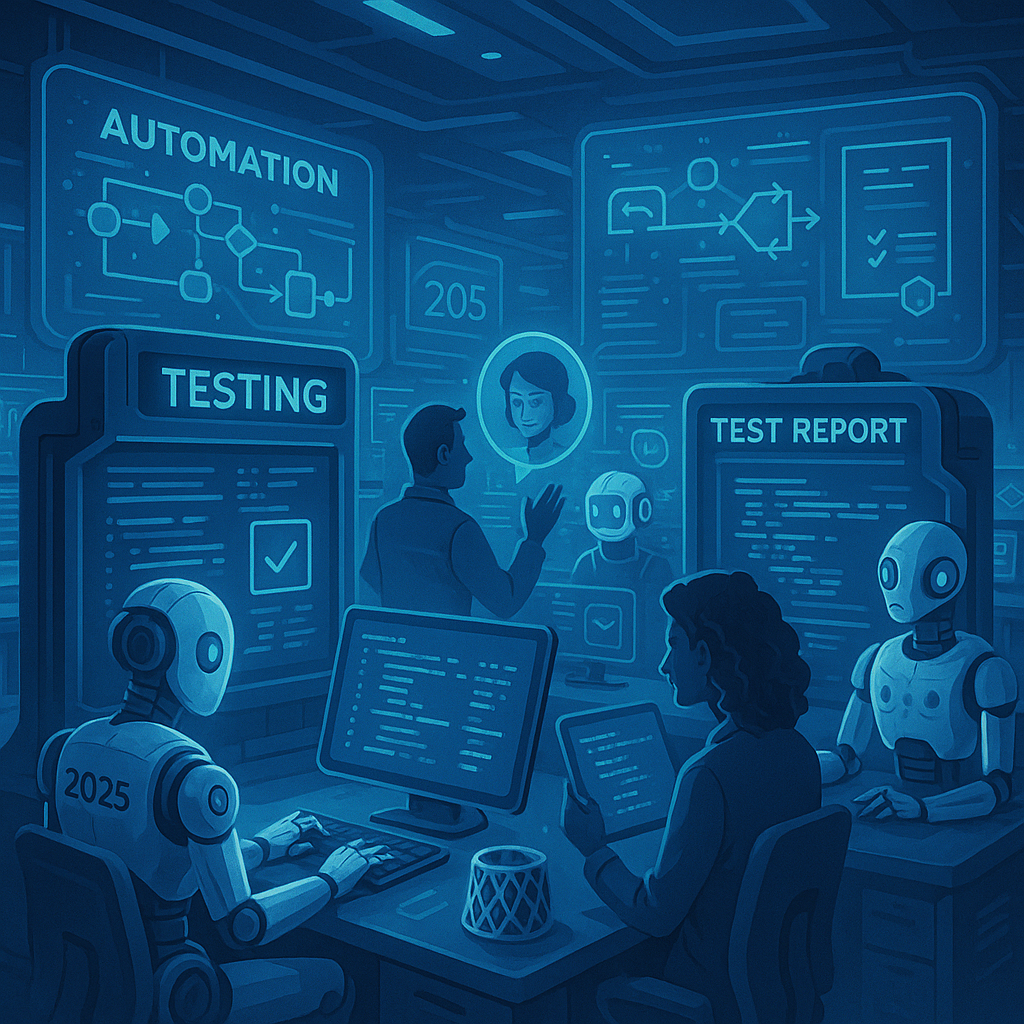
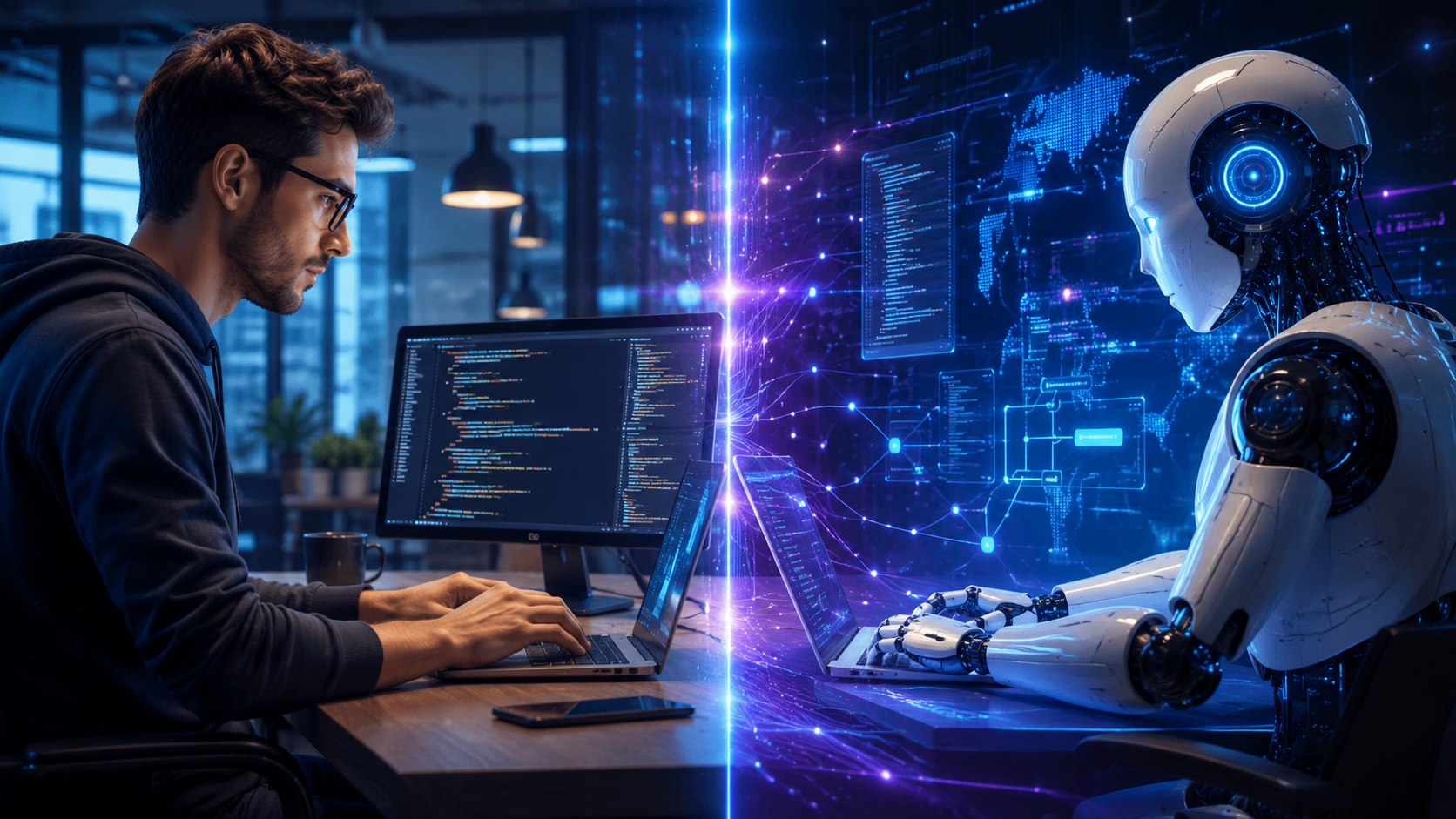
Artificial Intelligence is reshaping the software industry at a rapid pace. Developers today have access to powerful AI tools that can write code, detect bugs, automate testing, and generate documentation. But does this mean human developers are becoming obsolete? The short answer is no — and here is why.
How AI Is Transforming the Way Software Is Built
Just a few years ago, writing every line of code was entirely a human job. Today, AI-powered tools can generate code from simple instructions, suggest fixes in real time, and complete tasks that once took hours in just a few minutes.
This shift is making software teams significantly more productive. Projects that used to take months can now be completed faster, with fewer errors and lower costs. AI is not slowing developers down — it is giving them more time to focus on what truly matters.
Tools like GitHub Copilot, Amazon CodeWhisperer, and similar AI assistants are already being used by thousands of developers worldwide to speed up their daily work.
What AI Does Well in Software Development
AI excels at tasks that are repetitive, data-heavy, or time-consuming. Here is where AI tools currently add the most value:
- Faster code generation: Developers describe what they need, and AI produces a working starting point within seconds.
- Bug detection: AI scans codebases and flags errors, security vulnerabilities, and performance issues much faster than manual reviews.
- Automated testing: AI can generate test cases automatically, reducing the time spent on quality assurance.
- Documentation writing: AI can produce clear, accurate documentation that developers often delay writing.
- Code refactoring: AI suggests cleaner, more efficient versions of existing code without changing its core function.
By handling these routine tasks, AI frees developers to concentrate on higher-value work that requires human judgment.
What Human Developers Still Do Better
Despite its strengths, AI has clear limitations. There are several areas where human developers remain irreplaceable:
- Understanding business needs: Software is built to solve real problems. Developers interpret client requirements, user expectations, and business goals — something AI cannot fully grasp.
- Creative problem-solving: Many software challenges require original thinking and innovation that goes beyond pattern recognition.
- Architecture and strategic decisions: Choosing the right technology stack, designing scalable systems, and planning long-term projects require experience and judgment.
- Communication and collaboration: Working with clients, designers, product managers, and cross-functional teams demands strong interpersonal skills.
- Accountability and ethics: Developers are responsible for ensuring software is secure, fair, and reliable. Human oversight is essential when decisions affect users and businesses.
Human vs AI Developer: A Quick Comparison
| Capability | Human Developer | AI Developer Tool |
|---|---|---|
| Code Generation Speed | Moderate | Very Fast |
| Creative Thinking | Strong | Limited |
| Bug Detection | Good | Excellent |
| Business Understanding | Excellent | Poor |
| Team Communication | Excellent | None |
| Ethical Decision-Making | Strong | Absent |
How the Developer Role Is Evolving
The daily work of a software developer is changing, but the profession itself is not disappearing. Developers are moving away from writing repetitive boilerplate code and stepping into roles that require more strategic thinking.
In the near future, developers will spend more time on:
- Designing scalable software architectures
- Reviewing and validating AI-generated code
- Solving complex, high-impact business problems
- Strengthening application security and performance
- Building innovative digital products and user experiences
The role is shifting from typing code to guiding intelligent systems — a change that actually raises the value of skilled developers.
Skills Developers Should Build for the Future
As AI tools become standard in development workflows, certain skills will become more important than ever:
- System design: Understanding how large, complex applications are structured and maintained.
- Cybersecurity: Security expertise is in high demand as threats grow more sophisticated.
- Business acumen: Developers who understand business goals build more effective software.
- Critical thinking: Analyzing problems and finding smart solutions remains a uniquely human strength.
- Proficiency with AI tools: Knowing how to use tools like GitHub Copilot or CodeWhisperer effectively will be a core skill for developers going forward.
The future of software development belongs to developers who treat AI as a powerful assistant rather than a competitor. Human creativity, strategic thinking, and real-world understanding combined with AI’s speed and automation will define the next generation of software teams. Developers who adapt and grow alongside these tools will not just survive this shift — they will thrive in it.