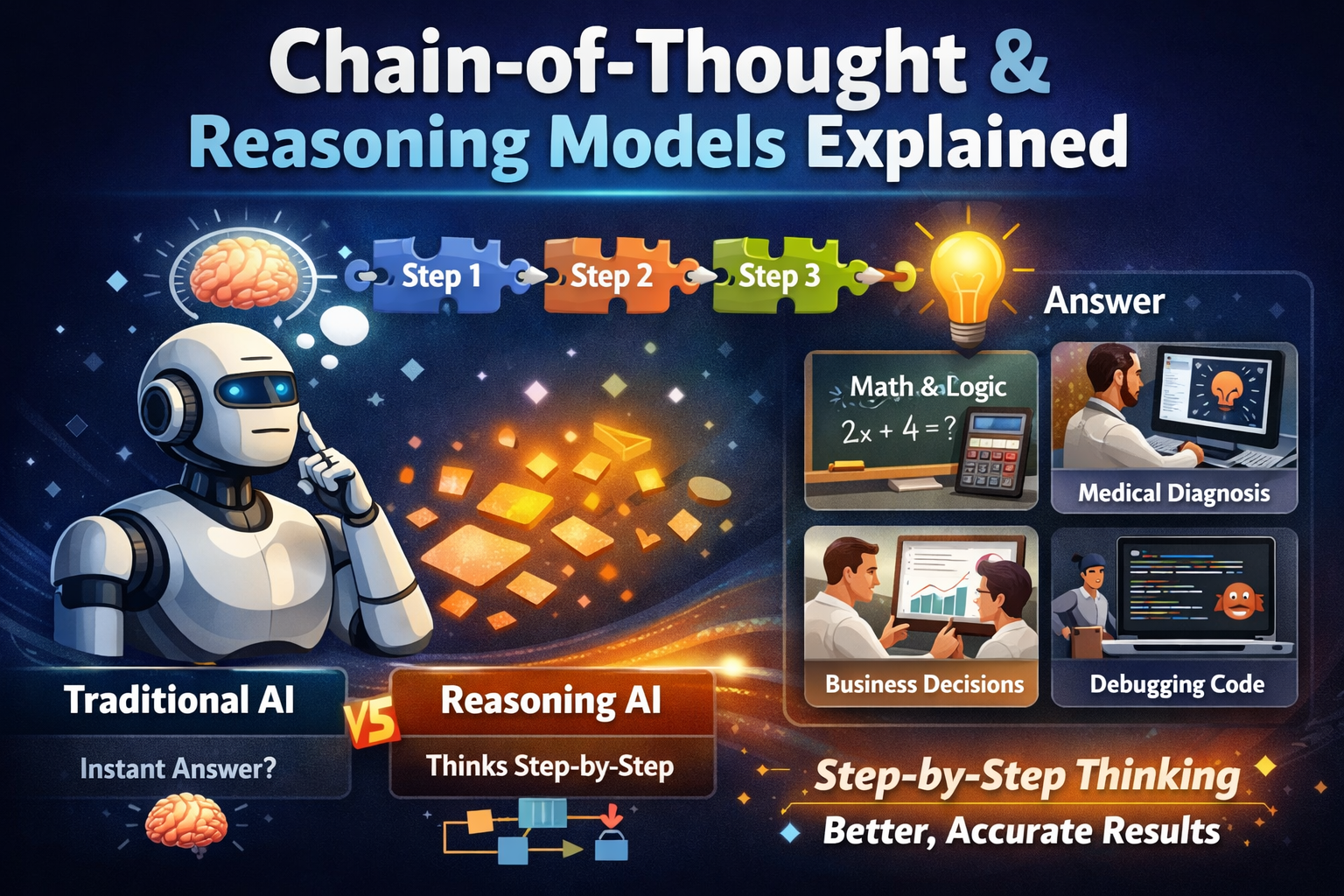

Generative AI started as a tool for writing blogs and emails. Today, it has grown into something far more powerful — helping developers write code, engineers design systems, and businesses solve complex problems faster than ever before. Here is a clear look at what generative AI can actually do and why it matters for your work.
What Is Generative AI and How Does It Work?
Generative AI is a type of technology that creates new content — text, images, or code — based on patterns it has learned from large amounts of data. Think of it as a smart assistant that understands your request and produces useful output in seconds.
Unlike traditional software that follows fixed rules, generative AI adapts to what you need. The more specific your input, the more accurate and helpful the result. Tools like large language models are at the core of this technology, and they are getting better with every update.
From Writing Drafts to Planning and Problem-Solving
In its early days, generative AI was mainly used to speed up content creation — drafting social media captions, writing product descriptions, or generating email templates. That alone saved many hours of work.
But the scope has expanded significantly. Today, generative AI can:
- Help plan projects and break down complex tasks into steps
- Suggest business strategies and creative ideas
- Improve design concepts by generating multiple variations quickly
- Summarise long documents and extract key insights
- Support decision-making by analysing options and trade-offs
It is no longer just a writing assistant. It is becoming a thinking partner for professionals across industries.
How Generative AI Is Making Coding More Accessible
One of the most significant shifts has been in software development. Generative AI can now write functional code, explain what that code does, suggest improvements, and identify bugs — all within seconds.
This has two major benefits:
- For beginners: Learning to code becomes faster because AI can explain concepts in plain language and show working examples instantly.
- For experienced developers: Repetitive tasks like writing boilerplate code, creating test cases, or documenting functions can be handled by AI, freeing up time for more complex problem-solving.
The result is faster development cycles, fewer errors, and more time spent on building features that actually matter to users.
Supporting Engineers and Technical Professionals
Generative AI is also proving valuable in engineering and technical fields. Engineers can use it to:
- Draft system architecture and design documents
- Test ideas quickly without building full prototypes
- Analyse performance data and suggest optimisations
- Generate technical reports and documentation
Instead of spending hours on manual tasks, engineers can use generative AI to speed up research and validation. This leads to better decisions and stronger outcomes in less time.
| Field | How Generative AI Helps |
|---|---|
| Marketing | Creates content, ad copies, and campaign ideas |
| Software Development | Writes, explains, and debugs code |
| Engineering | Supports system design, testing, and documentation |
| Business Strategy | Generates ideas, summaries, and decision support |
Challenges and Limitations You Should Keep in Mind
Generative AI is powerful, but it is not without flaws. There are real challenges that users and organisations need to be aware of:
- Accuracy issues: AI can sometimes produce incorrect or outdated information. Human review remains essential before acting on any AI-generated output.
- Data privacy concerns: Sharing sensitive business or personal data with AI tools carries risks. Always check the privacy policies of the tools you use.
- Over-dependence: Relying too heavily on AI without building your own understanding can weaken skills over time. Use it as a support tool, not a replacement for critical thinking.
- Bias in outputs: AI learns from existing data, which may carry biases. Outputs should always be reviewed with a critical eye.
The key is to treat generative AI as a capable assistant — one that works best when guided by a knowledgeable human.
What the Future of Generative AI Looks Like
The trajectory of generative AI points toward tools that can handle complete workflows — from initial research to final output — with minimal human intervention. We are already seeing early versions of this with AI agents that can browse the web, write code, run tests, and report results autonomously.
In the near future, generative AI is expected to become more integrated into everyday work tools — from spreadsheets and design software to customer support platforms and project management systems. The professionals who learn to work effectively alongside these tools will have a clear advantage.
Generative AI has moved well past its early role as a content writing shortcut. It now supports coding, engineering, strategic planning, and creative work across industries. While it comes with limitations that require careful handling, its ability to save time and improve output quality is hard to ignore. Whether you are a developer, a marketer, or a business owner, understanding how to use generative AI effectively is quickly becoming an essential skill.