Artificial intelligence is no longer confined to powerful data centers. A growing shift is happening where AI processing moves directly onto the devices we use every day — from smartphones and wearables to factory machines and self-driving cars. This shift is called Edge AI, and it is reshaping how machines make decisions in real time.
What Is Edge AI and How Does It Work?
Edge AI refers to running artificial intelligence models directly on local devices — such as smartphones, cameras, sensors, industrial machines, or vehicles — rather than sending data to a remote cloud server for processing.
In a traditional cloud-based AI setup, data travels from a device to a distant server, gets analyzed, and then a response is sent back. This round trip takes time. With Edge AI, the device itself handles the analysis. Results are produced almost instantly because the data never leaves the device.
This local processing is what makes Edge AI ideal for applications where speed is critical and even a fraction of a second of delay can cause problems.
Why Low-Latency Machine Learning Matters
Latency is simply the time it takes for data to travel, get processed, and return as a usable result. In cloud AI systems, this delay can range from milliseconds to seconds depending on network conditions.
Low-latency machine learning eliminates most of this delay by keeping processing on the device. This is especially important in situations like:
- Autonomous vehicles that must react to road conditions in real time
- Medical wearables that monitor heart rate or detect irregularities instantly
- Industrial machines that need to identify faults before they cause breakdowns
- Smart surveillance cameras that detect unusual activity without waiting for cloud confirmation
In all these cases, waiting for a cloud server to respond is simply not fast enough. Edge AI solves this by making the device itself intelligent.
Edge AI vs Cloud AI: Key Differences
Both Edge AI and Cloud AI have their strengths. The right choice depends on the use case. Here is a simple comparison:
| Feature | Edge AI | Cloud AI |
|---|---|---|
| Processing Location | On the device | Remote server |
| Response Speed | Near-instant | Depends on network |
| Data Privacy | High — data stays local | Lower — data sent externally |
| Internet Dependency | Works offline | Requires connectivity |
| Scalability | Limited by device hardware | Highly scalable |
| Bandwidth Usage | Low | High |
When real-time performance, privacy, and offline reliability are priorities, Edge AI is the stronger choice. For large-scale data analysis and model training, Cloud AI still holds an advantage.
Technologies Powering Edge AI Growth
Several key technologies are driving Edge AI forward at a rapid pace:
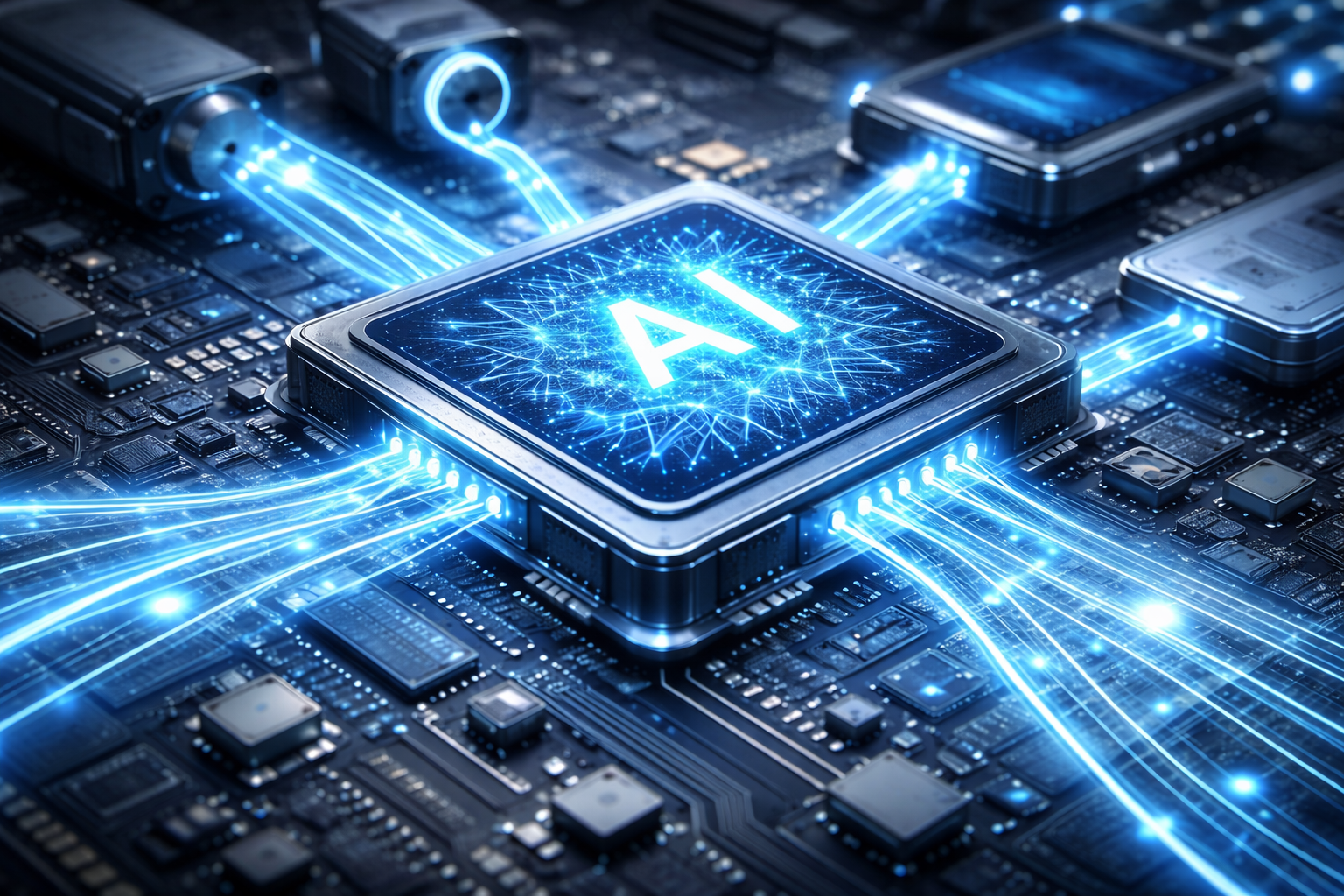
- Dedicated AI chips: Companies are designing processors specifically built for on-device AI inference, making local processing faster and more energy-efficient.
- 5G connectivity: While Edge AI reduces dependence on the internet, 5G improves communication speed when devices do need to sync with the cloud.
- Model optimization techniques: Methods like quantization and pruning make AI models smaller and lighter so they can run on compact hardware without losing accuracy.
- TinyML: This emerging field focuses on running machine learning on extremely small and low-power devices, opening up Edge AI to a much wider range of hardware.
Together, these technologies are making it possible to deploy powerful AI capabilities on devices that were previously too limited to handle such workloads.
Real-World Uses of Edge AI Across Industries
Edge AI is already active across multiple sectors:
- Healthcare: Wearable devices track vital signs and flag health anomalies in real time, allowing faster medical responses.
- Manufacturing: Smart machines use on-device AI to detect equipment faults early, reducing downtime and maintenance costs.
- Retail: Intelligent systems monitor inventory levels and analyze customer movement patterns without sending sensitive data to external servers.
- Transportation: Autonomous vehicles process sensor and camera data locally to make split-second driving decisions safely.
- Security: Smart cameras identify suspicious behavior on-site without relying on cloud connectivity.
Challenges That Still Need to Be Addressed
Edge AI is promising, but it comes with real limitations that engineers and developers are actively working to overcome:
- Limited hardware power: Local devices cannot match the raw computing power of large cloud servers, which restricts the complexity of AI models that can run on them.
- Energy consumption: Running AI models continuously on a device can drain batteries faster, which is a concern for portable and wearable devices.
- Security risks: Connected edge devices can be vulnerable to cyberattacks if not properly secured, making robust security protocols essential.
- Model updates: Keeping AI models up to date on distributed edge devices is more complex than updating a centralized cloud system.
Advances in chip design, software optimization, and security frameworks are steadily addressing these challenges, making Edge AI more practical with each passing year.
Edge AI represents a meaningful step in how intelligence is distributed across the physical world. By processing data where it is created — on the device itself — it reduces delay, protects user privacy, and keeps systems running even without internet access. As hardware becomes more capable and energy-efficient, Edge AI will become a standard feature across smart cities, healthcare systems, industrial automation, and personal devices, forming the backbone of the next generation of intelligent technology.