Cryptocurrency is no longer just about buying and holding coins. With the rise of decentralized finance (DeFi), crypto holders now have new ways to earn passive income — and yield farming is one of the most talked-about methods. If you have heard the term but are not sure what it means, this guide breaks it all down in plain language.
What Is Yield Farming?
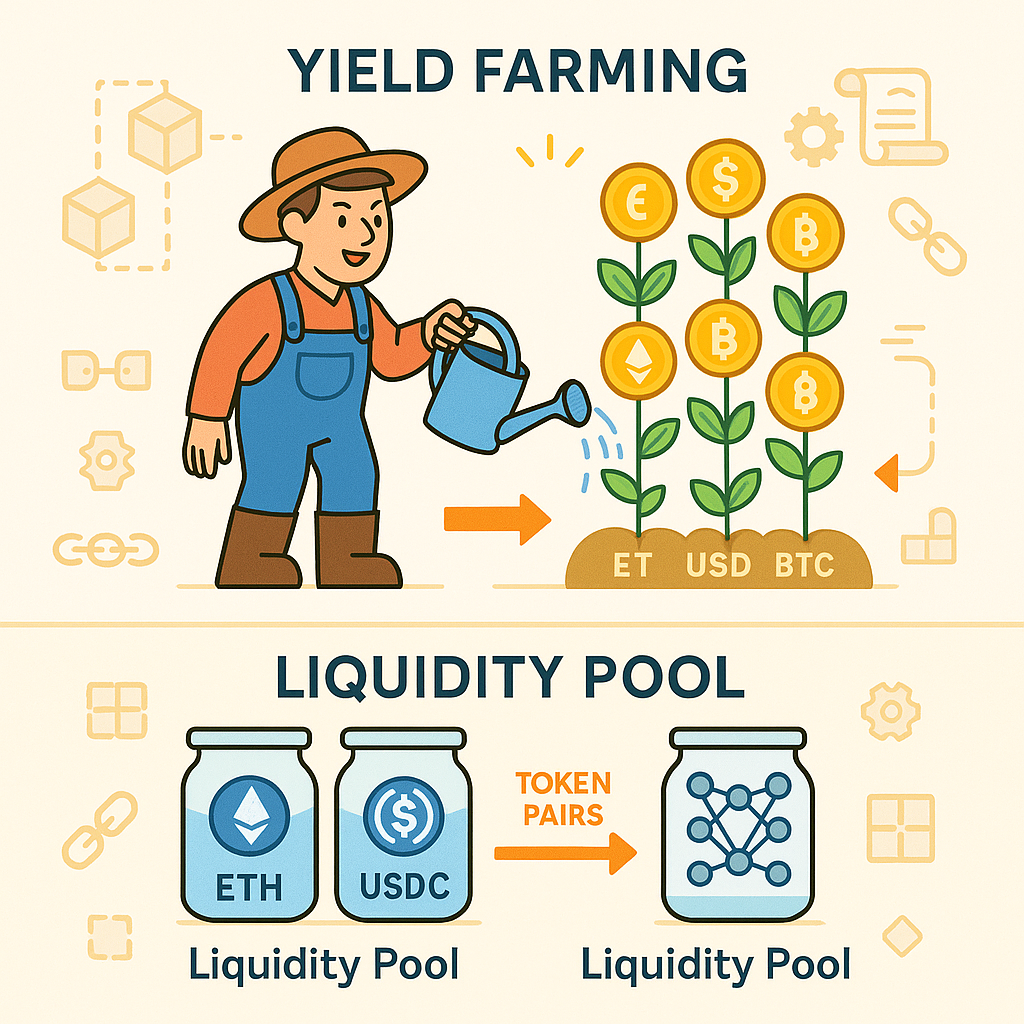
Yield farming is a way to earn rewards on your cryptocurrency by locking it into a smart contract on a blockchain-based platform. Think of it like a savings account at a bank — except there is no bank involved, and the returns can be significantly different.
When you participate in yield farming, you lend your crypto to a DeFi protocol. In return, you earn interest or token rewards. These earnings typically come from two sources:
- Trading fees generated on the platform
- Incentive tokens offered by the protocol to attract liquidity
In simple terms, your crypto works for you while it sits in the protocol, and you collect rewards for providing that service.
What Are Liquidity Pools and How Do They Work?
To understand yield farming properly, you need to know what a liquidity pool is. A liquidity pool is a large collection of crypto tokens locked inside a smart contract. These pools power trading on decentralized exchanges (DEXs) like Uniswap and PancakeSwap.
Here is how the process works step by step:
- Users deposit two tokens — for example, ETH and USDC — into the pool in equal value.
- Traders on the DEX use this pool to swap one token for another.
- Every time a trade happens, a small fee is charged.
- As a liquidity provider, you receive a share of those fees proportional to your contribution.
By adding your tokens to the pool, you help ensure that traders can always find liquidity. In return, the platform rewards you for keeping the system running smoothly.
How Yield Farming and Liquidity Pools Connect
When you deposit tokens into a liquidity pool, the platform gives you a special token in return — commonly called an LP token (Liquidity Provider token). This LP token represents your share of the pool and proves your contribution.
Here is where yield farming comes in. You can take those LP tokens and deposit them into a yield farm — a separate program that offers additional token rewards on top of your trading fee earnings.
A practical example looks like this:
- You deposit ETH and DAI into a liquidity pool on a DEX.
- You receive LP tokens representing your share of that pool.
- You stake those LP tokens in a yield farm to earn the platform’s native token, such as UNI on Uniswap or CAKE on PancakeSwap.
The result is two income streams from a single deposit — trading fee earnings plus bonus farming rewards. This layered approach is what makes yield farming attractive to many crypto holders.
| Step | Action | Reward |
|---|---|---|
| 1 | Deposit tokens into liquidity pool | Share of trading fees |
| 2 | Receive LP tokens | Proof of pool share |
| 3 | Stake LP tokens in yield farm | Bonus platform tokens (UNI, CAKE, etc.) |
Why Is Yield Farming So Popular?
Yield farming has attracted a large number of crypto users because it offers returns that traditional savings accounts or fixed deposits simply cannot match. Instead of letting your crypto sit idle in a wallet, you put it to work.
Key benefits include:
- Passive income from trading fees and token rewards
- Compounding opportunities where you reinvest earnings to grow your position
- Early access to new tokens from emerging DeFi projects
- No banks or middlemen — everything runs on smart contracts
However, the high reward potential also comes with real risks that every participant must understand before getting started.
Key Risks of Yield Farming You Must Know
Yield farming is not a guaranteed income source. There are several risks that can affect your returns or even result in losses:
- Impermanent Loss: If one token in your deposited pair changes in value significantly compared to the other, you may end up with less value than if you had simply held the tokens. This is called impermanent loss.
- Smart Contract Bugs: DeFi protocols run on code. If there is a flaw or vulnerability in the smart contract, hackers can exploit it and drain the pool.
- Rug Pulls: Some DeFi projects are fraudulent. Developers collect liquidity from users and then disappear with the funds, leaving investors with worthless tokens.
- Market Volatility: Crypto prices can swing sharply. A sudden drop in token prices can reduce your overall returns even if the farming rewards are high.
Always research a platform thoroughly before depositing any funds. Check if the smart contracts have been audited by reputable security firms and look for community feedback.
How to Start Yield Farming Safely as a Beginner
If you want to try yield farming, starting carefully is the smartest approach. Here are practical tips for beginners:
- Start with a small amount: Do not risk money you cannot afford to lose. Begin with a small deposit to understand how the process works.
- Use well-known platforms: Stick to established and audited protocols like Uniswap, Aave, Curve Finance, or PancakeSwap.
- Understand the terms: Know what tokens you are depositing, what rewards you will earn, and what fees apply.
- Monitor your position regularly: Track your earnings and watch for any changes in pool performance or token prices.
- Diversify your exposure: Avoid putting all your crypto into a single pool or platform.
The more informed you are, the better your chances of making yield farming work in your favour without falling into common traps.
Yield farming and liquidity pools represent a significant shift in how people can earn from their crypto holdings. While the concept may seem complex at first, the core idea is straightforward — provide liquidity, earn rewards. With the right knowledge, careful platform selection, and a clear understanding of the risks involved, yield farming can be a meaningful addition to a crypto strategy. As with any financial decision, informed participation is always the safest path forward.