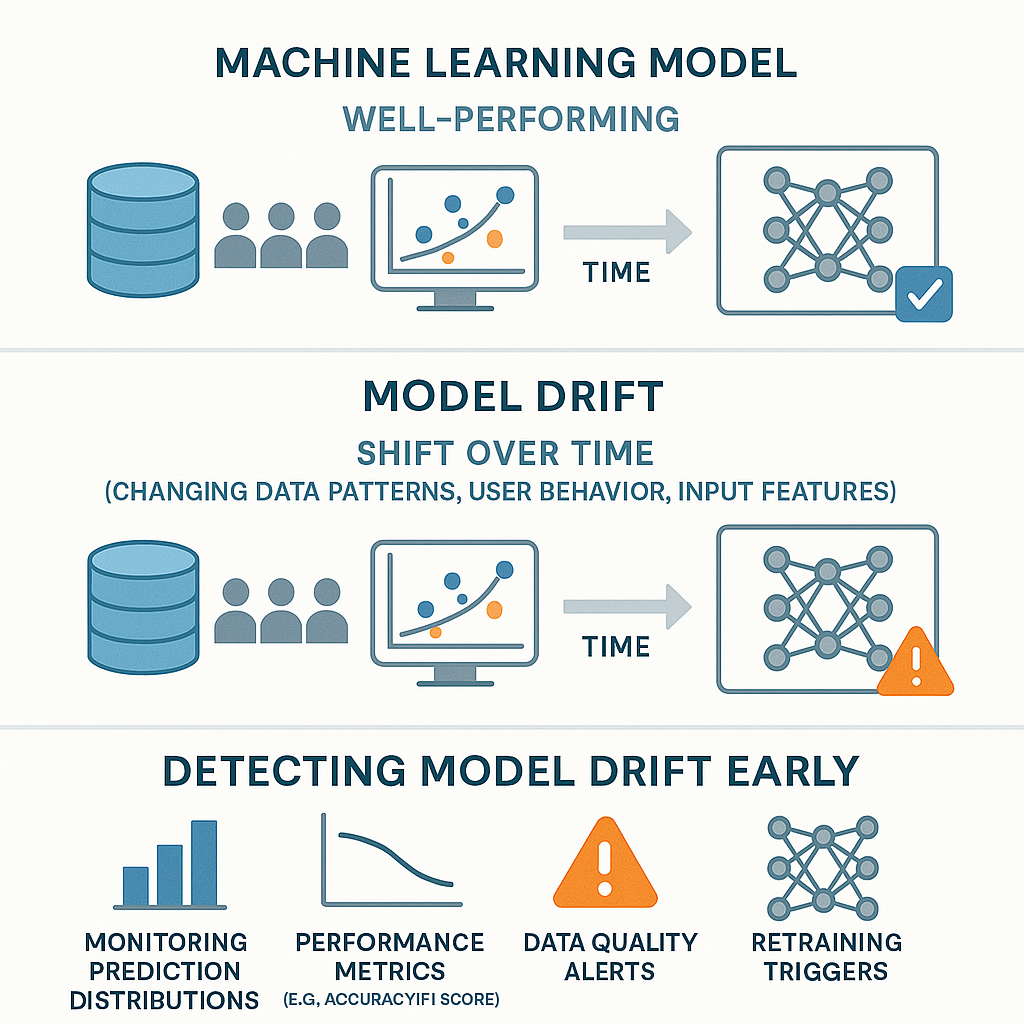
Machine learning models are built to learn from data and make accurate predictions. But over time, the real world changes — and when it does, even the best-trained models can start making mistakes. This gradual decline in model accuracy is known as model drift, and catching it early can save businesses from costly errors.
What Is Model Drift?
Model drift happens when a machine learning model that once performed well begins producing less accurate results. The core reason is simple: the data the model now sees no longer matches the data it was originally trained on.
Think of a model trained to predict online shopping trends based on last year’s customer behavior. If shoppers change their habits — buying more on mobile, switching product preferences, or responding to new trends — the model struggles to keep up. That gap between old training data and new real-world data is drift.
There are two main types of model drift:
- Data Drift: The input data itself changes. For example, a shift in the age group or location of your customer base.
- Concept Drift: The relationship between input and output changes. For instance, what counts as a “popular” product today may be very different from what it meant two years ago.
Why Does Model Drift Happen?
Drift is a natural part of deploying machine learning models in the real world. It cannot always be prevented, but it can be managed. Common causes include:
- Changing user behavior — People’s habits, preferences, and needs shift over time.
- Seasonal patterns — Events like festive shopping seasons or flu outbreaks create temporary but significant data shifts.
- New regulations or laws — Financial and healthcare models are especially vulnerable when rules change.
- Market changes or global events — Economic shifts, pandemics, or supply chain disruptions can alter data patterns overnight.
- Technology updates — Changes in how data is collected or stored can affect model inputs without warning.
In short, the world keeps moving — and a model trained on yesterday’s data may not be ready for today’s reality.
How Model Drift Affects Businesses
Ignoring model drift is not just a technical oversight — it can have real business consequences. Here is what can go wrong:
- Your model starts producing wrong predictions, leading to poor decisions.
- Customers lose trust in your product if recommendations or outputs feel off.
- Businesses may miss opportunities or make expensive mistakes based on outdated insights.
- In regulated industries like finance or healthcare, inaccurate model outputs can create serious legal and compliance risks.
Keeping models accurate is not just a data science problem — it directly impacts revenue, customer satisfaction, and risk management.
How to Detect Model Drift Early
The sooner you spot drift, the easier it is to fix. Here are practical methods to stay ahead of it:
- Monitor model performance regularly: Track key metrics like accuracy, precision, recall, and F1-score over time. A steady drop in any of these is a warning sign.
- Watch for data changes: Compare incoming data with your original training data. Look for shifts in value distributions, missing fields, or new patterns that did not exist before.
- Run shadow models: Deploy a newer or retrained model alongside the existing one without affecting live users. Compare their outputs to see if an update is needed.
- Set up automated alerts: Define performance thresholds that trigger notifications when results fall below acceptable levels. This helps you catch problems in real time rather than weeks later.
- Retrain models regularly: Do not wait for performance to collapse. Use fresh data to keep your model aligned with current conditions on a scheduled basis.
Tools That Help Detect Model Drift
Several platforms are built specifically to help teams monitor and manage model drift in production environments. Here is a quick comparison of popular options:
| Tool | Type | Key Feature |
|---|---|---|
| Evidently AI | Open Source | Tracks data and model performance drift with visual reports |
| Seldon Alibi Detect | Open Source Library | Monitors ML models for outliers and distribution shifts |
| AWS SageMaker Model Monitor | Cloud Platform | Detects drift in models running in production on AWS |
| Fiddler AI | Enterprise Platform | Offers model explainability and continuous health monitoring |
These tools reduce the manual effort of checking model health and allow teams to respond faster when something goes wrong.
Managing model drift is an ongoing responsibility for any team that relies on machine learning in production. By understanding what causes drift, monitoring your models consistently, and using the right tools, you can keep your predictions accurate and your business decisions sound. The key is not to wait for problems to surface — proactive monitoring is always better than reactive fixes.