Behind every successful business lies a web of repetitive, time-consuming tasks — processing invoices, managing employee records, handling procurement, and more. These back-office operations are essential, yet they often drain resources and slow teams down. Process mining combined with artificial intelligence is changing that, helping companies work faster, reduce costs, and improve accuracy across departments.
What Is Process Mining and Why Does It Matter?
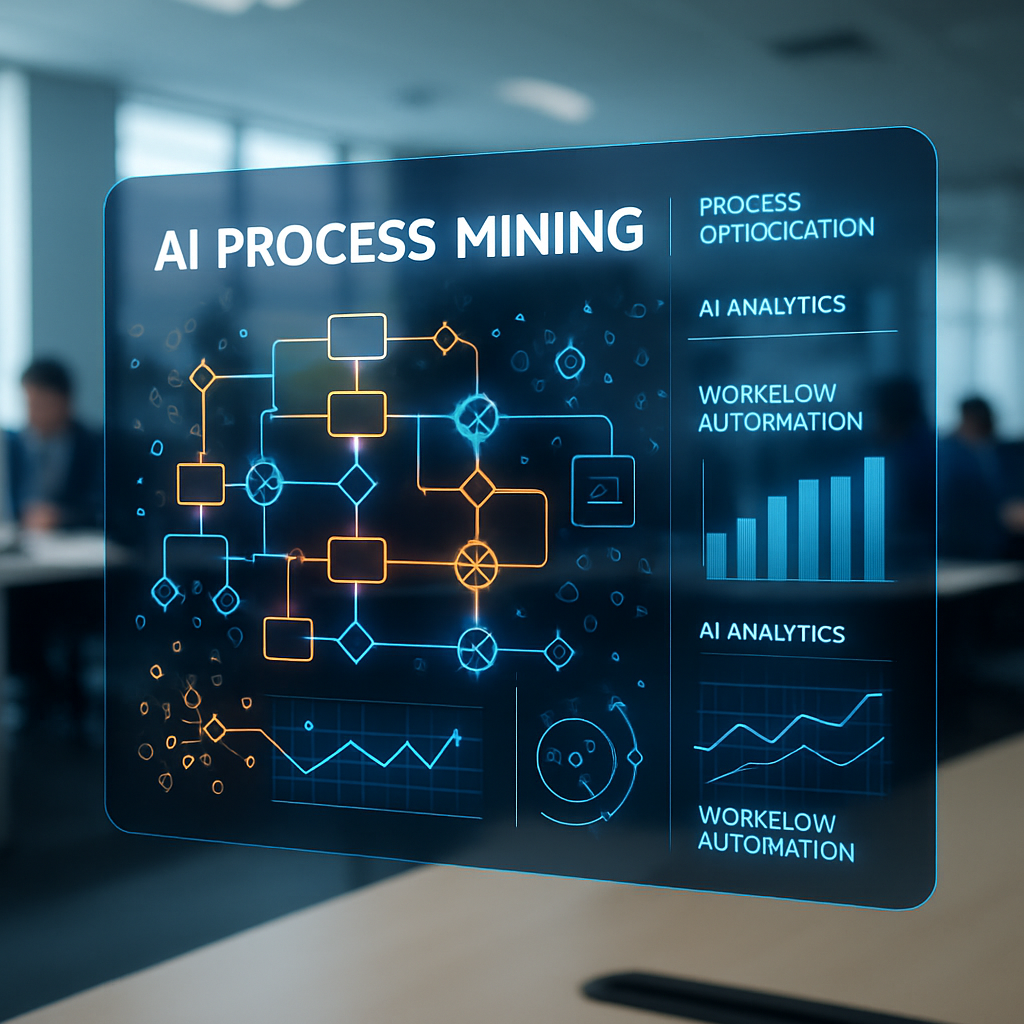
Think of process mining as an X-ray for your business operations. Every time an employee submits a form, enters data, or clicks through a system, they leave behind a digital trail. Process mining tools collect and analyse this data to show exactly how work flows through an organisation — not just how it is supposed to flow, but how it actually does.
This visibility helps businesses identify:
- Bottlenecks where work gets stuck or delayed
- Inefficient steps that consume more time than necessary
- Repetitive tasks that could be automated or eliminated
Without this kind of insight, managers often make decisions based on assumptions rather than real data. Process mining removes that guesswork entirely.
How AI Takes Process Mining to the Next Level
Process mining tells you what is happening. Artificial intelligence tells you what to do about it — and then acts on it.
Using machine learning and intelligent automation, AI can:
- Predict where bottlenecks are likely to occur before they happen
- Recommend smarter, faster ways to complete routine tasks
- Automate repetitive steps like data entry, approvals, and notifications without human intervention
When process mining and AI work together, the result is not just better visibility — it is a continuously improving system that adapts and optimises itself over time.
Real-World Applications Across Back-Office Functions
Businesses across industries are already applying these technologies to their core back-office functions. Here are some of the most impactful use cases:
- Invoice Automation: AI scans incoming invoices, matches them against purchase orders, and approves or flags them — reducing manual effort and processing time significantly.
- Employee Onboarding: HR teams use AI to automatically send welcome communications, assign training modules, and set up system access for new hires.
- Procurement and Purchasing: AI speeds up purchase approvals and flags unusual requests or delays, keeping procurement workflows on track.
- Compliance Monitoring: Intelligent systems monitor tasks in real time to ensure every action aligns with company policies and regulatory requirements.
| Back-Office Function | How AI and Process Mining Help |
|---|---|
| Finance and Accounting | Automated invoice matching, payment processing, and anomaly detection |
| Human Resources | Streamlined onboarding, automated document handling, and compliance tracking |
| Procurement | Faster approvals, supplier management, and spend analysis |
| IT Operations | Automated ticketing, system monitoring, and incident resolution |
| Supply Chain | Inventory tracking, demand forecasting, and logistics optimisation |
Key Benefits of Automating Back-Office Work
Companies adopting process mining and AI for back-office automation report measurable improvements across multiple areas:
- Faster task completion: Automated workflows finish in minutes what used to take hours or days
- Lower operational costs: Fewer manual hours means reduced labour expenses
- Fewer errors: Machines handle repetitive tasks with consistent accuracy
- Better data insights: Real-time dashboards give managers a clear view of operations
- More productive teams: Employees shift their focus from routine tasks to strategic, creative work
For businesses looking to scale without proportionally increasing headcount, back-office automation offers a practical and proven path forward.
What the Future of Back-Office Automation Looks Like
As AI technology matures, back-office operations are expected to become increasingly self-sufficient. Future systems will be capable of resolving their own issues, making real-time decisions based on live data, and displaying performance dashboards that require minimal human oversight.
The back office of tomorrow will not just support the business — it will actively drive efficiency, flag risks early, and adapt to changing conditions without waiting for human instruction. Companies that invest in process mining and AI today are building the operational foundation for that future.
Back-office automation is no longer a concept reserved for large enterprises. Businesses of all sizes are finding practical, affordable ways to apply process mining and AI to their daily operations — and the results speak for themselves.
Frequently Asked Questions
Odoo 17 introduces AI-powered lead scoring, automated invoice processing, customisable dashboards, digital twin technology for manufacturing, AI-driven financial projections, and expanded e-commerce payment options.
Yes, Odoo 17 is designed to work for businesses of all sizes. Its modular structure means small businesses can start with only the features they need and expand as they grow.
Odoo 17 improves financial management through AI-driven cash flow forecasting, smarter bank reconciliation that reduces manual matching errors, and automatic multi-currency exchange rate updates for international transactions.