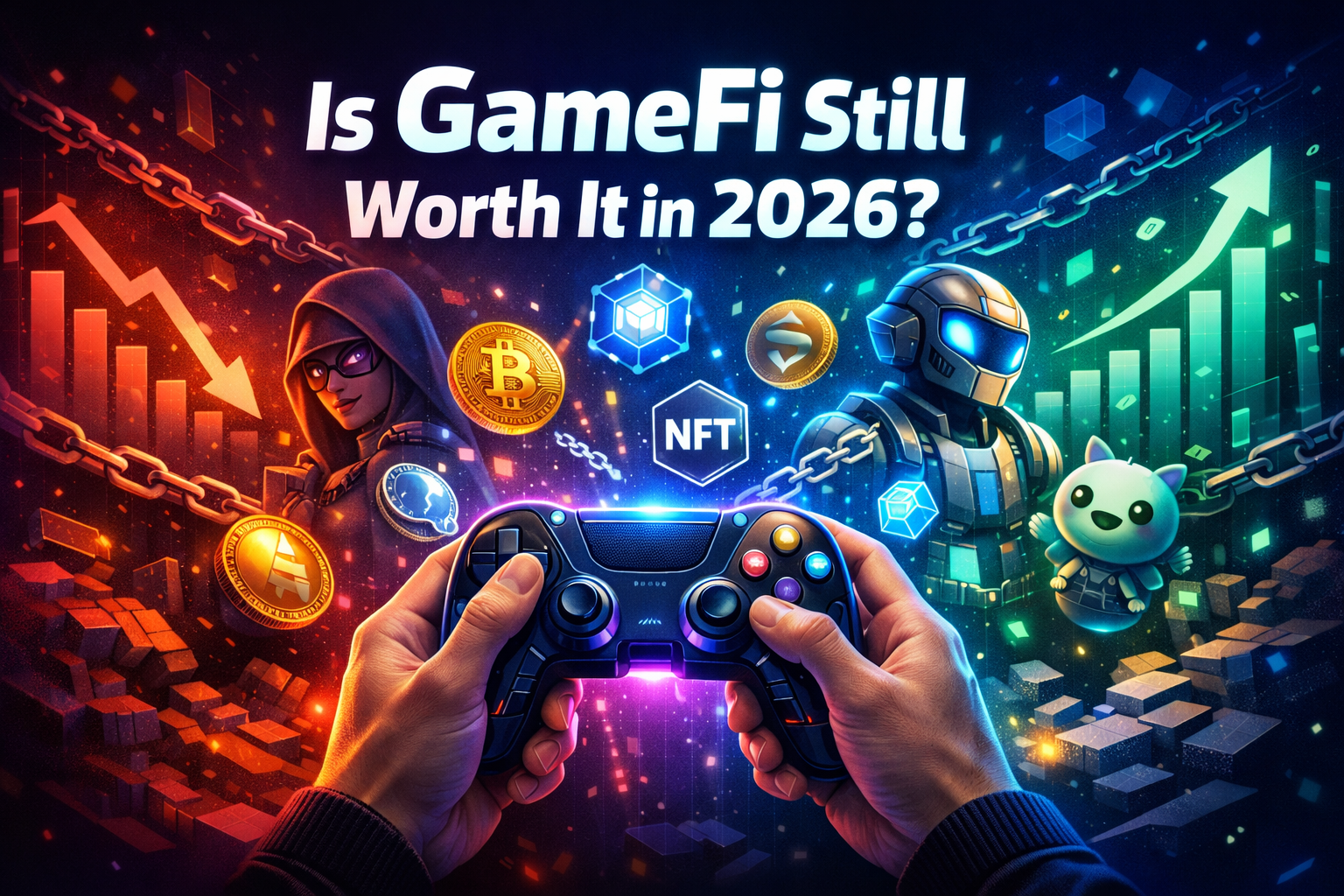
GameFi once captured the imagination of millions — a world where playing video games could earn you real money. But after the initial excitement faded and crypto markets turned volatile, many people started questioning whether GameFi still has a future. Here is a clear, honest look at where GameFi stands today and whether it is worth your time and money.
What Is GameFi and How Does It Work?
GameFi is a combination of gaming and decentralised finance built on blockchain technology. It allows players to do things that traditional games simply do not offer:
- Earn cryptocurrency rewards by playing games
- Own in-game items such as characters, weapons, land, and skins as digital assets
- Sell or trade those items on open marketplaces for real money
- Participate in game economies that operate on blockchain networks
Unlike conventional games where your progress and items belong to the game company, GameFi gives players genuine ownership of their digital assets through NFTs and blockchain records. This was a major shift in how people thought about gaming.
Why GameFi Lost Its Early Momentum
The early boom in GameFi, driven largely by games like Axie Infinity, attracted millions of players hoping to earn a steady income. But several structural problems caused the excitement to die down quickly.
- Unsustainable reward models: Most early GameFi projects depended on a constant flow of new players to fund rewards. When growth slowed, the entire reward system collapsed.
- Poor gameplay quality: Many games were built around earning mechanics rather than genuine entertainment. Players were not having fun — they were working.
- Crypto market crashes: When token prices dropped sharply, in-game earnings lost most of their real-world value overnight.
- High entry costs: Several popular games required players to buy expensive NFTs just to start playing, which locked out a large portion of potential users.
- Project failures: Many GameFi projects were poorly planned or lacked long-term vision, leading to sudden shutdowns.
These issues together pushed a large number of players and investors away from the space.
How GameFi Has Evolved and What Is Different Now
GameFi is not finished — it has been going through a significant transformation. Developers and investors have learned from the failures of the early era and are building differently.
The biggest shift is in philosophy. The focus has moved from earn-first to play-first. New blockchain games are being designed with better graphics, engaging storylines, and smoother gameplay that can attract players even without financial incentives.
Several other positive changes are visible in the current GameFi landscape:
- Many new games are free to start, removing the high entry barrier that discouraged beginners
- Reward systems are being designed to be more balanced and long-lasting
- Established gaming studios and large companies are beginning to explore blockchain integration
- Cross-game asset compatibility is being developed, meaning your items could work across multiple platforms
- Integration with Web3 technology is giving players more control over their data and assets
| Early GameFi (2021–2022) | GameFi Today (2025–2026) |
|---|---|
| Earn-first model | Play-first model |
| High entry cost via NFTs | Many games are free to start |
| Weak gameplay quality | Improved graphics and storytelling |
| Unsustainable reward systems | More balanced tokenomics |
| Limited to single platforms | Cross-game asset compatibility emerging |
Can You Still Earn Money from GameFi in 2026?
Yes, earning from GameFi is still possible — but expectations need to be realistic. The days of making a full-time income from a single blockchain game are largely over for most players.
Today, GameFi earnings are smaller, more stable, and depend heavily on:
- The specific game you choose and its tokenomics
- The time and skill you invest
- The overall state of the crypto market
- How early you join a project
Think of it less as a primary income source and more as a way to earn a little extra while doing something you genuinely enjoy. Players who approach GameFi with that mindset tend to have a much better experience than those chasing quick profits.
Benefits and Challenges of GameFi Today
GameFi still carries real advantages worth considering:
- Players have true ownership of in-game assets, unlike in traditional games
- Opportunity to earn rewards through skill and time investment
- Growing ecosystem with new projects entering regularly
- Potential for asset value appreciation if a game becomes popular
- Part of the broader Web3 movement giving users more digital rights
At the same time, the challenges are real and should not be ignored:
- Earnings are never guaranteed and remain tied to volatile crypto markets
- Regulatory clarity around blockchain gaming is still lacking in many countries, including India
- Risk of project failure remains high, especially with newer or smaller games
- Scams and poorly designed projects still exist in the space
Staying informed and doing proper research before investing time or money into any GameFi project is essential.
What the Future of GameFi Could Look Like
The long-term outlook for GameFi is cautiously optimistic. As technology advances, the gap between traditional gaming and blockchain gaming is expected to narrow.
Some developments that could shape the future of GameFi include:
- Integration with virtual reality to create fully immersive digital worlds
- Interoperable assets that work across multiple games and platforms
- More professional game studios entering the blockchain space, raising overall quality
- Deeper connection with the Web3 ecosystem and decentralised applications
- Clearer regulations that could bring more trust and mainstream adoption
GameFi is gradually becoming a legitimate part of the digital economy rather than a speculative trend. The projects that survive will likely be those that prioritise genuine gaming experiences alongside financial incentives.
In summary, GameFi in 2026 is not the gold rush it once appeared to be. But for players who enjoy gaming and are curious about blockchain technology, it remains a space worth watching and carefully exploring. Approach it with realistic expectations, do your research, and treat any earnings as a bonus rather than a guarantee.
Frequently Asked Questions
GameFi can still generate earnings in 2026, but the returns are smaller and more realistic compared to the early boom years. Earnings depend on the game you choose, your skill level, time invested, and the state of the crypto market. It is best treated as a side earning rather than a primary income source.
Many newer GameFi games are now free to start, which is a major improvement over early projects that required expensive NFT purchases just to begin. However, some games may still offer paid options that unlock better earning potential, so it is important to research each game before committing any funds.
In traditional games, your in-game items and progress belong to the game company and cannot be sold or transferred. In GameFi, players have real ownership of their digital assets through blockchain technology, meaning they can sell, trade, or transfer items for real-world value outside the game.