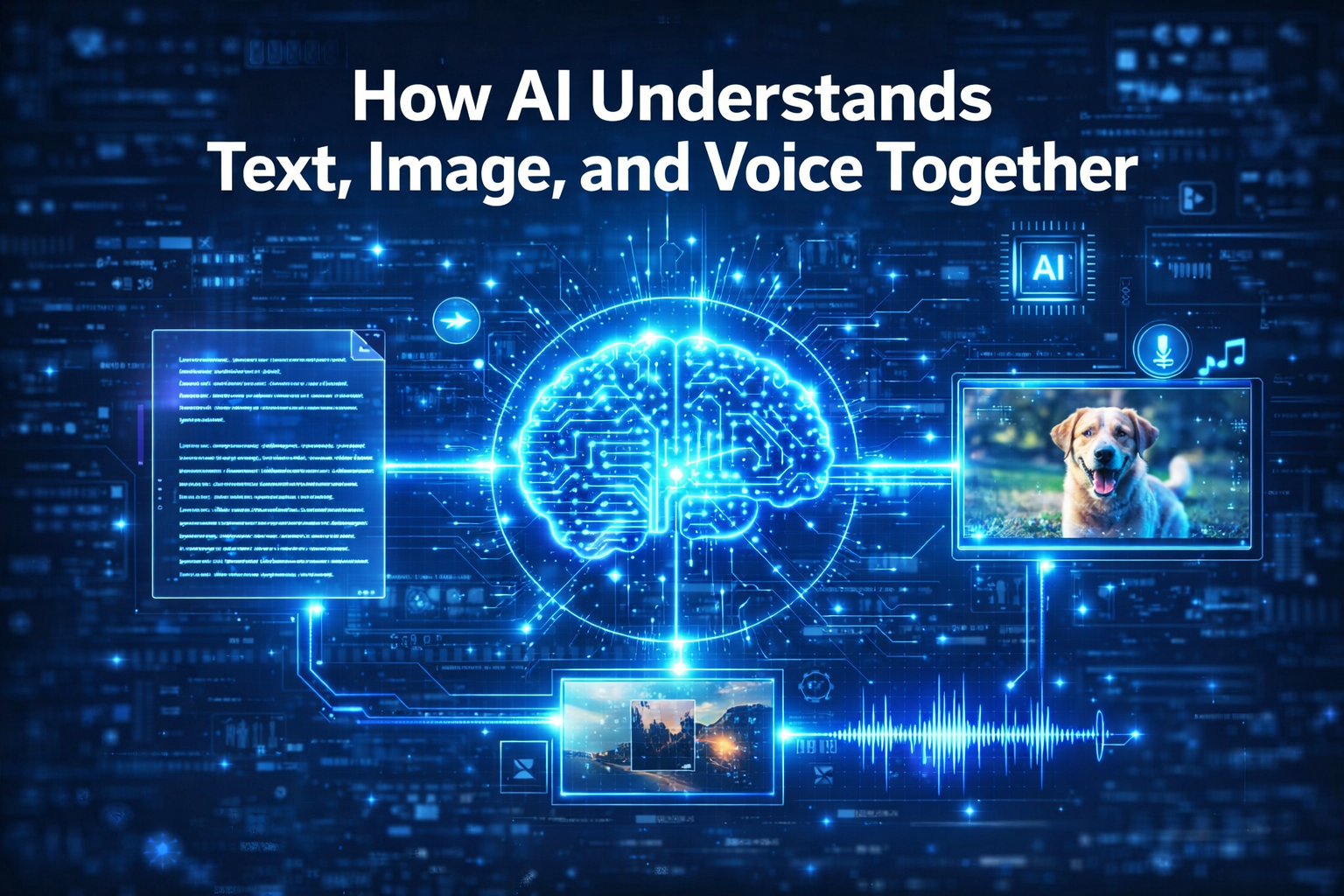
Artificial intelligence has come a long way from simply answering typed questions. Today, modern AI systems can process text, images, and voice simultaneously — much like how humans naturally communicate. This combined ability is known as Multimodal AI, and it is rapidly changing how machines interact with people across industries.
What Is Multimodal AI?
Multimodal AI refers to systems that can handle more than one type of input at the same time. Instead of processing text, images, or voice separately, these systems combine all three to build a fuller understanding of a situation.
Think of it this way: when a person watches a video, they hear the audio, read any text on screen, and see the visuals — all at once. Multimodal AI works in a similar way. By combining different data types, it can make smarter decisions and give more accurate, context-aware responses.
How AI Processes Each Type of Input
To understand how Multimodal AI works, it helps to look at how AI handles each input type individually:
- Text: AI reads and understands human language using Natural Language Processing (NLP). It can detect meaning, intent, and even emotional tone in sentences. This is why chatbots and search engines can respond so accurately to typed queries.
- Images: AI interprets visuals through computer vision. It analyzes shapes, colors, and patterns to identify objects, faces, or scenes. This technology powers face recognition systems, medical imaging tools, and security cameras.
- Voice: AI converts spoken words into text using speech recognition, then processes the meaning. It can also pick up on tone and language style, which helps voice assistants like those on smartphones respond more naturally.
When these three capabilities work together, the result is a system that understands context far better than any single-input model could.
Real-World Applications of Multimodal AI
Multimodal AI is not a distant concept — it is already embedded in everyday technology. Here are some practical examples:
- Voice assistants on smartphones and smart speakers understand spoken commands and respond with relevant information.
- Self-driving cars use cameras, sensors, and data processing together to read road conditions and make driving decisions.
- Social media platforms analyze both images and captions to understand content and serve relevant recommendations.
- Healthcare systems combine medical scan images with patient history text to help doctors identify conditions faster.
- Customer support chatbots can now accept image uploads along with text queries to resolve issues more efficiently.
| Input Type | Technology Used | Common Use Case |
|---|---|---|
| Text | Natural Language Processing (NLP) | Chatbots, search engines |
| Image | Computer Vision | Face recognition, medical scans |
| Voice | Speech Recognition | Voice assistants, smart devices |
Why Multimodal AI Matters for Users and Businesses
The biggest advantage of Multimodal AI is improved accuracy. When a system draws from multiple sources of information, it is less likely to misunderstand a request or give an irrelevant response.
For everyday users, this means more natural interactions with technology. You do not need to type perfectly or follow specific commands. You can speak, show an image, or type — and the system will understand you.
For businesses, this opens up new possibilities in customer service, healthcare diagnostics, retail, education, and security. Companies that adopt Multimodal AI early are likely to offer better user experiences and operate more efficiently.
Challenges and Concerns Around Multimodal AI
Despite its promise, Multimodal AI comes with real challenges that researchers and developers are still working through:
- Data requirements: Training these systems requires massive amounts of labeled data across all input types, which is expensive and time-consuming to collect.
- Computing power: Processing multiple data types simultaneously demands significant hardware resources.
- Privacy risks: Systems that analyze voice, face, and text together raise serious concerns about data collection and user surveillance.
- Integration complexity: Building systems that combine different data types without errors is technically difficult.
Progress is being made on all these fronts, and the technology is improving steadily with each passing year.
Multimodal AI represents a meaningful shift in how machines understand the world. By bringing together text, image, and voice processing into a single intelligent system, it moves technology closer to the way humans naturally think and communicate. As these systems become more capable and widely available, they will reshape how we interact with devices, access information, and receive services — making technology more accessible and useful for everyone.