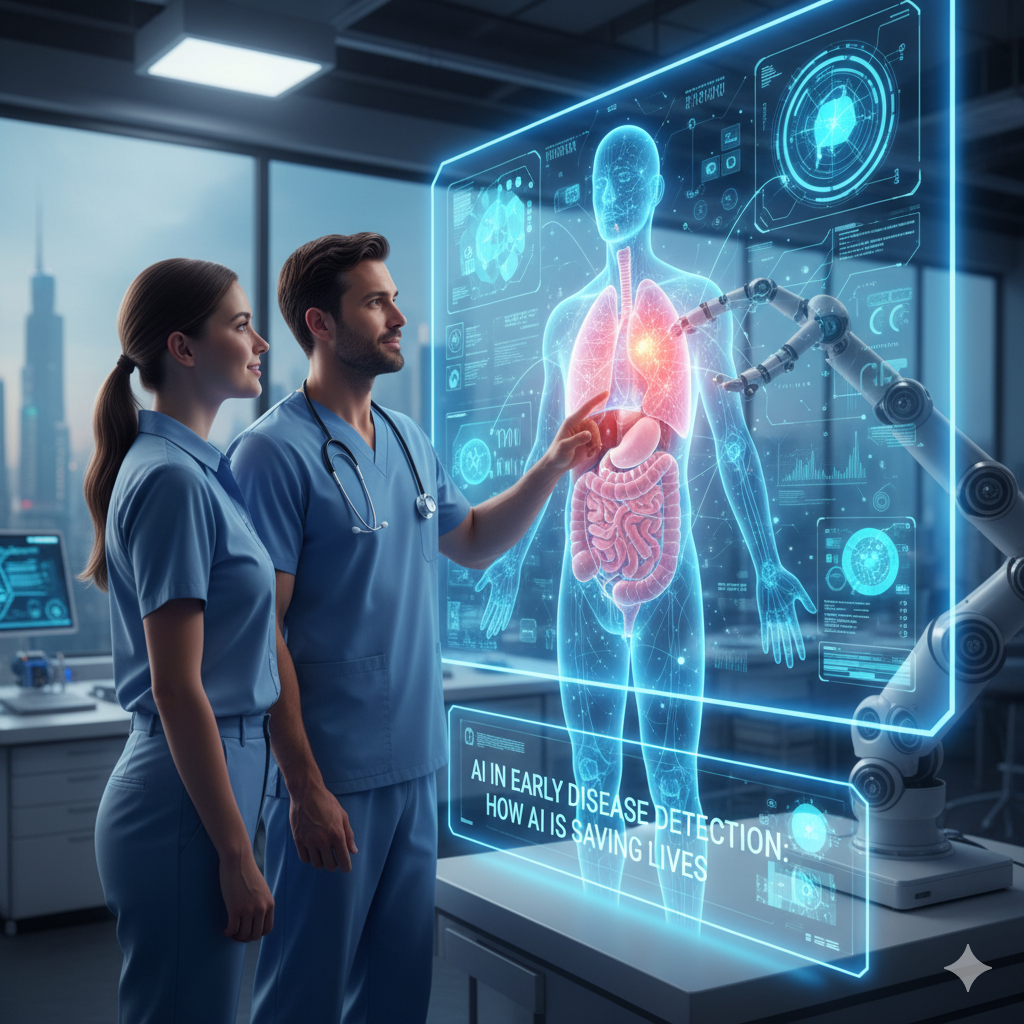
Medical science has always raced against time when it comes to detecting diseases. The earlier a condition is caught, the better the chances of survival and recovery. Artificial intelligence is now giving doctors a powerful edge in that race — identifying signs of illness sometimes before a patient even feels unwell. From cancer screenings to heart monitoring, AI-powered tools are quietly changing how healthcare works across the world.
What Is AI-Based Early Disease Detection?
AI-based early disease detection refers to the use of computer programs trained on large medical datasets — including scans, lab reports, and patient health records — to identify the earliest signs of a disease.
These systems learn to distinguish between healthy and unhealthy patterns in data, then flag potential risks for doctors to review. Some key ways this works include:
- Medical imaging analysis: AI examines X-rays, MRI scans, and CT scans to spot tiny abnormalities that may be missed during a routine check.
- Predictive health profiling: By reviewing a patient’s medical history, lifestyle data, and lab results, AI can estimate the likelihood of developing certain conditions.
- Wearable health monitors: Smartwatches and fitness bands use AI to track real-time health data and send alerts when something unusual is detected.
Real-World Applications Across Major Diseases
AI is already being used in hospitals and clinics to detect a wide range of serious conditions at an early stage. Here is how it is making a difference across different disease areas:
| Disease Area | How AI Helps |
|---|---|
| Cancer | Google’s LYNA system detects breast cancer cells with over 90% accuracy by analysing medical scans. |
| Heart Disease | AI reads ECG data and heart scans to warn doctors about potential heart attacks or blockages before they happen. |
| Diabetic Retinopathy | Eye scan analysis by AI detects early-stage diabetic retinopathy, a leading cause of blindness in diabetic patients. |
| Alzheimer’s and Parkinson’s | AI identifies subtle changes in brain scans and speech patterns years before symptoms appear. |
| Infectious Diseases | AI monitors global health data to track and predict the spread of diseases like COVID-19. |
These examples show that AI is not limited to one type of illness. It is being applied broadly, helping doctors act faster and with greater confidence.
Key Benefits of Using AI for Disease Detection
The advantages of bringing AI into early diagnosis go beyond just speed. Here is what makes it genuinely useful for patients and healthcare providers:
- Faster diagnosis: AI processes large volumes of medical data far quicker than any human team can manage.
- Higher accuracy: It reduces the chance of human error, especially in reading complex imaging data.
- Lower long-term costs: Catching a disease early means less expensive treatment later, reducing the financial burden on patients and health systems.
- Personalised care: AI can tailor health recommendations based on an individual’s unique medical profile.
- Preventive focus: Rather than only treating illness, AI helps prevent conditions from reaching a dangerous stage.
Challenges That Still Need to Be Addressed
Despite its promise, AI in healthcare is not without limitations. Several important concerns need careful attention before these tools can be widely trusted:
- Data privacy: Patient health records are sensitive. Strong safeguards are essential to prevent misuse or data breaches.
- Algorithmic bias: If an AI system is trained on data that does not represent diverse populations, it may produce inaccurate results for certain groups.
- Regulatory approval: Medical AI tools must pass strict safety and efficacy checks before they can be used in clinical settings.
- Human oversight remains essential: AI supports doctors — it does not replace them. Final medical decisions must always rest with qualified healthcare professionals.
What the Future of AI in Healthcare Looks Like
The next phase of AI in medicine is expected to focus heavily on real-time, continuous health monitoring. Wearable devices are becoming more sophisticated, capable of tracking vital signs around the clock and automatically alerting doctors when readings fall outside safe ranges.
Hospitals are already integrating AI into diagnostic workflows to speed up results and reduce backlogs. Looking ahead, the shift in healthcare is expected to move from reactive treatment — addressing illness after it strikes — to proactive prevention, where AI helps people stay healthy before problems develop.
This shift could be especially significant in countries like India, where healthcare infrastructure is stretched and early detection tools could help millions of people access timely diagnosis without always needing specialist consultations in person.
In conclusion, AI-powered early disease detection is one of the most meaningful developments in modern medicine. By identifying health risks sooner, it gives both doctors and patients more time to respond effectively. The goal is not just better technology — it is longer, healthier lives for more people.