Face detection is one of the most widely used technologies in computer vision today. From unlocking your smartphone to monitoring traffic cameras, machines are now capable of spotting human faces in images and video with remarkable speed. Understanding how this technology works, where it struggles, and how it is being applied across industries gives a clearer picture of its growing importance in everyday life.
How Face Detection Actually Works
At its core, face detection relies on algorithms trained to recognize patterns associated with human facial features. The process follows a structured pipeline that converts raw visual data into actionable information.
- Image Preprocessing: The input image is converted into a format that a computer can analyze, often involving resizing, grayscale conversion, or noise reduction.
- Feature Extraction: Key facial landmarks such as eyes, nose, and mouth are identified using edges, corners, and gradient patterns in the image.
- Face Detection: The algorithm scans the image systematically, searching for regions that match known patterns of a human face.
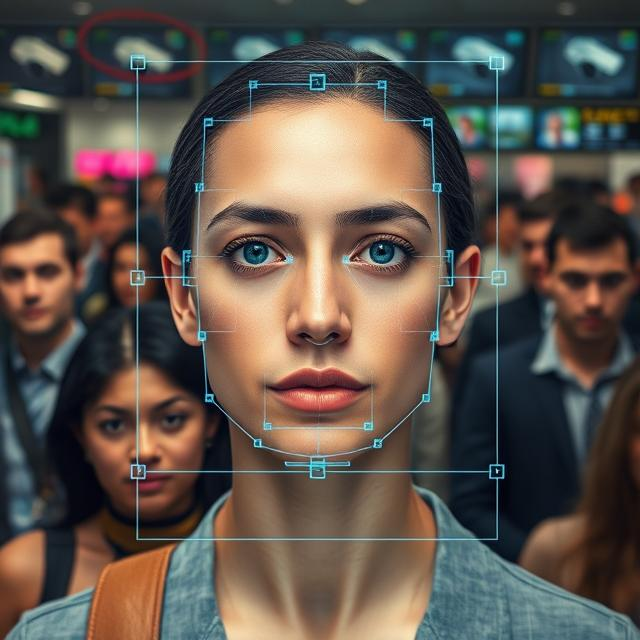
- Face Localization: Once a face is detected, the system pinpoints its exact position in the image, usually by drawing a bounding box around it.
Modern face detection systems often use deep learning models, particularly convolutional neural networks (CNNs), which have significantly improved accuracy over older methods like the Viola-Jones algorithm.
Key Challenges That Still Hold Face Detection Back
Despite major advances, face detection systems still face real-world limitations that engineers and researchers are actively working to address.
- Lighting Variations: Poor or uneven lighting can distort facial features, making detection unreliable in low-light or high-contrast environments.
- Occlusions: Masks, glasses, scarves, or other objects that partially cover the face can confuse detection algorithms.
- Pose Variability: Faces viewed from extreme angles or in profile are harder to detect compared to front-facing images.
- Facial Expressions: Strong expressions like wide smiles or frowns can alter the shape and position of facial features.
- Diverse Skin Tones: Some systems have historically shown lower accuracy across different skin tones, raising concerns about bias and fairness in deployment.
Addressing these challenges is critical, especially as face detection moves into high-stakes environments like law enforcement, healthcare, and financial services.
Where Face Detection Is Being Used Right Now
Face detection has found practical applications across a wide range of industries, making it one of the most commercially active areas of computer vision.
| Industry | Application |
|---|---|
| Security | Surveillance, fraud prevention, access control |
| Mobile Devices | Face unlock, payment authentication, AR filters |
| Social Media | Photo tagging, image search, augmented reality |
| Automotive | Driver monitoring, fatigue detection, in-car assistance |
| Healthcare | Patient identification, health diagnostics from facial cues |
In India, face detection is increasingly being integrated into government identity systems, airport security, and banking applications, reflecting its growing role in public infrastructure.
What the Future of Face Detection Looks Like
The field is advancing rapidly, with several key areas expected to see significant improvement in the coming years.
- Faster Real-Time Processing: Improved hardware and optimized models will allow face detection to work more quickly and reliably on edge devices like smartphones and security cameras.
- Higher Accuracy in Difficult Conditions: Research is focused on making systems perform well even in low light, with partial occlusions, or across diverse demographics.
- Privacy and Ethical Safeguards: As deployment grows, so does the need for clear regulations around consent, data storage, and the ethical use of facial data.
- Integration with Other Technologies: Face detection is increasingly being combined with emotion recognition, gait analysis, and behavioral analytics to build more comprehensive identification systems.
Governments and technology companies worldwide are working to establish standards that balance innovation with individual privacy rights, a conversation that will shape how this technology develops over the next decade.
Face detection has moved well beyond a laboratory concept. It is embedded in the devices people use daily and the systems that protect public spaces. As accuracy improves and ethical frameworks mature, its role in both personal technology and large-scale infrastructure will only grow stronger.