
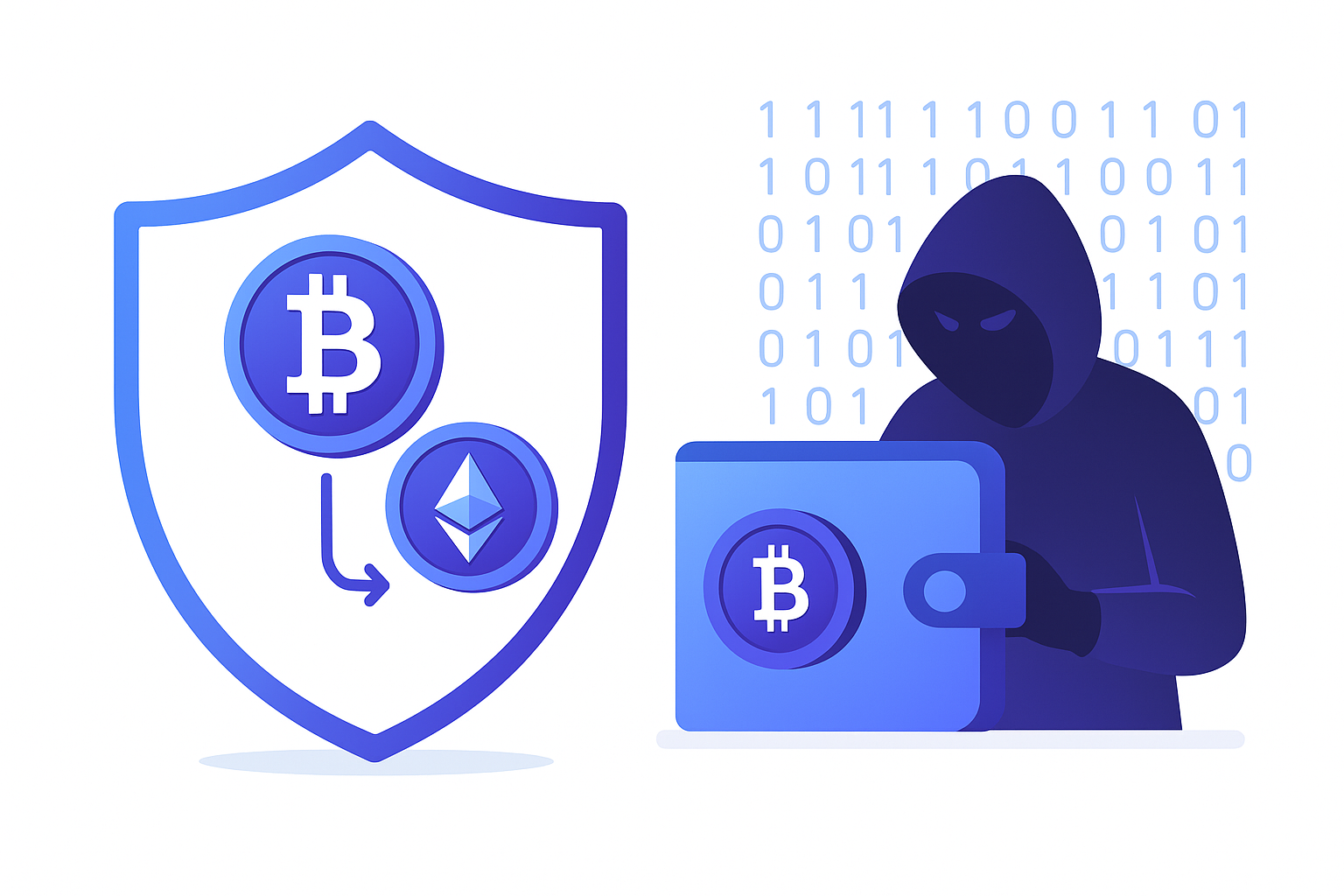
Cryptocurrency adoption is growing fast in 2025, with millions of people across India and the world buying, selling, and holding digital assets like Bitcoin, Ethereum, and stablecoins. But as the market expands, so do the dangers. Unlike traditional banks, crypto offers no customer support, no chargebacks, and no way to reverse a transaction once it goes through. If someone steals your crypto, it is almost certainly gone forever.
What Crypto Security Actually Means
Crypto security refers to the practices, tools, and habits that protect your digital currency, wallets, and exchange accounts from hackers and fraudsters. Think of it like locking your home — except the stakes are entirely financial and the locks are digital.
The most important thing to understand is this: crypto transactions are irreversible. Once a transfer is confirmed on the blockchain, no authority can undo it. This makes prevention your only real line of defense. There is no bank to call, no dispute form to fill, and no government insurance on your holdings.
Why Crypto Attacks Are Increasing in 2025
Several factors are driving a sharp rise in crypto-related crimes this year:
- More users, more targets: As millions of new investors enter the crypto space, hackers have a larger pool of potential victims to exploit.
- Sophisticated cybercriminals: Attackers now use advanced malware and highly targeted techniques to breach wallets and platforms.
- Rushed project launches: Many new DeFi applications, tokens, and blockchain bridges go live without proper security audits, leaving dangerous gaps that bad actors quickly find and exploit.
- Exchange vulnerabilities: Even well-known platforms are not immune. In 2025, major exchanges including ByBit and CoinDCX suffered significant security breaches, proving that no centralized platform can guarantee complete safety for user funds.
Common Crypto Threats Every Investor Should Know
Understanding the types of attacks is the first step toward protecting yourself. Here are the most common threats in the crypto space right now:
- Exchange Hacks: Attackers break into trading platforms and drain large amounts of cryptocurrency from user accounts and hot wallets.
- Phishing Scams: Fake websites, emails, or social media messages trick users into entering their wallet private keys, passwords, or seed phrases. Once shared, your funds can be emptied instantly.
- Smart Contract Weaknesses: Poorly coded DeFi applications contain bugs that hackers exploit to drain liquidity pools or steal user funds.
- SIM Swap Attacks: Criminals convince your mobile carrier to transfer your phone number to their SIM card, allowing them to bypass SMS-based two-factor authentication and access your accounts.
- Ransomware: Malicious software locks your computer files and demands a cryptocurrency payment — usually Bitcoin — to restore access.
| Threat Type | How It Works | Who Is at Risk |
|---|---|---|
| Exchange Hack | Attackers breach platform servers | All exchange users |
| Phishing Scam | Fake sites steal login or seed phrases | New and experienced users |
| Smart Contract Bug | Code flaws exploited to drain funds | DeFi investors |
| SIM Swap | Phone number hijacked to bypass 2FA | SMS 2FA users |
| Ransomware | Files locked, crypto demanded | Businesses and individuals |
Practical Steps to Keep Your Crypto Safe
The good news is that most crypto theft is preventable. Following these steps significantly reduces your risk:
- Use a hardware wallet: Store large amounts of cryptocurrency in a cold storage hardware wallet like Ledger or Trezor. These devices keep your private keys offline and away from internet-based attacks.
- Enable two-factor authentication (2FA): Always activate 2FA on every exchange and wallet account. Use an authenticator app like Google Authenticator rather than SMS-based 2FA to avoid SIM swap risks.
- Verify website addresses carefully: Before entering any login details, double-check the URL. Phishing sites often use addresses that look almost identical to real platforms.
- Download apps only from official sources: Use only the official app stores or verified project websites to download crypto wallets and exchange apps.
- Choose exchanges with strong security records: Research a platform’s security history before depositing funds. Look for exchanges that offer insurance on digital assets and conduct regular security audits.
- Spread your holdings: Avoid keeping all your crypto in one place. Distribute assets across multiple wallets and platforms to limit losses if one is compromised.
- Never share your seed phrase: Your wallet’s seed phrase is the master key to all your funds. No legitimate platform or support team will ever ask for it.
Why Crypto Security Should Be Your Top Priority
Digital assets are reshaping personal finance in India and globally, offering new investment opportunities and financial freedom. But this space operates without the safety nets that traditional banking provides. One careless click on a suspicious link or one moment of trusting the wrong person can wipe out months or years of savings.
The responsibility for protecting your crypto falls entirely on you. Staying informed about the latest threats, using the right tools, and building safe habits are not optional extras — they are essential parts of being a crypto investor in 2025.
As platforms like ByBit and CoinDCX have shown this year, even large and trusted exchanges can be breached. The safest approach is to treat every account and every transaction with caution, and to never assume that any platform is completely secure.
Frequently Asked Questions
The safest way to store large amounts of cryptocurrency is in a hardware wallet, also called cold storage. Devices like Ledger or Trezor keep your private keys offline, making them much harder for hackers to access compared to exchange accounts or software wallets.
In most cases, no. Cryptocurrency transactions are irreversible once confirmed on the blockchain. There is no central authority or bank that can reverse a transfer or reimburse stolen funds, which is why prevention and strong security habits are critical.
A SIM swap attack happens when a criminal convinces your mobile carrier to transfer your phone number to a SIM card they control. This lets them receive your SMS verification codes and bypass two-factor authentication on your crypto accounts. Using an authenticator app instead of SMS-based 2FA significantly reduces this risk.