
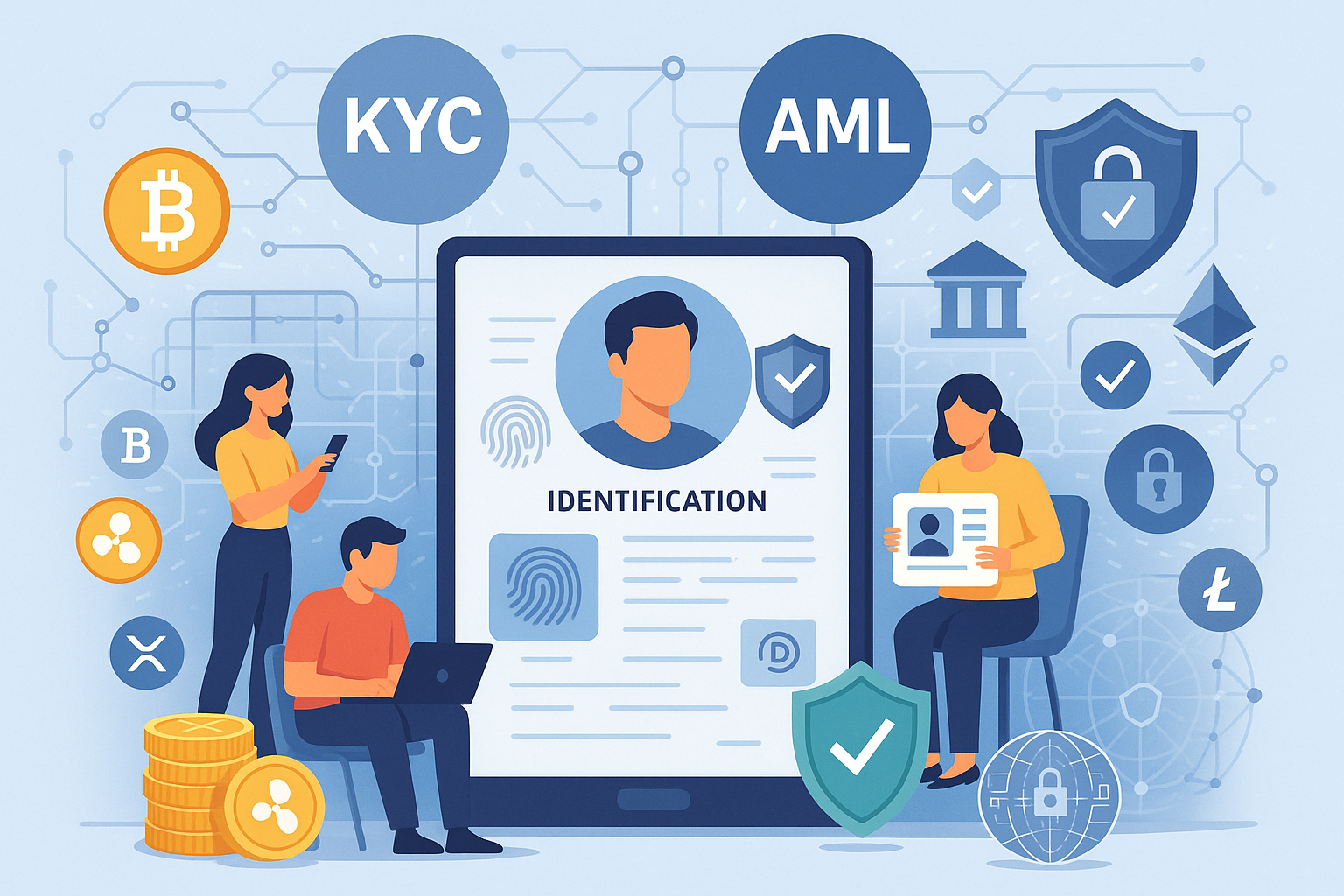
Cryptocurrency has grown from a niche technology into a global financial force. But with that growth comes serious responsibility. Two of the most important tools keeping the crypto world safe and legitimate are KYC (Know Your Customer) and AML (Anti-Money Laundering). Together, they protect users, platforms, and the broader financial system from fraud, theft, and illegal activity.
What is KYC in Cryptocurrency?
KYC stands for Know Your Customer. It is a verification process that crypto exchanges and platforms use to confirm the real identity of their users before allowing them to trade or transact.
When you sign up on a crypto exchange, the KYC process typically asks you to submit:
- A government-issued photo ID such as a passport or Aadhaar card
- Proof of address such as a utility bill or bank statement
- A selfie or live photo for facial verification
This process ensures that the person creating an account is who they claim to be. It blocks bad actors from using fake or stolen identities to access financial services.
Why KYC matters for crypto users:
- Stops fraudsters from using fake or stolen identities on platforms
- Helps exchanges stay compliant with financial regulations
- Builds trust between users and the platform they are using
What is AML in Cryptocurrency?
AML stands for Anti-Money Laundering. It refers to a set of laws, regulations, and monitoring tools designed to prevent criminals from using cryptocurrency to hide, move, or clean illegally obtained money.
AML systems work in the background, constantly scanning transactions for unusual patterns. If a user suddenly transfers a large amount of funds without a clear source, or if transactions match known criminal patterns, the system flags and reports them to the relevant authorities.
Why AML is critical in the crypto space:
- Prevents criminals from using crypto platforms for illegal financial activities
- Maintains transparency and fairness across the ecosystem
- Helps platforms meet legal obligations set by regulators worldwide
How KYC and AML Work Together
KYC and AML are not separate systems — they are two sides of the same coin. KYC identifies who is using a platform, while AML monitors what those users are doing with their funds.
Here is a simple way to understand how they connect:
| Feature | KYC | AML |
|---|---|---|
| Full Form | Know Your Customer | Anti-Money Laundering |
| Primary Role | Identity verification | Transaction monitoring |
| When It Applies | At account registration | Ongoing, during all transactions |
| Goal | Confirm user identity | Detect and report suspicious activity |
For example, if someone registers on a crypto exchange using false information and then attempts to transfer large sums of money, the KYC system would have already flagged the suspicious identity, and the AML system would catch the unusual transaction pattern. Together, they create a strong safety net.
Impact on Crypto Users: Pros and Cons
For everyday users, KYC and AML compliance has both benefits and minor inconveniences.
Benefits for users:
- A safer environment for trading and investing in crypto
- Greater confidence that the platform is legitimate and regulated
- Protection against scams, hackers, and cybercriminals
Drawbacks for users:
- The sign-up process takes longer due to document verification
- Users must share personal documents, which raises privacy concerns for some
While the extra steps may feel inconvenient, they are a small price to pay for a significantly safer trading experience. Most reputable platforms store this data securely and use it only for compliance purposes.
What KYC and AML Mean for Crypto Platforms
For crypto exchanges and platforms, implementing KYC and AML is not optional — it is a legal requirement in most countries. Platforms that fail to comply risk heavy fines, loss of operating licenses, and reputational damage.
Key responsibilities for crypto platforms:
- Follow rules set by local regulators and international bodies like the Financial Action Task Force (FATF)
- Invest in fraud detection tools and transaction monitoring software
- Maintain transparency with users about how their data is used
Long-term benefits for platforms:
- Stronger reputation as a trustworthy and compliant service
- Higher user retention because customers feel safe on regulated platforms
- Sustainable business growth backed by regulatory approval
As global regulators tighten their grip on the crypto industry, platforms that have already built strong KYC and AML frameworks will have a clear competitive advantage over those that have not.
In conclusion, KYC and AML are not obstacles to crypto adoption — they are the foundation of a trustworthy and sustainable crypto ecosystem. For users, they offer protection and peace of mind. For platforms, they ensure legal compliance and long-term credibility. As the crypto industry continues to mature, these compliance measures will only become more important for everyone involved.