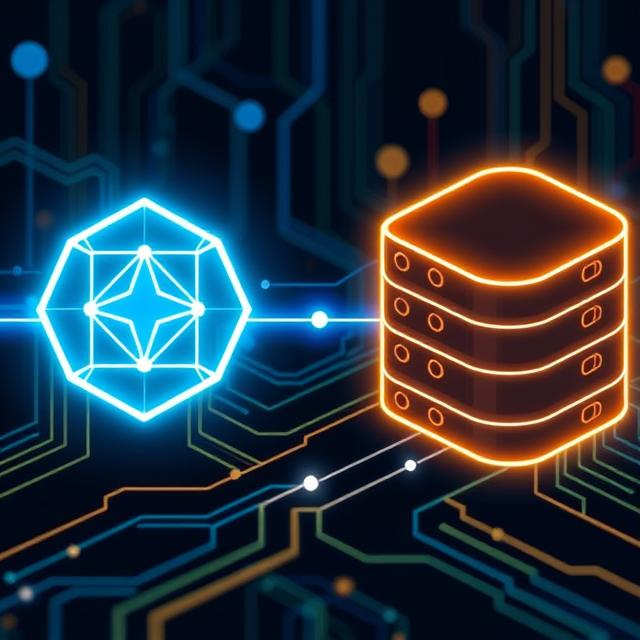
When it comes to storing and managing data, two major technologies dominate the conversation — blockchain and traditional databases. Both are powerful, but they work in fundamentally different ways. Understanding these differences helps businesses, developers, and everyday users make smarter decisions about which system fits their needs.
1. Centralized vs Decentralized Control
The most basic difference between the two systems is how they are structured and who controls them.
- Traditional Databases: These operate on a centralized model. All data sits in one location, managed by a single organization or administrator. This makes management straightforward, but it also means one party holds complete control over the data.
- Blockchain: Blockchain works on a decentralized model. Data is distributed across thousands of computers, called nodes, with no single authority in charge. Every participant in the network holds a copy of the data, which increases both transparency and security.
For businesses that need full control over their data, traditional databases offer simplicity. For systems where trust between multiple parties is essential, blockchain’s decentralized approach is a stronger fit.
2. Data Security and Immutability
Security is one of the most talked-about advantages of blockchain technology.
- Traditional Databases: Data in traditional databases can be edited, updated, or deleted by authorized users. While this flexibility is useful, it also opens the door to unauthorized changes, data corruption, or internal misuse.
- Blockchain: Once data is recorded on a blockchain, it cannot be changed or removed. This immutability is enforced through cryptographic hashing and a consensus mechanism, where multiple nodes must agree before any new data is added. This makes blockchain highly resistant to tampering.
For industries like finance, healthcare, and supply chain management, where data integrity is critical, blockchain’s immutable nature offers a significant advantage.
3. Transparency and Traceability
How openly data can be viewed and tracked is another key difference between the two systems.
- Traditional Databases: Access is restricted. Only users with specific permissions can view or modify data. Tracking changes often requires additional audit tools and administrative access.
- Blockchain: Public blockchains allow anyone in the network to view every transaction recorded on the ledger. This complete visibility makes it easy to trace the full history of any data entry, adding a strong layer of accountability.
This transparency makes blockchain particularly useful for applications like cryptocurrency transactions, public records, and supply chain tracking, where auditability matters.
4. Speed, Performance, and Data Management
How each system handles data operations and processing speed is a practical consideration for any project.
| Feature | Traditional Database | Blockchain |
|---|---|---|
| Data Operations | Create, Read, Update, Delete (CRUD) | Append-only (no editing or deletion) |
| Processing Speed | Fast, suitable for large-scale apps | Slower due to multi-node verification |
| Scalability | Highly scalable | Limited by network size and consensus |
Traditional databases support full CRUD operations — create, read, update, and delete — giving administrators complete flexibility. Blockchain only allows new data to be appended. Each new entry forms a new block, preserving a complete and unalterable history. For high-volume applications that need fast processing, traditional databases hold a clear edge. Blockchain’s distributed verification process makes it slower, especially as the network grows larger.
5. Cost and Maintenance
Budget and ongoing maintenance are real-world factors that influence which system an organization chooses.
- Traditional Databases: These are generally cheaper to set up and maintain. Centralized management reduces operational complexity. However, organizations may need to invest separately in security measures, backups, and disaster recovery systems.
- Blockchain: Running a blockchain network, especially a proof-of-work blockchain, consumes significant computing power and energy, which raises operational costs. Maintaining a distributed network also adds complexity. That said, blockchain can reduce costs in specific areas — for example, by removing the need for intermediaries in financial transactions or cross-border payments.
The right choice depends on the use case. For internal business data management, traditional databases are cost-effective. For applications involving multiple untrusted parties or requiring tamper-proof records, blockchain’s higher cost may be justified.
Both blockchain and traditional databases have clear strengths and limitations. Traditional databases are faster, cheaper, and easier to manage, making them ideal for most business applications. Blockchain offers unmatched security, transparency, and data integrity, making it the right choice for scenarios where trust, traceability, and immutability are non-negotiable. The best system is always the one that matches the specific requirements of the task at hand.