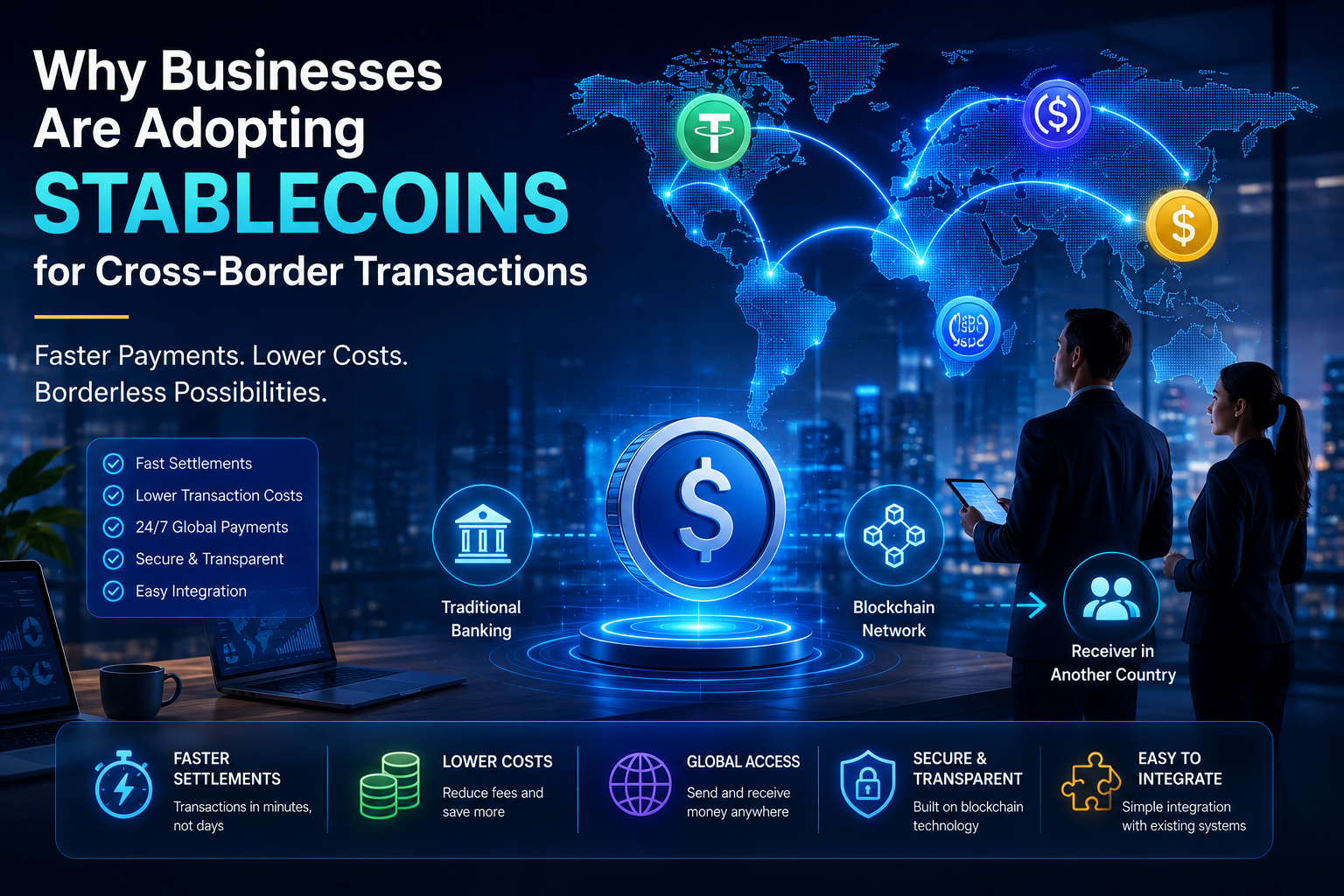
International payments have long been a pain point for businesses. Slow bank transfers, high fees, and complex currency conversions eat into profits and delay operations. Stablecoins — a type of cryptocurrency pegged to stable assets like the US Dollar — are now offering businesses a practical way to move money across borders faster, cheaper, and more transparently.
What Are Stablecoins and Why Do They Matter for Business?
Stablecoins are digital currencies built on blockchain technology, designed to hold a steady value by being linked to traditional assets such as the US Dollar or Euro. Unlike Bitcoin or Ethereum, which can swing wildly in price, stablecoins offer the predictability that businesses need for everyday financial transactions.
This price stability, combined with the speed and transparency of blockchain networks, makes stablecoins a strong candidate for replacing or supplementing traditional cross-border payment systems.
The Real Problems with Traditional International Payments
Any business that regularly sends or receives money internationally knows the frustrations involved. The current banking system relies on multiple intermediaries, each adding time and cost to the process.
- High transaction fees from banks and payment providers
- Slow settlement times that can stretch to several business days
- Currency conversion costs that reduce the final amount received
- Limited banking hours that delay urgent transfers
- Complex compliance processes involving multiple financial institutions
For companies managing dozens or hundreds of international transactions each month, these inefficiencies directly impact cash flow and profitability.
Key Benefits of Using Stablecoins for Cross-Border Transactions
Businesses adopting stablecoins report several clear advantages over traditional payment methods. Here is a comparison of how stablecoin payments stack up against conventional bank transfers:
| Feature | Traditional Bank Transfer | Stablecoin Payment |
|---|---|---|
| Settlement Time | 2 to 5 business days | Minutes |
| Transaction Fees | High (multiple charges) | Significantly lower |
| Availability | Banking hours only | 24/7 |
| Transparency | Limited visibility | Full blockchain record |
| Access Requirements | Bank account needed | Internet and digital wallet |
These differences are driving more businesses — from small exporters to large enterprises — to explore stablecoin-based payment solutions.
Where Businesses Are Already Using Stablecoins
Stablecoin adoption is growing across multiple industries and business functions. Companies are integrating stablecoin payments into:
- E-commerce platforms to accept payments from international customers
- Supply chain networks to pay overseas suppliers quickly
- B2B payment systems for faster invoice settlements
- International payroll services to pay remote employees and freelancers abroad
- Digital marketplaces where buyers and sellers operate across different countries
The ability to send funds directly through blockchain networks — without relying on correspondent banks — gives businesses greater control over their financial operations.
Risks and Regulatory Considerations Businesses Must Know
Stablecoins are not without challenges. Businesses considering adoption should carefully evaluate the following:
- Regulatory compliance: Rules around stablecoin use vary by country and are still evolving. Companies must stay updated on local financial regulations to avoid legal issues.
- Issuer credibility: Not all stablecoins are equally trustworthy. Businesses should choose widely adopted, transparent stablecoins backed by credible issuers.
- Technology risks: Like any digital system, blockchain networks can face technical issues. Having contingency payment plans is advisable.
- Staff training: Teams handling finance and payments need to understand how stablecoin wallets and transactions work.
Choosing established stablecoins and working with reputable blockchain payment platforms can help businesses manage these risks effectively.
The Road Ahead for Stablecoins in Global Commerce
The global demand for faster, cheaper international payments is only growing. Financial institutions, fintech companies, and large enterprises are already investing in blockchain-based payment infrastructure. As regulations become clearer and blockchain technology matures, stablecoins are expected to become a standard tool in global business finance.
Businesses that start exploring stablecoin payments now — understanding both the benefits and the risks — will be better positioned to operate efficiently in an increasingly connected global economy.
Stablecoins will not replace traditional banking overnight, but they are already proving their value as a practical, cost-effective alternative for cross-border transactions. For businesses looking to reduce payment friction and expand internationally, they represent a meaningful step forward.
Frequently Asked Questions
Stablecoins are a type of cryptocurrency designed to maintain a stable value by being pegged to traditional assets like the US Dollar or Euro. Unlike Bitcoin or Ethereum, which can experience large price swings, stablecoins offer price predictability, making them suitable for business payments and financial transactions.
The regulatory environment for stablecoins in India is still evolving. Businesses should consult legal and financial advisors to ensure compliance with current RBI guidelines and Indian financial regulations before using stablecoins for commercial transactions.
Key risks include changing regulatory requirements across different countries, varying levels of issuer credibility and transparency, potential technical issues on blockchain networks, and the need for staff training on digital wallet management. Choosing widely adopted and transparent stablecoins from credible issuers can help reduce these risks.