Artificial intelligence is no longer just a tool that assists humans — it is rapidly becoming the central decision-making layer that controls how software applications behave, how business workflows run, and how physical devices operate. This shift from rule-based automation to intelligent, adaptive control is one of the most significant changes happening in technology right now.
What Does AI as a Control Layer Actually Mean?
When we talk about AI as a control layer, we mean using artificial intelligence as the main decision-maker across software, processes, and connected devices. Instead of humans manually adjusting settings or developers writing fixed rules for every situation, AI decides what to do, when to do it, and how to do it.
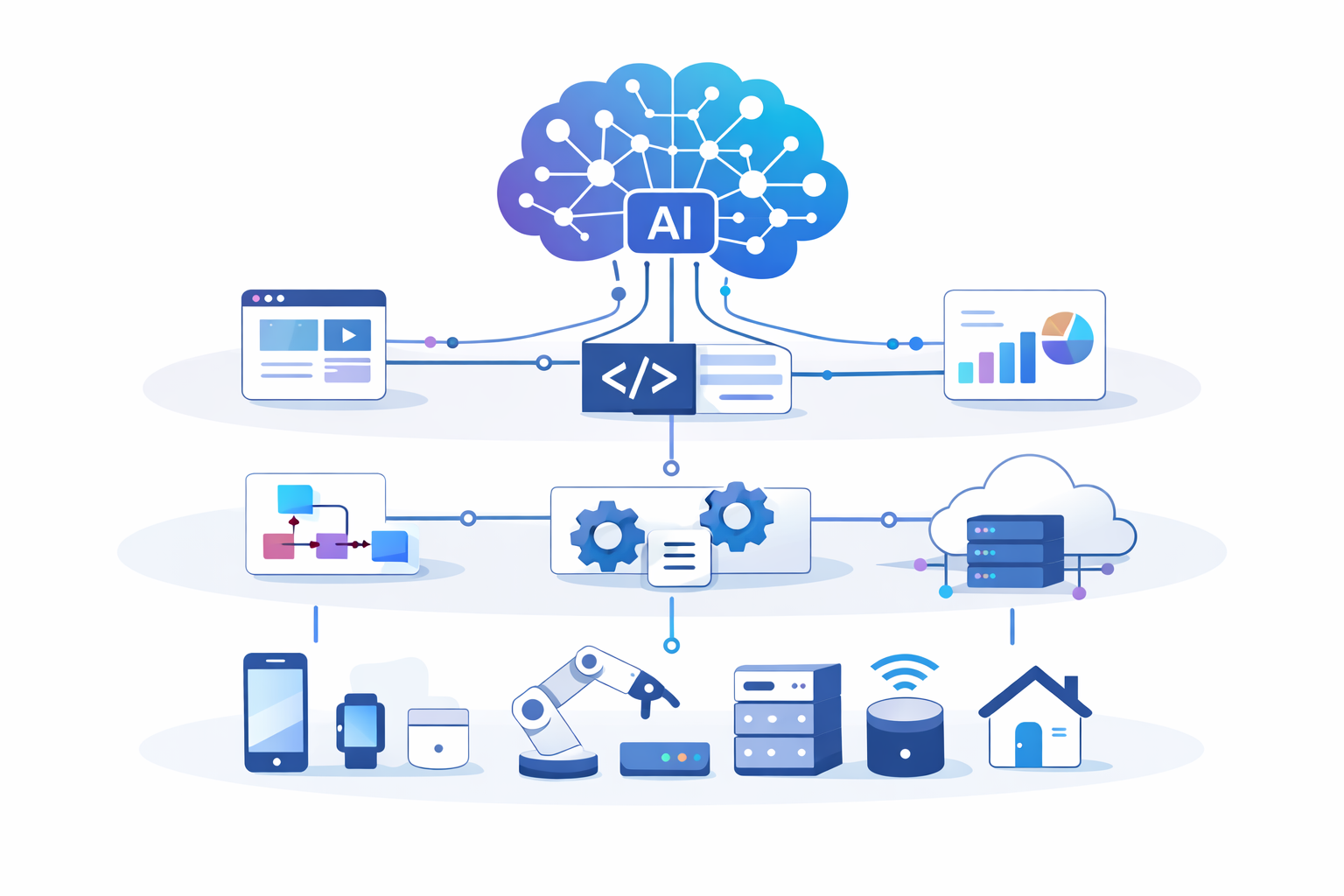
Think of it as the brain sitting above all your systems — observing, understanding, deciding, and acting. A traditional software system only does exactly what it is programmed to do. An AI control layer goes further. It:
- Observes live data from systems and users
- Understands the current situation in context
- Makes decisions based on defined goals
- Takes action automatically without waiting for human input
- Learns from outcomes to improve its future decisions
This makes systems smart, flexible, and self-improving over time — something traditional automation simply cannot achieve.
AI Control Layers Inside Applications
In software applications, an AI control layer changes how the app behaves and responds to each user. Rather than users manually adjusting settings or navigating complex menus, the AI handles that automatically based on usage patterns and goals.
Real-world examples include:
- A CRM platform that automatically ranks and prioritises sales leads based on likelihood to convert
- A coding or design tool that suggests the next best action based on what the user is trying to build
- A business application that rearranges its interface and features based on how individual users work
In each case, the AI manages the experience so users can focus on outcomes rather than configuration. This reduces friction and increases productivity significantly.
How AI Is Transforming Business Workflows
Business workflows are the structured steps organisations follow to complete tasks — from approving invoices to onboarding new employees. Traditional workflow automation follows fixed rules and breaks down when conditions change unexpectedly.
An AI control layer makes workflows smart and adaptive. Instead of rigid automation scripts, AI-powered workflows can:
- Detect delays, bottlenecks, or errors in real time
- Reassign tasks automatically to the right person or system
- Choose the most efficient path to complete a process
- Continuously improve workflow performance based on historical data
This helps businesses reduce manual effort, cut operational costs, and respond faster to changing conditions — all without requiring constant human oversight.
AI Controlling Physical Devices and IoT Systems
Beyond software, AI control layers are also being applied to physical devices, particularly in Internet of Things (IoT) environments and smart infrastructure.
AI can manage and control devices such as:
- Factory machines — adjusting speed, temperature, or output in real time
- Building energy systems — optimising heating, cooling, and lighting based on occupancy
- Traffic management systems — controlling signals in smart cities to reduce congestion
- Smart home devices — adapting routines based on resident habits and preferences
In these environments, AI makes real-time decisions without waiting for a human operator. This is especially valuable in situations where delays could be costly or dangerous.
AI Control Layers vs Traditional Automation: Key Differences
It is important to understand how AI control layers differ from the automation tools businesses have used for years.
| Feature | Traditional Automation | AI Control Layer |
|---|---|---|
| Decision-making | Fixed rules set by developers | Dynamic, goal-based decisions |
| Adaptability | Requires manual updates | Learns and adapts automatically |
| Complexity handling | Struggles with changing conditions | Works well in complex environments |
| Improvement over time | Static unless reprogrammed | Continuously improves from data |
| Human involvement | High — frequent intervention needed | Low — humans set goals, AI executes |
Industries Already Using AI Control Layers
AI control layers are not a future concept — they are already being deployed across multiple industries:
- Enterprise software: Business tools that adapt to user behaviour and automate repetitive decisions
- Healthcare: Patient workflow management, diagnostic support, and resource allocation
- Manufacturing: Smart factories where AI controls production lines and supply chains
- Financial services: Real-time fraud detection and automated risk assessment
- Smart cities: AI-managed infrastructure including traffic, utilities, and public services
Adoption is growing rapidly as organisations realise the competitive advantage of systems that manage themselves intelligently.
What the Future Looks Like
Looking ahead, AI control layers are expected to become even more capable. They will function like AI operating systems — running autonomous AI agents that manage entire digital ecosystems on behalf of businesses and individuals.
Rather than instructing software step by step, humans will simply define goals, and the AI control layer will figure out the best way to achieve them. This represents a fundamental change in how we interact with technology.
As these systems mature, the focus will shift from building software that does tasks to building AI layers that pursue outcomes — making organisations faster, smarter, and more resilient.
For businesses and developers, embracing AI as a control layer means less manual work, better decisions driven by real data, and systems that grow more effective over time. The organisations that adopt this approach early are likely to hold a significant advantage in the years ahead.