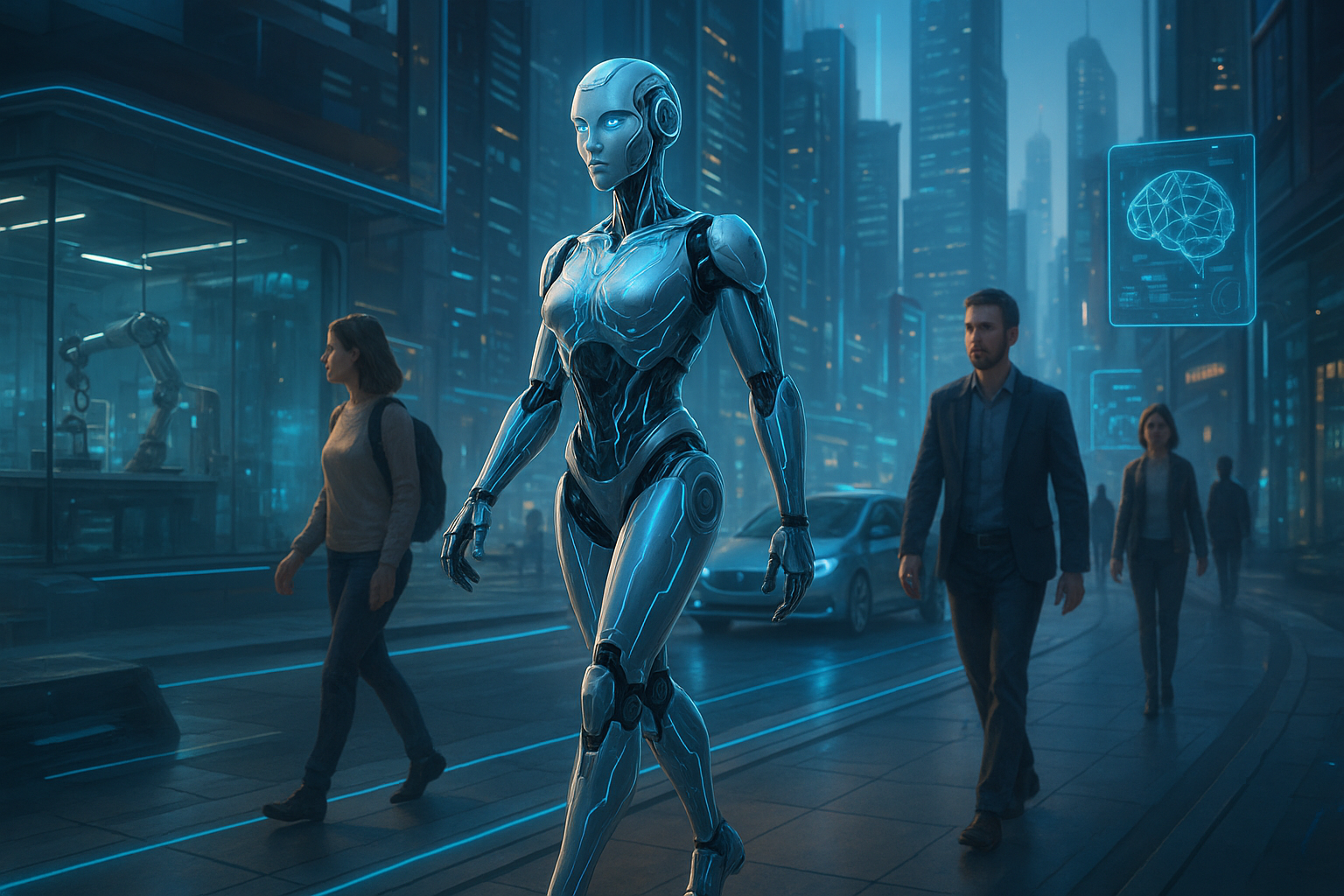
Artificial intelligence has moved well beyond chatbots and recommendation engines. The next major shift in AI is called Embodied AI — a form of intelligence that does not just process data but physically senses, moves, and interacts with the real world. From warehouse robots to self-driving cars, embodied AI is quietly reshaping how humans and machines work together.
What Is Embodied AI?
Embodied AI refers to artificial intelligence that exists inside a physical body — giving it the ability to perceive its surroundings, take actions, and learn from real-world experiences. Unlike traditional AI systems that operate purely in digital environments, embodied AI combines three core capabilities:
- Sensing: Gathering input through sight, sound, and touch using cameras, microphones, and physical sensors.
- Acting: Moving and interacting with the physical world through robotic limbs, wheels, or other mechanisms.
- Learning: Improving over time using machine learning and reinforcement learning based on real experiences.
In simple terms, it is AI that does not just think — it also does.
Key Features That Make Embodied AI Different
Several characteristics set embodied AI apart from conventional software-based AI systems:
- Real-World Interaction: A warehouse robot that picks up boxes, reads barcodes, and places items in the correct location is a clear example. It works with physical objects in real environments, not simulated ones.
- Learning by Doing: Instead of relying only on pre-loaded data, embodied AI improves through hands-on practice. A robot learning to walk, for instance, tries different movements repeatedly until it finds what works.
- Multi-Modal Intelligence: These systems process multiple types of input simultaneously. A healthcare robot can listen to a patient’s request, visually identify the correct medicine, and physically hand it over — all at once.
- Adaptability: Embodied AI responds to unexpected changes in its environment. A self-driving car, for example, adjusts its path instantly when another vehicle cuts in front of it.
Real-World Applications Across Industries
Embodied AI is already being deployed across several sectors. Here is a look at where it is making the biggest impact:
| Industry | Application | Example |
|---|---|---|
| Transport | Autonomous Vehicles | Self-driving cars using sensors and AI algorithms |
| Healthcare | Medical and Care Robots | Surgical robots and elderly care assistants |
| Home | Smart Home Devices | Robotic vacuum cleaners, AI kitchen assistants |
| Manufacturing | Factory and Warehouse Robots | Amazon and Tesla robots for packaging and assembly |
| Education | Interactive Learning | Research lab simulations and classroom robots |
Why Embodied AI Is Gaining Momentum in 2025
Several forces are driving the rapid growth of embodied AI right now:
- Human-Like Interaction: People respond more naturally to AI that can physically act and respond, rather than one that only generates text or audio.
- Industry Investment: Companies like Tesla with its Optimus humanoid robot and Boston Dynamics are pushing robotics into practical, everyday use cases at scale.
- Cross-Industry Demand: From logistics to elder care, there is growing demand for machines that can handle physical tasks reliably.
- Convergence of Technologies: The combination of AI, the Internet of Things (IoT), and advanced robotics is producing machines that are smarter and more capable than ever before.
Challenges Holding Embodied AI Back
Despite its promise, embodied AI still faces significant obstacles before it becomes truly mainstream:
- High Development Costs: Building robots with advanced AI capabilities requires substantial investment in hardware, software, and testing.
- Ethical and Social Concerns: Questions around job displacement and personal privacy need thoughtful policy responses from governments and companies alike.
- Technical Complexity: Training AI to handle unpredictable real-world situations is far harder than running controlled simulations in a lab.
- Safety Requirements: Any robot operating near humans must meet strict safety standards to prevent accidents or harm in everyday environments.
What the Future Looks Like by 2030
Researchers and industry leaders expect embodied AI to become a regular part of daily life within the next few years. By 2030, it is likely to appear widely across:
- Homes, in the form of household helpers and personal assistants
- Factories and warehouses running on near-full automation
- Hospitals and care homes supporting elderly patients and assisting in surgeries
- Roads and skies through self-driving vehicles and delivery drones
The long-term vision is to build AI systems that fit naturally into human routines — machines that can think, sense, and act as reliable companions rather than just tools.
Embodied AI represents a genuine shift in how we think about artificial intelligence. It is no longer just about processing power or data analysis. It is about building machines that can exist in and navigate the same physical world that humans do — and that changes everything about how AI will affect our lives going forward.
Frequently Asked Questions
Embodied AI is artificial intelligence that exists inside a physical body, such as a robot or self-driving car. Unlike regular AI that only processes data on a computer, embodied AI can sense its environment, move around, and learn from real-world experiences.
Common examples include self-driving cars that navigate roads using sensors and AI, warehouse robots used by companies like Amazon and Tesla, healthcare robots that assist in surgeries or help elderly patients, and smart home devices like robotic vacuum cleaners.
The main challenges include high development and manufacturing costs, ethical concerns around job displacement and privacy, the technical difficulty of training AI in unpredictable real-world settings, and the need to ensure robots can operate safely around humans.