Manufacturing is changing fast. A new kind of factory is emerging where no human worker sets foot on the production floor — ever. These are called dark factories, and they represent the most advanced form of industrial automation the world has seen. Powered by artificial intelligence, robotics, and smart sensors, dark factories operate around the clock without lights, air conditioning, or human presence.
What Is a Dark Factory?
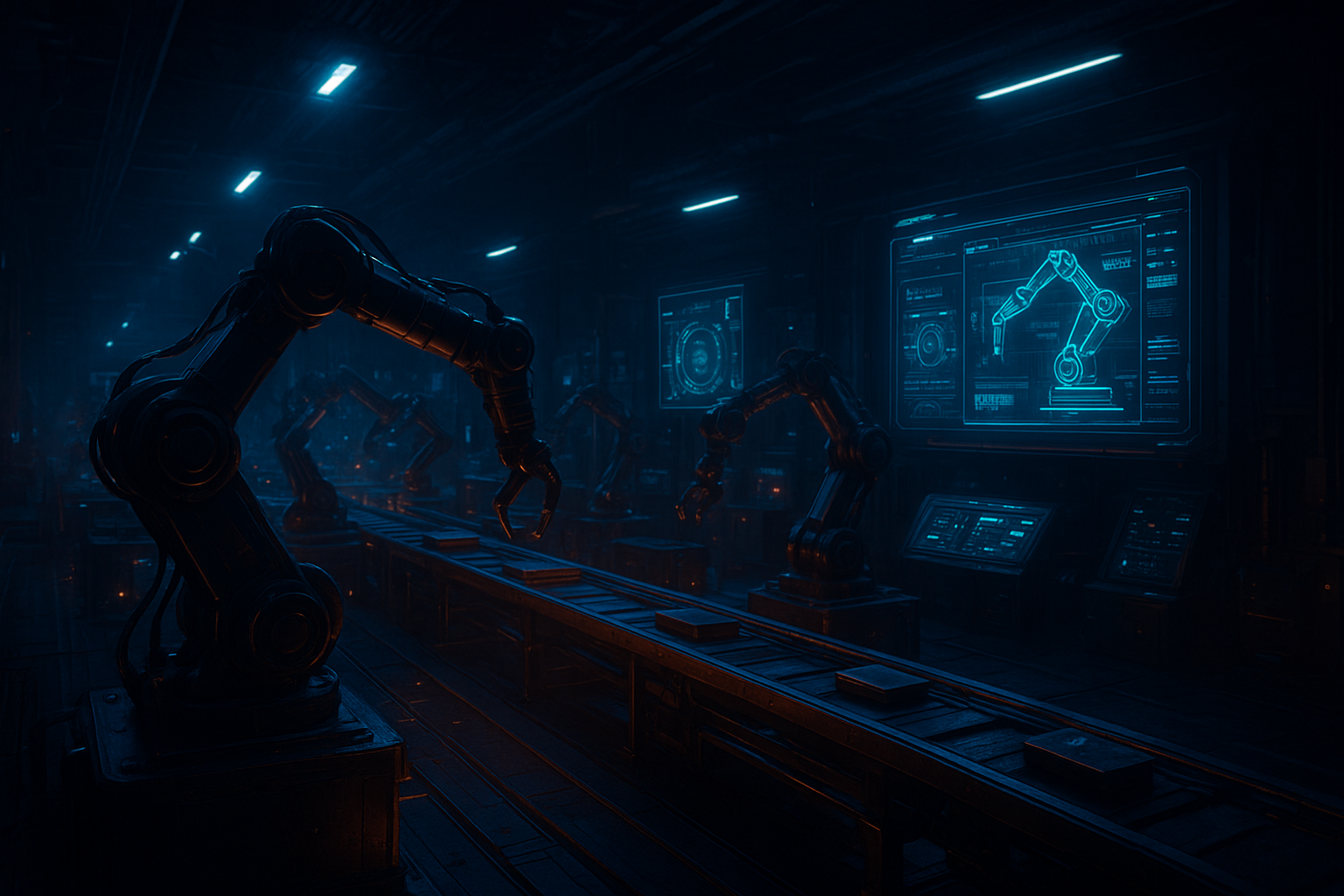
A dark factory is a fully automated manufacturing facility where robots, machines, and AI handle every aspect of production. There are no human workers on the shop floor. Since machines do not need light to function, these factories literally operate in the dark — which is exactly where the name comes from.
These facilities run 24 hours a day, seven days a week, without breaks or shift changes. There is no need for lighting, restrooms, safety gear for workers, or air conditioning. Only machines, sensors, and computer systems keep the operation running — silently and continuously.
How AI and Robots Work Together Inside Dark Factories
Artificial intelligence acts as the central brain of a dark factory. It controls how machines operate, adjusts production speed, identifies problems, and makes real-time decisions based on data from hundreds of sensors placed throughout the facility.
Robots serve as the primary workforce. They handle tasks such as:
- Assembling parts with high precision
- Welding, cutting, and shaping materials
- Packaging finished products
- Transporting goods across the factory floor using automated vehicles
These robots work faster and more accurately than humans. They do not tire, and they repeat the same tasks without errors. AI continuously monitors their performance and adjusts operations to maintain peak efficiency.
Quality control is handled by AI-powered cameras using computer vision technology. These cameras inspect every product in detail, detecting cracks, scratches, missing parts, or shape defects. Any faulty product is automatically removed from the production line before it reaches the next stage.
Predictive Maintenance, Digital Twins, and Smart Supply Chains
One of the most valuable features of dark factories is predictive maintenance. Sensors attached to machines constantly collect data on temperature, vibration, and operating speed. Machine learning algorithms analyze this data and predict when a machine is likely to fail — before it actually does. This allows companies to schedule repairs in advance, avoiding costly production stoppages.
Dark factories also use digital twins — virtual replicas of the physical factory created using AI. Engineers can test new machine settings, production layouts, or process changes on the digital model before applying them in the real factory. This reduces risk, saves money, and speeds up improvements.
The supply chain is also fully automated. AI systems automatically order raw materials, manage warehouse inventory, and coordinate deliveries using robots and autonomous vehicles. Production never stops due to material shortages because the system anticipates demand and acts ahead of time.
Benefits and Challenges of Dark Factories
Dark factories offer significant advantages for manufacturers, but they also come with real challenges that businesses must consider carefully.
| Benefits | Challenges |
|---|---|
| 24/7 production without breaks | Very high initial investment cost |
| Higher precision and consistency | Requires strong cybersecurity protection |
| Reduced human error | AI system failures can halt all production |
| Lower long-term labor costs | Job displacement concerns for factory workers |
| Workers kept away from hazardous environments | Complex setup and maintenance of systems |
Dark Factories vs Smart Factories: What Is the Difference?
Many people confuse dark factories with smart factories. While both use automation and AI, they are not the same.
- Smart factories have humans working alongside machines. Workers are still present on the floor, and facilities include lighting, restrooms, and worker safety infrastructure.
- Dark factories have zero human presence on the production floor. Everything is handled by machines and AI, and no human facilities are needed.
Smart factories represent a step toward full automation. Dark factories are the final destination — complete, human-free manufacturing.
Real-World Examples and the Future of Dark Factories
Several major companies across the world have already adopted dark factory systems. In Japan, certain manufacturing plants have operated for months without any human intervention on the floor. In Germany and the United States, electronics and automobile production facilities use extensive automation that closely mirrors the dark factory model.
Looking ahead, dark factories are expected to expand into industries such as automobile manufacturing, consumer electronics, medical equipment production, and aerospace. The growth of AI, robotics, 5G connectivity, and the Internet of Things is making fully automated factories more accessible and practical for businesses of all sizes.
As for jobs, dark factories will reduce demand for manual labor but will also create new roles. AI engineers, robotics technicians, data analysts, and automation specialists will be in high demand. The nature of work will shift from physical labor to technology management and system oversight.
In 2025, dark factories are gaining momentum because businesses face rising labor costs, intense global competition, and pressure to improve product quality. AI-driven automation gives companies a way to produce more, spend less, and maintain consistent quality — all at the same time.
Dark factories are not a distant concept. They are already here, and their influence on global manufacturing will only grow stronger in the years ahead. For industries ready to invest in the technology, the long-term rewards in efficiency, safety, and competitiveness are substantial.
Frequently Asked Questions
A dark factory is a fully automated manufacturing facility that operates without any human workers on the production floor. It is called dark because machines and robots do not need light to function, so the factory runs entirely without lighting.
AI acts as the central control system in a dark factory. It monitors data from sensors, manages robot operations, performs quality checks using computer vision, predicts machine failures through machine learning, and automates the entire supply chain without human input.
Dark factories will reduce the need for manual labor on the factory floor, but they will also create new jobs in areas like AI engineering, robotics maintenance, data analysis, and automation management. The workforce will shift toward technology-focused roles rather than physical production tasks.