If you are new to cryptocurrency trading or looking to switch platforms, one of the first decisions you will face is whether to use a centralized exchange (CEX) or a decentralized exchange (DEX). Both types let you buy, sell, and trade digital assets, but they work in very different ways and serve different kinds of users. Understanding the key differences can save you time, money, and potential security risks.
What Is a Centralized Exchange (CEX)?
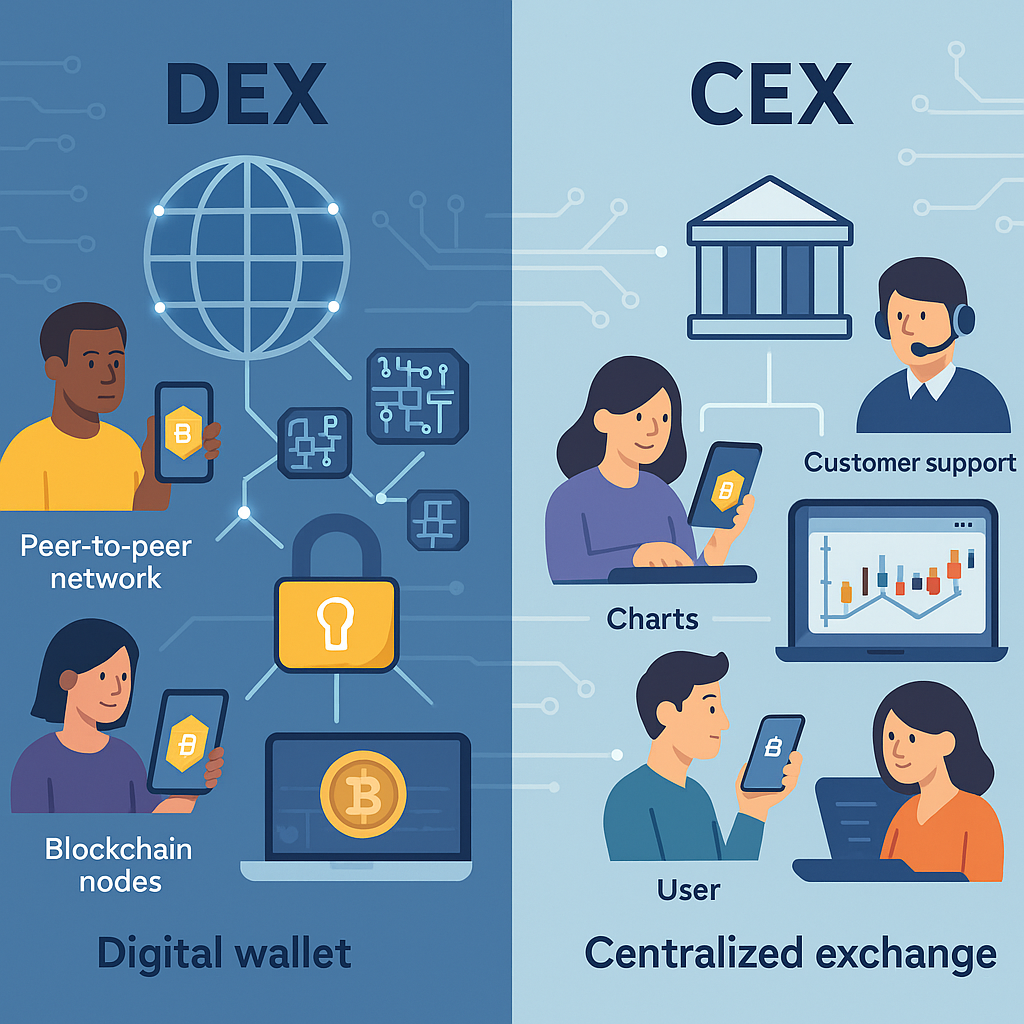
A centralized exchange is a company-run platform that manages all trading activity and user accounts on your behalf. Think of it as a digital brokerage or a traditional bank for crypto. You create an account, deposit funds, and the platform handles your trades behind the scenes.
Some of the most widely used centralized exchanges include Binance, Coinbase, and Kraken. These platforms are popular because they are easy to navigate and offer strong customer support.
Key benefits of using a CEX:
- Beginner-friendly interface: Simple layouts make it easy for new users to get started without technical knowledge.
- Fast trade execution: High trading volumes mean buyers and sellers are matched quickly.
- Customer support: You can reach a help team if something goes wrong with your account or transaction.
- Fiat currency support: Most CEXs allow you to deposit and withdraw using Indian Rupees, US Dollars, or other traditional currencies.
Downsides of centralized exchanges:
- Identity verification required: Most CEXs require KYC (Know Your Customer) checks, meaning you must submit personal documents.
- You do not control your funds: The exchange holds your crypto on your behalf, which means you depend on their security.
- Hack risk: Because all user funds are stored in one place, CEXs are attractive targets for cybercriminals.
What Is a Decentralized Exchange (DEX)?
A decentralized exchange operates without any central authority or company managing it. Instead, it runs on smart contracts — self-executing programs built on a blockchain. You trade directly from your own crypto wallet, and no third party holds your funds at any point.
Popular DEX platforms include Uniswap and PancakeSwap, both of which run on blockchain networks and allow peer-to-peer trading without sign-up requirements.
Key benefits of using a DEX:
- Greater privacy: No registration or identity verification is needed to start trading.
- Full asset control: Your crypto stays in your own wallet throughout every transaction.
- Reduced hack risk: There is no central storage point for attackers to target.
- Access to newer tokens: DEXs often list new or niche tokens before they appear on centralized platforms.
Drawbacks of decentralized exchanges:
- Steeper learning curve: Setting up a crypto wallet and navigating DEX interfaces can confuse first-time users.
- Slower transactions: Lower liquidity on some DEXs can slow down trade execution.
- No customer support: If something goes wrong, there is no helpline or support team to contact.
- Gas fees: Blockchain transaction fees, known as gas fees, can sometimes be high depending on network activity.
CEX vs DEX: Side-by-Side Comparison
| Feature | Centralized Exchange (CEX) | Decentralized Exchange (DEX) |
|---|---|---|
| Fund Control | Platform holds your funds | You hold your own funds |
| Privacy | Requires identity verification (KYC) | No ID or sign-up required |
| Ease of Use | Very user-friendly | Can be complex for beginners |
| Security | Vulnerable to centralised hacks | Safer due to decentralisation |
| Transaction Speed | Fast due to high liquidity | May be slower with low liquidity |
| Customer Support | Available via help teams | Usually not available |
| Fiat Support | Yes, supports INR, USD, etc. | Typically crypto-to-crypto only |
Which Type of Exchange Should You Choose?
The right choice depends entirely on your experience level, priorities, and how you plan to trade.
- Choose a CEX like Binance or Coinbase if you are just starting out, want a simple experience, prefer trading with fiat currency, or need customer support when issues arise.
- Choose a DEX like Uniswap or PancakeSwap if you are an experienced trader, value privacy, want full control over your funds, or want access to newer tokens not yet listed on major platforms.
Many experienced crypto traders actually use both types depending on the situation. A CEX may be used for buying crypto with fiat money, while a DEX is used for swapping tokens or accessing DeFi (decentralised finance) opportunities.
To conclude, neither CEX nor DEX is universally better. Your trading goals, technical comfort level, and security preferences should guide your decision. Start with a CEX if you are new to crypto, and explore DEX platforms once you are comfortable managing your own wallet and understanding blockchain transactions.
Frequently Asked Questions
A centralized exchange (CEX) is run by a company that holds your funds and manages trades on your behalf, like Binance or Coinbase. A decentralized exchange (DEX) uses smart contracts on a blockchain so you trade directly from your own wallet without any middleman, like Uniswap or PancakeSwap.
DEXs are generally considered safer from large-scale hacks because there is no central storage of user funds. However, CEXs often have stronger security teams and insurance. The risk on a DEX shifts to the user — if you lose access to your wallet, your funds cannot be recovered.
DEXs can be challenging for beginners because they require setting up and managing a crypto wallet, understanding gas fees, and navigating less intuitive interfaces. Most beginners are better off starting with a centralized exchange like Coinbase or Kraken before moving to a DEX.