
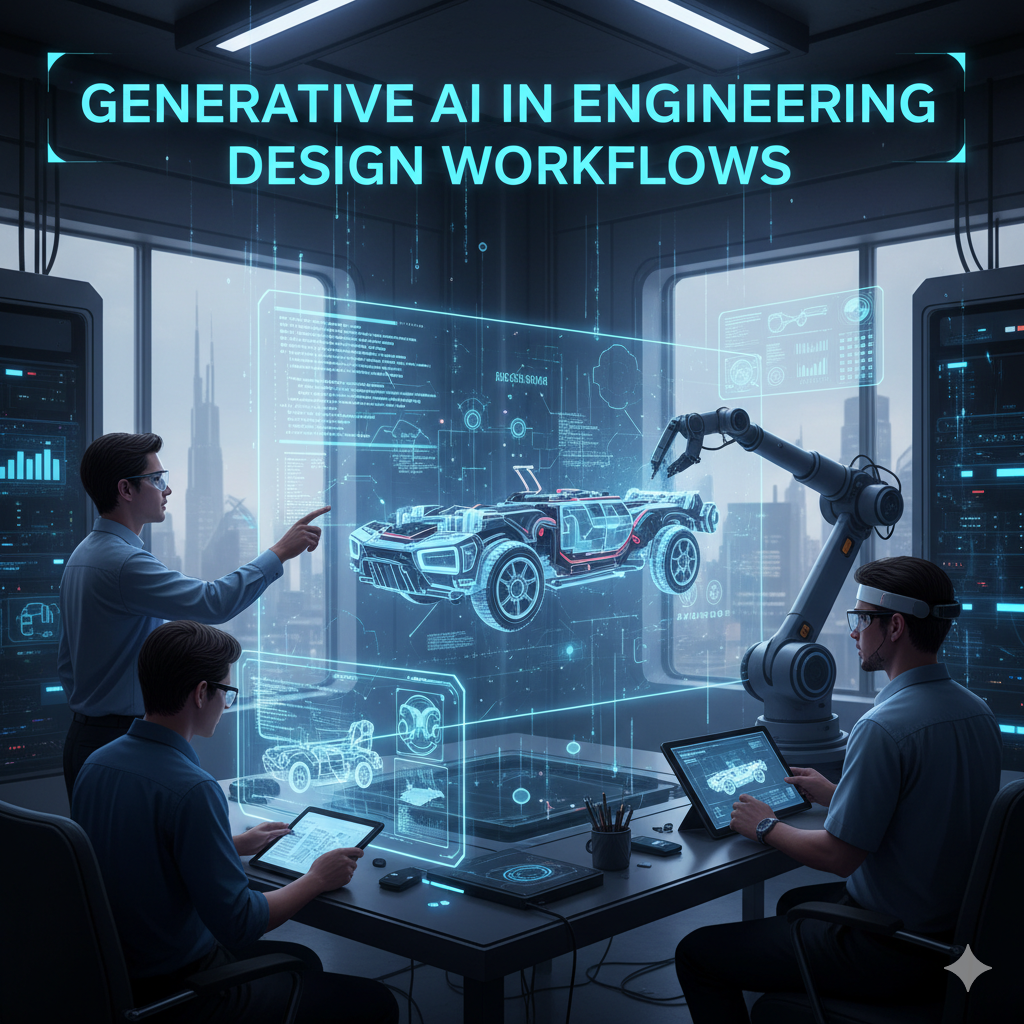
Engineering has always been about solving complex problems with precision and creativity. Now, generative artificial intelligence is changing how engineers approach design — making the process faster, smarter, and more efficient than ever before. From aerospace to civil construction, AI-powered design tools are reshaping entire industries.
What Is Generative AI in Engineering?
Generative AI is a type of artificial intelligence that can produce new outputs — including text, images, 3D models, and product designs — based on a set of inputs and goals defined by the user.
In engineering, this means a designer can feed the system parameters such as material type, weight limits, cost targets, and performance requirements. The AI then generates multiple design options that meet those criteria — automatically.
- A car designer can use AI to create lighter yet stronger vehicle components.
- A civil engineer can generate structural designs that use fewer materials without compromising safety.
- A product designer can test hundreds of model variations in minutes instead of days.
This shift from manual iteration to AI-assisted generation is one of the biggest changes in modern engineering practice.
Key Ways Generative AI Helps Engineers Work Better
The benefits of integrating generative AI into engineering design workflows are practical and measurable. Here is how it directly supports engineering teams:
- Faster Design Process: Engineers set design goals, and the AI produces dozens of viable solutions quickly. Work that once took days can now be completed in hours.
- Smarter Optimization: AI tools run digital simulations on all generated designs, testing strength, performance, and cost before anything is physically built.
- Fewer Mistakes: Early-stage simulation helps identify potential design flaws before they become expensive real-world problems.
- Eco-Friendly Design: AI helps engineers select efficient shapes and materials, reducing waste and supporting sustainability goals.
Real-World Applications Across Industries
Generative AI is not a theoretical concept — it is already being used by leading companies across multiple engineering sectors.
- Aerospace: Companies like Airbus use AI-generated designs to develop lighter aircraft components, which directly reduces fuel consumption and operating costs.
- Automotive: Brands like BMW and General Motors apply AI-based design tools to create stronger, lighter, and more cost-effective car parts.
- Civil Engineering: Architects and structural engineers use AI to design buildings that are both visually striking and structurally sound.
- Electronics: AI assists in designing smaller, more efficient circuit boards that pack more performance into less space.
Why Engineering Teams Are Adopting Generative AI
The adoption of generative AI in engineering is growing because the advantages are clear and quantifiable. The table below summarises the core benefits:
| Benefit | How It Helps Engineering Teams |
|---|---|
| Speed | Can cut design time by up to 70% |
| Creativity | Generates unique design ideas that humans might overlook |
| Lower Cost | Reduces the need for multiple physical prototypes |
| Sustainability | Uses materials more efficiently, reducing waste |
| Better Decisions | Helps engineers identify and select the most effective design |
What the Future Holds for Generative AI in Engineering
The current applications of generative AI in engineering are just the beginning. As the technology matures, it is expected to work alongside several other emerging technologies:
- Digital Twins: Virtual replicas of physical machines and structures that allow engineers to test and refine designs in real time without physical risk.
- Smart Robots: AI-powered machines that can both design and build components autonomously, reducing human error on the factory floor.
- Cloud Collaboration: Teams spread across different locations can work together using shared AI design tools, making global engineering projects more efficient.
As these technologies develop together, the engineering profession will produce solutions that are faster to design, cheaper to build, and better for the environment.
Generative AI is not about replacing engineers — it is about giving them a more powerful set of tools. Instead of spending weeks refining a single design, engineers can now explore hundreds of options in minutes and focus their expertise on making the best choice. The combination of human judgment and AI capability is setting a new standard for what engineering can achieve.