Machine breakdowns cost businesses thousands of rupees every hour in lost production, emergency repairs, and idle workers. Predictive maintenance, especially when paired with automation, helps industries stay ahead of these costly failures by catching problems before they spiral out of control.
What Is Predictive Maintenance?
Predictive maintenance is a proactive approach to keeping machines in good working condition. Instead of waiting for equipment to fail or following a fixed schedule of check-ups, this method uses sensors and real-time data to monitor machine health continuously.
Think of it like visiting a doctor for a health check-up before you fall sick — not after you are already in the hospital. Sensors track parameters like temperature, vibration, and noise levels. When readings go beyond normal ranges, the system flags a potential issue so technicians can act early.
This approach stands in sharp contrast to traditional reactive maintenance, where teams only respond after a breakdown has already caused damage and downtime.
How Automation Makes Predictive Maintenance More Powerful
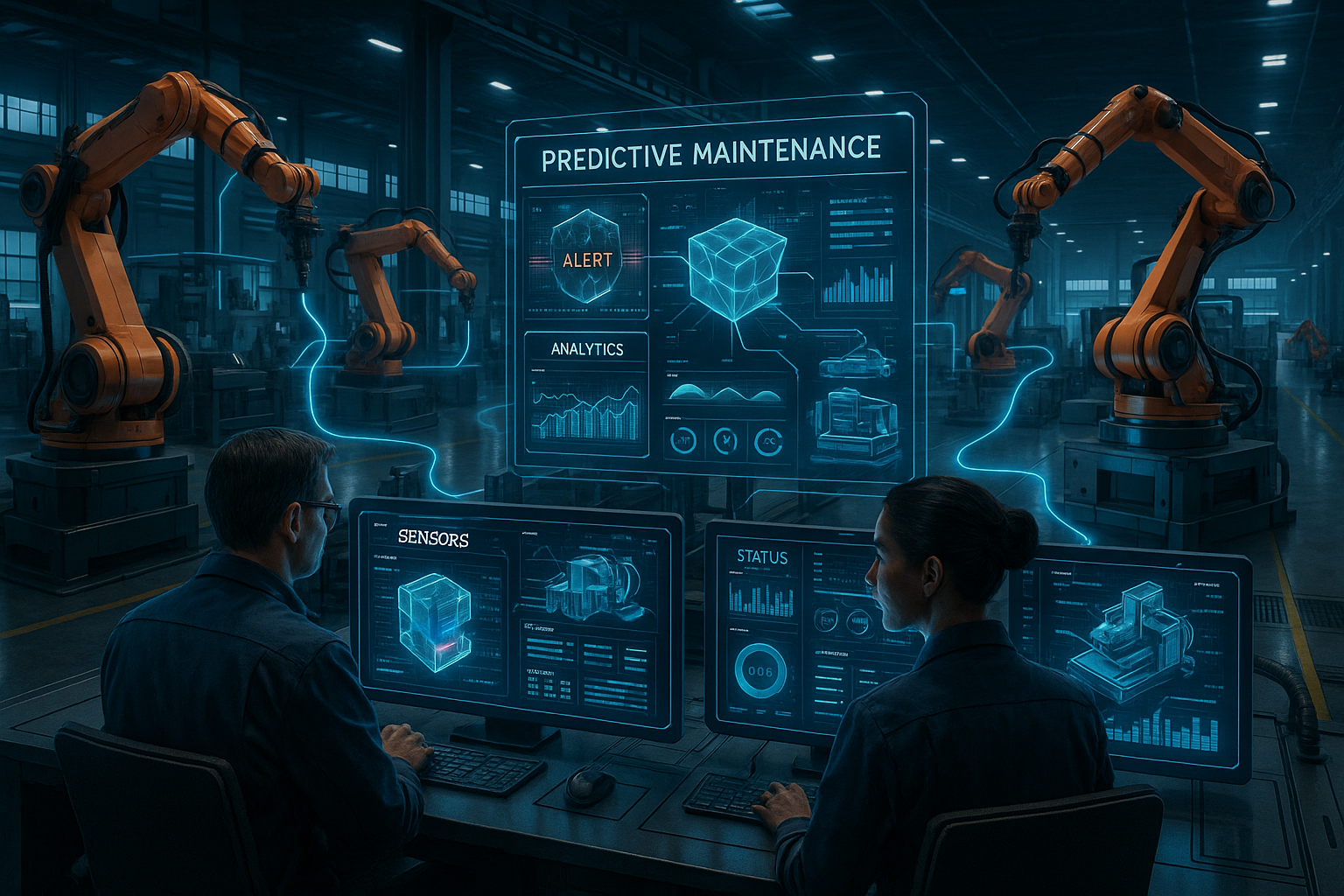
Automation takes predictive maintenance to a higher level by removing the need for constant human monitoring. Here is how the process typically works:
- Sensors collect real-time data from machines, including temperature readings, vibration patterns, and unusual sounds.
- Smart software analyses this data continuously and identifies abnormal patterns that could signal an upcoming failure.
- Automated alerts notify maintenance teams immediately when a potential problem is detected.
- Some advanced systems can automatically schedule repair appointments or safely shut down machines to prevent further damage.
This entire process happens without anyone watching screens around the clock. The result is faster response times, fewer human errors, and more efficient use of maintenance staff.
Real-World Example: Stopping a Factory Shutdown Before It Happens
Consider a manufacturing plant with dozens of machines running simultaneously. One motor begins to overheat gradually. Without a monitoring system, no one notices until the motor burns out, the production line stops, and the factory loses hours of output.
With automated predictive maintenance in place, the situation plays out very differently:
- A temperature sensor detects the rising heat in the motor.
- The system sends an instant alert to the maintenance team.
- A technician inspects and repairs the motor during a scheduled break.
- Production continues without interruption.
The outcome is clear — no unplanned downtime, no emergency repair costs, and no delays in delivery schedules.
Key Benefits of Combining Predictive Maintenance with Automation
Businesses across sectors are adopting this approach because the advantages are practical and measurable:
- Higher machine uptime: Equipment runs longer without unexpected failures, keeping production targets on track.
- Lower maintenance costs: Teams fix only what needs fixing, avoiding unnecessary routine check-ups and expensive emergency repairs.
- Longer equipment life: Timely care prevents wear and tear from escalating, extending the working life of costly machinery.
- Reduced manual workload: Automated monitoring frees up maintenance staff to focus on skilled tasks rather than routine checks.
- Better planning: Real-time data helps managers schedule repairs, budget for replacements, and plan upgrades with greater accuracy.
| Maintenance Type | When Action Is Taken | Cost Impact |
|---|---|---|
| Reactive Maintenance | After breakdown | High — emergency repairs and downtime |
| Preventive Maintenance | On a fixed schedule | Medium — some unnecessary servicing |
| Predictive Maintenance | Based on real-time data | Low — targeted and timely repairs only |
Industries Already Using Predictive Maintenance
This technology is not limited to large factories. It is being used across a wide range of sectors:
- Manufacturing: Keeps production lines running smoothly by monitoring motors, conveyor belts, and assembly equipment.
- Transportation: Tracks engine health and mechanical systems in trucks, aircraft, and trains to prevent mid-journey failures.
- Energy: Monitors turbines, wind mills, and electrical grids to avoid costly outages.
- Buildings and Facilities: Manages HVAC systems, elevators, and other infrastructure to reduce service disruptions.
- Healthcare: Ensures critical medical devices like MRI machines and ventilators remain fully operational at all times.
Challenges to Consider Before Adopting This Technology
While the benefits are significant, businesses should be aware of a few practical challenges:
- Complex initial setup: Installing the right sensors, integrating software, and training staff requires careful planning and technical expertise.
- Higher upfront investment: The initial cost of sensors, software licences, and infrastructure can be substantial, though long-term savings typically outweigh this.
- Cybersecurity risks: Since these systems are often connected to the internet, they need strong security measures to protect against data breaches and cyberattacks.
Businesses that plan carefully and invest in the right infrastructure tend to recover their initial costs within a few years through reduced downtime and repair expenses.
Looking ahead, the field is moving towards systems that can identify and fix minor issues on their own, send repair updates through smartphone apps, and even deploy robots for physical maintenance tasks. The goal is equipment that largely manages itself, with humans stepping in only for complex decisions.
Predictive maintenance combined with automation is no longer a luxury reserved for large corporations. As sensor costs fall and software becomes more accessible, businesses of all sizes are finding it a practical and profitable investment in operational reliability.
Frequently Asked Questions
Predictive maintenance is a proactive approach where sensors continuously monitor machine health by tracking temperature, vibration, and other parameters. When readings go beyond normal levels, the system alerts maintenance teams so they can fix the issue before a breakdown occurs.
Automation removes the need for constant human monitoring. Smart software analyses sensor data in real time, sends automated alerts to maintenance teams, and in some cases can schedule repairs or safely shut down machines automatically to prevent further damage.
Predictive maintenance is widely used in manufacturing, transportation, energy, building management, and healthcare. Any industry that relies on machinery or critical equipment can benefit from this approach to reduce downtime and maintenance costs.