Software development has changed significantly over the past decade. With apps now expected to run on phones, desktops, smartwatches, and more, developers need a smarter way to build. The API-first approach has become one of the most reliable methods to handle this challenge — and companies like Stripe, Spotify, and Twitter have already proven its value.
What Is API-First Development?
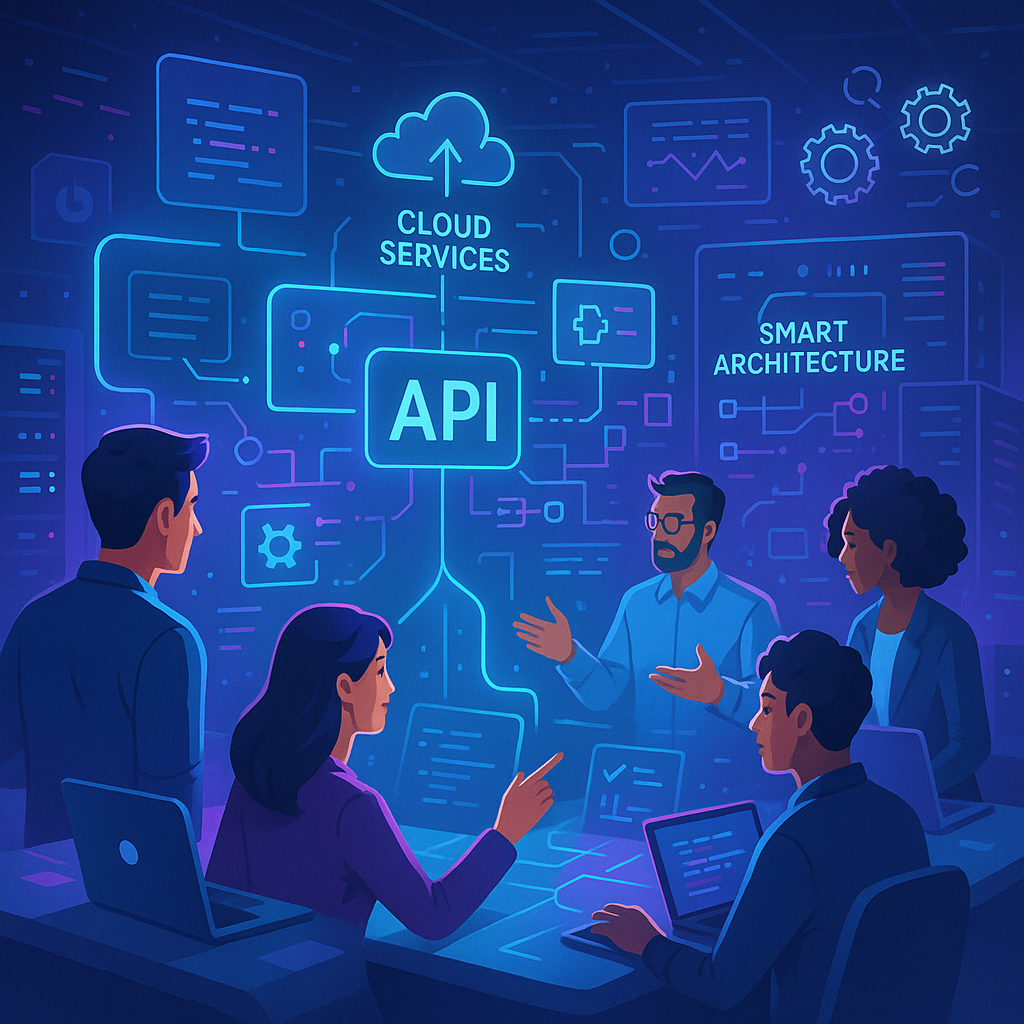
API-first development means designing the Application Programming Interface (API) before writing any front-end or back-end code. An API acts as a bridge between different parts of a system, allowing apps and services to communicate with each other.
In a traditional approach, developers often build the application first and then create an API as an afterthought. The API-first method flips this process. The team agrees on the API structure, inputs, and outputs at the very beginning — before any interface or server logic is written.
This shift in thinking leads to cleaner architecture, better collaboration, and faster delivery across multiple platforms.
Why Developers and Teams Choose API-First
There are clear, practical reasons why the API-first approach has gained wide adoption in the software industry:
- Parallel Development: Backend and frontend teams can work at the same time. The frontend team uses a mock API while the backend team builds the real one — no waiting around.
- Platform Flexibility: A single stable API can power a web app, a mobile app, a smartwatch interface, and even third-party integrations — all from the same source.
- Consistency Across Products: Every platform consumes the same API, which means consistent data and behavior across all user touchpoints.
- Faster and Easier Testing: Since the API is defined early, automated tests can be written and run before the UI is even built.
- Scalability: As the product grows, new features or new app types can be added without breaking existing functionality.
Step-by-Step: How to Build an API-First Application
If you are planning to adopt this approach, here is a practical roadmap to follow:
- Step 1 — Design the API First: Map out all the endpoints, inputs, and expected outputs your application will need. Tools like Swagger and OpenAPI are widely used for this purpose. A well-documented API design becomes the single source of truth for the entire team.
- Step 2 — Choose the Right Tools: Use platforms like Postman to test and validate your API design early. Catching mistakes at the design stage is far cheaper than fixing them after code is written.
- Step 3 — Version Your API: Every major change to the API should come with a new version number — for example, moving from v1 to v2. This ensures older apps continue to work without disruption while newer apps can adopt updated features.
- Step 4 — Test Thoroughly Before Building the UI: Write automated tests and run them regularly. Confirm the API behaves exactly as designed before any front-end work begins.
- Step 5 — Build the Front-End: Once the API is stable and tested, develop the user interface — whether that is a website, a mobile app, or a desktop application. The front-end simply consumes the API rather than being tightly coupled to the backend logic.
Real-World Companies Using API-First Design
Some of the most successful technology companies in the world have built their products around an API-first philosophy:
| Company | How They Use API-First |
|---|---|
| Twitter and Facebook | Provide public APIs so third-party apps can access and display their data |
| Stripe | Built its entire payment business on a developer-friendly API |
| Twilio | Offers communication APIs for SMS, voice, and video used by thousands of apps |
| Spotify | Created APIs that allow developers to build music control tools and integrations |
These companies did not just use APIs as a technical detail — they made APIs the core of their product strategy. This allowed them to grow their ecosystems rapidly by letting other developers build on top of their platforms.
Is API-First Right for Your Project?
The API-first approach works best when:
- Your app needs to run on multiple platforms — web, mobile, and beyond.
- You have separate frontend and backend teams working simultaneously.
- You plan to offer your service to third-party developers or partners.
- Long-term scalability and maintainability are priorities.
For smaller, single-platform projects with tight deadlines, a simpler approach may be more practical. But for any product expected to grow, serve multiple clients, or integrate with external services, API-first design is a strong foundation to build on.
In summary, API-first development is not just a technical preference — it is a strategic choice that leads to better-built software, faster team collaboration, and products that can grow without constant rewrites. As more businesses move toward multi-platform experiences, this approach is becoming the standard rather than the exception.
Frequently Asked Questions
API-first development is a software design approach where the API is designed and finalized before any front-end or back-end code is written. This ensures all parts of the application are built around a consistent, well-defined interface from the start.
Popular tools include Swagger and OpenAPI for designing and documenting APIs, and Postman for testing and validating API behavior during the design phase. These tools help teams catch errors early and maintain clear API documentation.
Several major technology companies follow an API-first approach, including Stripe and Twilio, which built their entire businesses on developer-friendly APIs, as well as Spotify, Twitter, and Facebook, which offer public APIs for third-party developers to build on.