
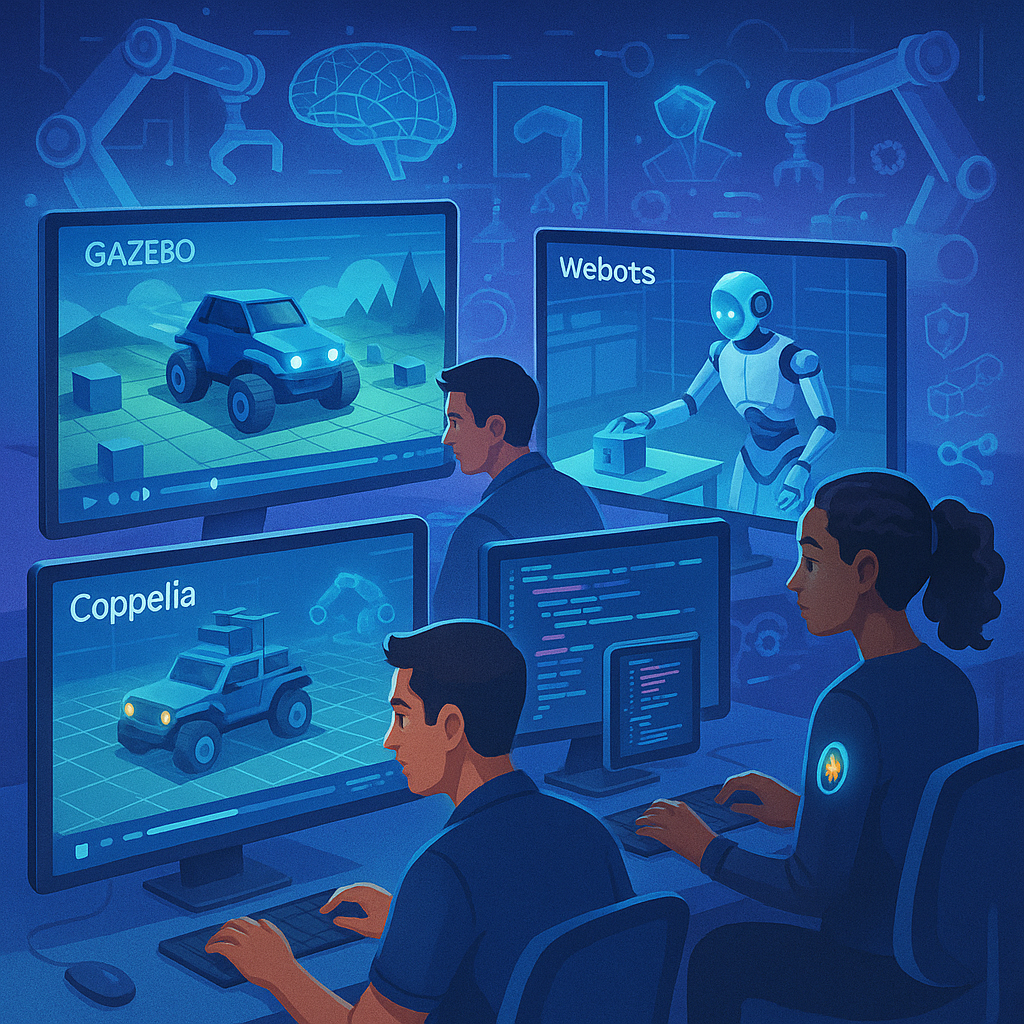
Testing robots in the real world is expensive, time-consuming, and sometimes dangerous. That is why engineers and researchers rely on robotics simulators — software tools that create virtual environments to test and refine robots before a single physical component is built. From well-established platforms like Gazebo and Webots to newer options like NVIDIA Isaac Sim, here is a complete look at the best robotics simulation tools available today.
What Does a Robotics Simulator Actually Do?
A robotics simulator creates a digital replica of the physical world where robots can be designed, tested, and evaluated. Instead of building expensive prototypes and risking hardware damage, engineers use these tools to:
- Design and test robot models in a virtual 3D environment
- Run hundreds of test scenarios without touching real hardware
- Adjust robot settings and observe performance under different conditions
- Identify design flaws early and fix them before production
The result is faster development cycles, lower costs, and safer testing — especially for robots that operate in hazardous environments.
Gazebo: The Go-To Simulator for Professional Developers
Gazebo is one of the most widely used robotics simulators in both research and industry. It has earned its reputation through years of active development and a strong open-source community.
- Realistic 3D environments: Gazebo builds detailed virtual worlds that closely mimic real-world physics.
- ROS integration: It works directly with the Robot Operating System (ROS), the standard middleware used by most professional robotics teams.
- Accurate physics engine: Its physics simulation delivers precise results, making test outcomes more reliable.
- Large community support: A vast user base means plenty of tutorials, plugins, and forums to help developers at every level.
Gazebo is best suited for developers working on complex, research-grade robots who need detailed and accurate simulations. It does have a steeper learning curve, but the depth it offers makes it worth the effort for serious projects.
Webots: Ideal for Students, Researchers, and Rapid Prototyping
Webots, developed by Cyberbotics and now open-source, has become a favourite among beginners and experienced developers alike. Its approachable design makes it easy to get started without sacrificing capability.
- Drag-and-drop interface: Build virtual environments quickly without writing complex setup code.
- Pre-built robot models: A library of ready-to-use robot models lets you start testing immediately.
- Multi-language support: Write robot controllers in Python, C++, Java, and other languages.
- Realistic sensors and motors: Simulated components behave like their real-world counterparts, giving accurate test results.
Webots is particularly popular in universities and research labs. It strikes a good balance between ease of use and technical depth, making it a strong choice for both learning and professional prototyping.
Other Robotics Simulators Worth Exploring
Beyond Gazebo and Webots, several other platforms offer strong capabilities depending on your project requirements:
| Simulator | Best For | Key Feature |
|---|---|---|
| CoppeliaSim (V-REP) | Custom and flexible simulations | Highly customizable with scripting support |
| NVIDIA Isaac Sim | AI-powered and autonomous robots | Photorealistic graphics and AI training support |
| Unity with ROS Connector | Visual fidelity and interactive testing | Game-quality visuals with ROS compatibility |
CoppeliaSim is a versatile platform that supports a wide range of simulation types and is popular in academic research. NVIDIA Isaac Sim is built for teams working on AI-driven robots and autonomous systems, offering photorealistic rendering powered by NVIDIA’s Omniverse platform. Unity with ROS connector appeals to developers who want high-quality visual environments combined with real robotics middleware.
Why Robotics Simulators Matter for Modern Development
The benefits of using simulators go well beyond just saving money on hardware. Here is why they have become essential in modern robotics development:
- Cost savings: Avoid expensive early-stage hardware builds by testing designs virtually first.
- Speed: Run hundreds of test scenarios in the time it would take to set up a single physical test.
- Safety: Test dangerous manoeuvres or failure scenarios in a virtual space without any real-world risk.
- Design flexibility: Tweak and iterate on robot designs freely before committing to physical parts.
- Collaboration: Teams in different locations can work on the same virtual robot environment simultaneously.
As cloud computing and digital twin technologies continue to mature, simulators are expected to become even more powerful — enabling global teams to co-develop and test robots in shared virtual spaces with near-real-world accuracy.
Whether you are a student building your first robot, a researcher testing autonomous systems, or an engineer developing industrial automation, choosing the right simulator can significantly speed up your work and improve the quality of your final product. Gazebo and Webots remain the top choices for most use cases, while platforms like NVIDIA Isaac Sim are quickly gaining ground for AI-focused robotics projects.
Frequently Asked Questions
Gazebo is better suited for advanced, research-grade robotics projects and integrates tightly with ROS, making it popular among professional developers. Webots is more beginner-friendly with a drag-and-drop interface and pre-built robot models, making it ideal for students, researchers, and rapid prototyping.
Yes, Gazebo is open-source and free to use. It is maintained by Open Robotics and has a large community that regularly contributes plugins, tutorials, and resources.
NVIDIA Isaac Sim is widely considered the best option for AI-powered and autonomous robots. It offers photorealistic graphics, AI training support, and is built on NVIDIA's Omniverse platform, making it highly capable for developing and testing intelligent robotic systems.