
Robots are getting smarter, faster, and more capable — and 5G technology is a big reason why. As 5G networks expand across India and the world, they are giving robots the speed and reliability needed to work in real-time, across industries ranging from healthcare to agriculture. Here is a complete look at how 5G-enabled robotics systems work, where they are being used, and what challenges still remain.
What Are 5G-Enabled Robotics Systems?
5G-enabled robotics refers to robots that use 5G wireless networks to communicate, process data, and perform tasks with minimal delay. Earlier generations of robots relied on slower networks like 4G or Wi-Fi, which caused noticeable lags in communication. These delays, even if just milliseconds, could lead to errors in fast-moving environments.
With 5G, data transfer happens almost instantly. This ultra-low latency allows robots to receive commands, process sensor data, and respond in real-time. The result is a robot that is not just faster but also far more accurate and reliable in complex situations.
Why 5G Makes Such a Big Difference for Robots
The core advantage of 5G for robotics comes down to three key technical improvements:
- Ultra-low latency: 5G can achieve latency as low as 1 millisecond, compared to 30–50 milliseconds on 4G networks. This near-instant response is critical for robots working in dynamic environments.
- High data speeds: 5G supports data speeds up to 10 Gbps, allowing robots to send and receive large volumes of sensor data, video feeds, and control signals without bottlenecks.
- Massive device connectivity: 5G can support up to one million connected devices per square kilometre, making it ideal for large-scale robotic deployments in factories or warehouses.
Together, these features allow robots to make split-second decisions, coordinate with other machines, and operate with far less human intervention.
How Different Industries Are Using 5G Robotics
5G-enabled robots are already being deployed across several key sectors. Here is a quick comparison of how different industries are benefiting:
| Industry | How 5G Robotics Is Used | Key Benefit |
|---|---|---|
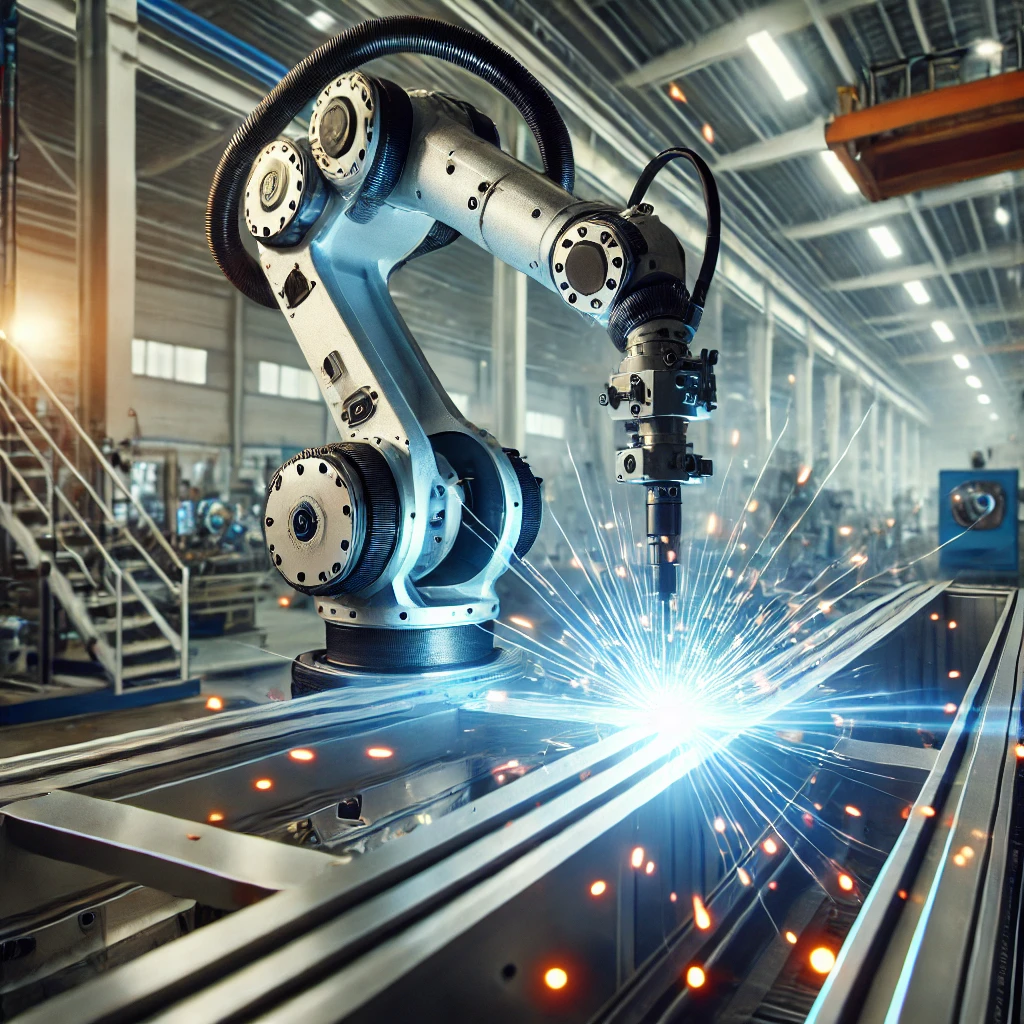
| Manufacturing | Automated production lines, quality checks | Reduced manual labour, higher output |
| Healthcare | Surgical assistance, patient monitoring | Greater precision, reduced human error |
| Warehousing & Logistics | Inventory management, order fulfilment | Faster deliveries, lower operational costs |
| Agriculture | Crop monitoring, automated harvesting | Improved yield, reduced resource waste |
| Mining & Disaster Response | Remote-controlled robots in hazardous zones | Worker safety, access to dangerous areas |
In healthcare, for instance, 5G-connected robotic arms can assist surgeons with procedures that require extreme precision. In agriculture, drones and ground robots connected via 5G can monitor large fields and respond to changing conditions without a farmer needing to be physically present.
5G Robotics and the Rise of Smart Cities
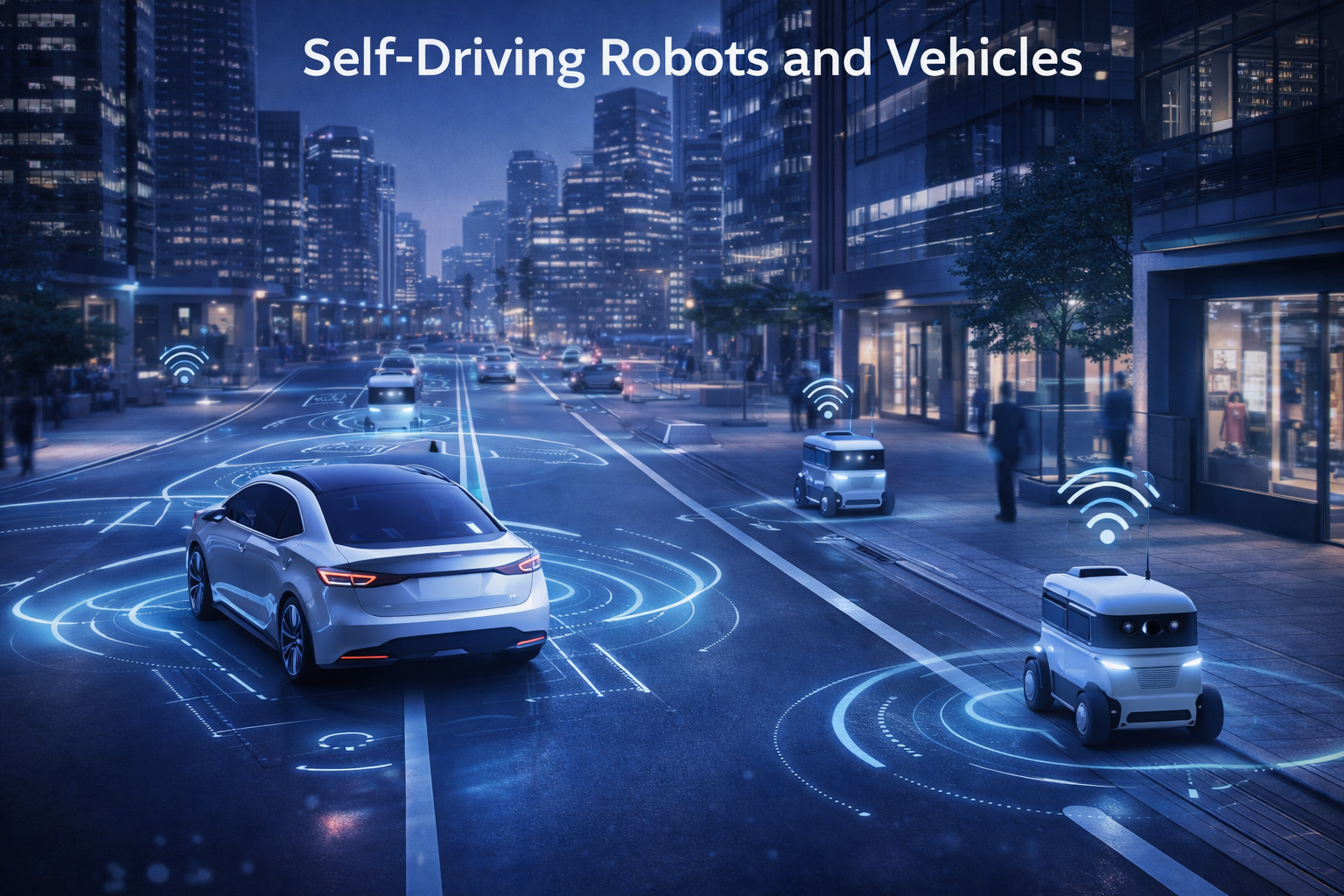
One of the most exciting applications of 5G-enabled robotics is in smart city infrastructure. Cities are increasingly looking at robots to handle tasks that are repetitive, dangerous, or resource-intensive.
In a 5G-connected smart city, robots can:
- Clean streets and public spaces autonomously
- Monitor and manage traffic flow in real-time
- Deliver goods and packages to homes and businesses
- Assist in public safety and surveillance operations
- Coordinate with other city systems like traffic lights and emergency services
Because all these robots are connected to a central network, they can share data with each other and with city management systems. This coordination makes city operations more efficient and reduces the burden on human workers.
Key Challenges Holding Back 5G Robotics
Despite its promise, 5G-enabled robotics still faces several real-world challenges that need to be addressed before widespread adoption becomes possible:
- Infrastructure costs: Building 5G networks requires significant investment in towers, hardware, and spectrum. Many rural and semi-urban areas in India still lack reliable 5G coverage.
- Cybersecurity risks: Robots connected to 5G networks are potential targets for cyber attacks. A compromised robot in a hospital or factory could cause serious harm. Strong encryption and security protocols are essential.
- High initial investment: The cost of 5G-compatible robotic systems is still high, making it difficult for small and medium businesses to adopt this technology quickly.
- Regulatory frameworks: Governments are still developing rules around autonomous robots, especially in public spaces and healthcare, which can slow down deployment.
Addressing these challenges will require collaboration between technology companies, governments, and industry bodies to create affordable, secure, and well-regulated robotic ecosystems.
What the Future of 5G Robotics Looks Like
As 5G networks continue to expand across India and globally, the potential for robotics will grow significantly. Robots will become more autonomous, capable of learning from their environments and making complex decisions without human input. We can expect to see them in homes, schools, transportation systems, and even in personal healthcare.
The combination of 5G with other technologies like edge computing, computer vision, and advanced sensors will push robotic capabilities even further. Industries that invest in this technology now are likely to gain a strong competitive advantage in the years ahead.
5G-enabled robotics is not a distant concept — it is already reshaping how work gets done. From factory floors to hospital operating rooms and smart city streets, these systems are proving their value. While challenges around cost, coverage, and security remain, the direction is clear: robots powered by 5G will play a central role in the future of automation and industrial growth in India and beyond.
Frequently Asked Questions
A 5G-enabled robotics system is a robot that uses a 5G wireless network to communicate and operate in real-time. The ultra-low latency and high data speeds of 5G allow these robots to respond almost instantly to commands and sensor data, making them faster and more accurate than robots using older networks.
Industries like manufacturing, healthcare, warehousing, agriculture, and smart city management benefit greatly from 5G robotics. These sectors require fast, reliable, and precise robotic operations, which 5G networks make possible through real-time data transfer and low-latency communication.
The main challenges include high infrastructure and setup costs, limited 5G coverage in rural areas, cybersecurity risks from connected systems, and the lack of clear regulatory frameworks for autonomous robots in public and industrial spaces. Addressing these issues is key to wider adoption.