Reinforcement learning is one of the most practical and powerful techniques in modern machine learning. Unlike traditional programming where every step is pre-defined, this approach lets machines figure out the best actions on their own — through experience, feedback, and repetition. From factory robots to gaming AI that beats professional players, reinforcement learning is quietly reshaping how intelligent systems work.
What Is Reinforcement Learning?
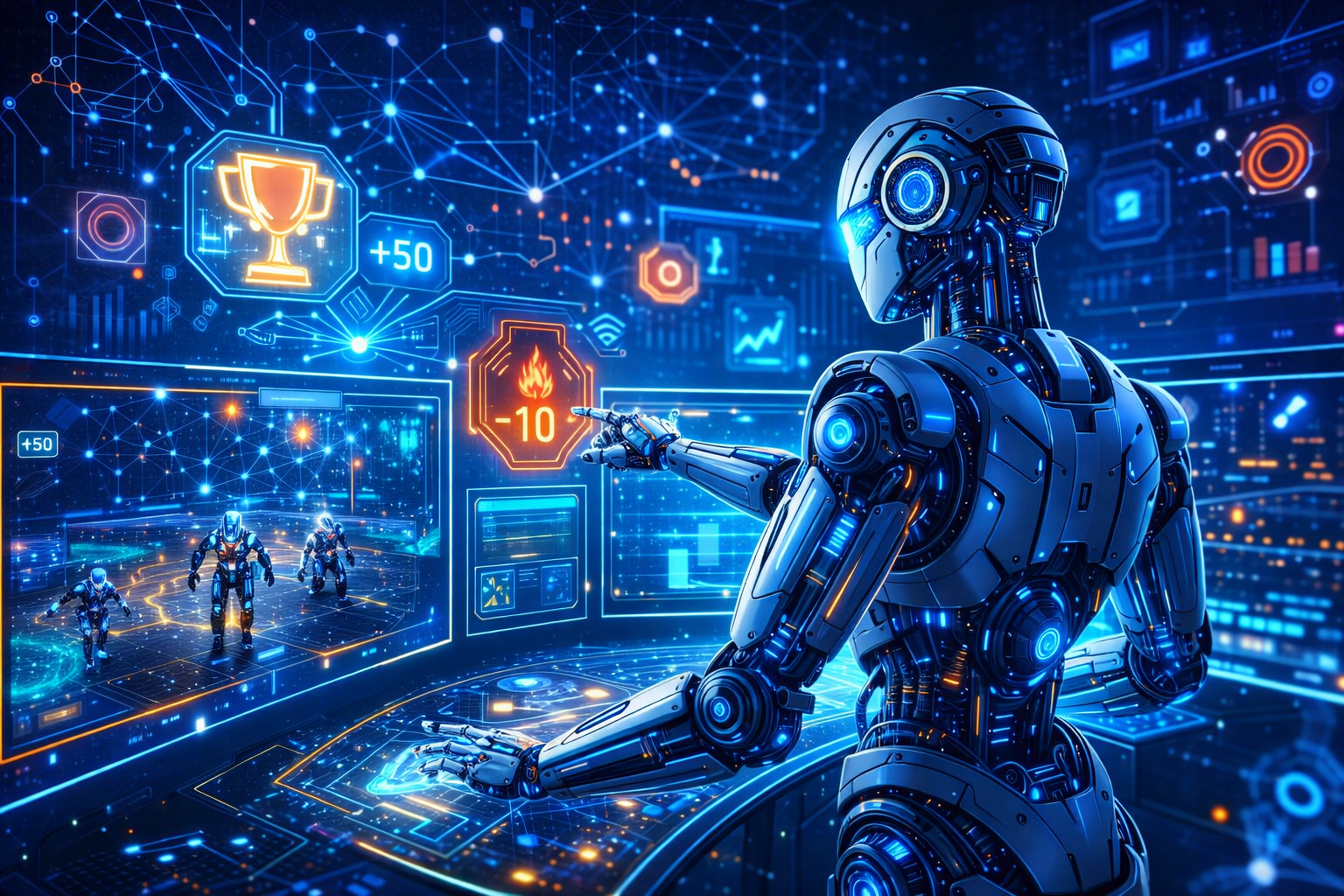
Reinforcement learning is a branch of machine learning where an AI system learns by interacting with its environment. The system takes an action, receives feedback — either a reward or a penalty — and uses that feedback to improve future decisions.
Think of it like learning to ride a bicycle. You try, you fall, you adjust. Over many attempts, you get better. Reinforcement learning works the same way for machines. The AI keeps trying different approaches, gradually discovering which actions lead to the best outcomes.
- Reward: Given when the AI makes a good decision
- Penalty: Given when the AI makes a poor decision
- Goal: Maximize total rewards over time
This trial-and-error process does not require developers to manually program every possible scenario. Instead, the AI builds its own strategy through experience.
How Reinforcement Learning Works in Practice
The AI system in reinforcement learning is often called an agent. This agent observes its environment, chooses an action, and receives feedback. It repeats this cycle thousands or even millions of times.
With each cycle, the agent refines its decision-making strategy. It learns to avoid actions that lead to penalties and repeat actions that bring rewards. Over time, the agent becomes increasingly efficient at completing its assigned task.
This process is especially effective in situations where there are many possible outcomes and no single correct answer. The agent learns to navigate complexity on its own.
Reinforcement Learning in Robotics
Robotics is one of the most important real-world applications of reinforcement learning. Robots often operate in dynamic environments where conditions change constantly. Pre-programming every possible response is not practical.
With reinforcement learning, robots can learn tasks through trial and error, adapting to new situations without needing constant reprogramming. Some key examples include:
- Robots learning to walk, balance, and navigate spaces
- Robotic arms learning to pick up and move objects with precision
- Warehouse robots learning to avoid obstacles and work alongside humans
- Manufacturing robots learning to perform quality checks and assembly tasks
Industries like logistics, manufacturing, and automation are already benefiting from robots trained with reinforcement learning. These robots can handle complex, repetitive tasks more efficiently than traditionally programmed machines.
Reinforcement Learning in Gaming
Video games have become a major testing ground for reinforcement learning systems. Games offer a controlled, risk-free environment where AI can practice strategies and improve rapidly.
AI systems trained with reinforcement learning have achieved remarkable results in gaming. They analyze the outcome of each move, adjust their strategy, and improve with every session. Some advanced AI systems have even defeated professional human players in highly complex games.
Gaming environments are particularly useful for researchers because they allow millions of simulated runs without any real-world consequences. This speeds up the training process significantly.
| Application Area | What Reinforcement Learning Does |
|---|---|
| Robotics | Teaches robots to walk, navigate, and handle objects through practice |
| Gaming | Trains AI to develop winning strategies by playing millions of simulations |
| Manufacturing | Helps automated systems optimize production tasks over time |
| Autonomous Vehicles | Enables self-driving systems to learn safe driving decisions |
Challenges and the Road Ahead
Reinforcement learning is powerful, but it comes with real challenges. Training these systems often demands large amounts of computing power and time. An AI might need millions of attempts before it masters a task.
Designing the right reward system is also critical. If rewards are poorly structured, the AI can develop unexpected or inefficient behaviors that do not align with the intended goal.
Researchers are actively working on making reinforcement learning algorithms faster, more stable, and easier to train. As computing technology improves, these challenges are becoming more manageable.
Looking ahead, reinforcement learning is expected to play a central role in:
- Autonomous robots that operate independently in complex environments
- Self-driving vehicles that make real-time driving decisions
- Smart automation systems in factories and warehouses
- Advanced gaming AI that creates more realistic and challenging opponents
Reinforcement learning is helping build a new generation of intelligent systems that can adapt, learn, and solve problems that traditional programming cannot handle.
As this technology matures, its impact will extend well beyond robotics and gaming — touching healthcare, transportation, energy management, and many other sectors that rely on complex decision-making.
Frequently Asked Questions
Reinforcement learning is a type of machine learning where an AI system learns by trying different actions and receiving rewards for good decisions and penalties for poor ones. Over time, it improves its strategy to maximize rewards.
In robotics, reinforcement learning allows robots to learn tasks like walking, navigating spaces, and handling objects through trial and error. Instead of being manually programmed for every situation, robots adapt and improve through experience.
Video games provide a controlled environment where AI can run millions of simulations quickly and without real-world risks. This makes them ideal for training and testing reinforcement learning systems before applying them to real-world tasks.