Worldcoin (WLD) is no longer just another cryptocurrency making noise in the market. In 2025, it has emerged as one of the most talked-about projects at the intersection of blockchain technology and digital identity. Founded by Sam Altman, the CEO of OpenAI, Worldcoin introduces a concept that sets it apart from Bitcoin or Ethereum — using your iris scan to prove you are a real human being online.
What Is Worldcoin and How Does It Work?
Worldcoin operates as both a cryptocurrency and a global digital identity project. Its core goal is to give every person on Earth a secure digital identity called World ID — essentially a digital passport verified through biometrics.
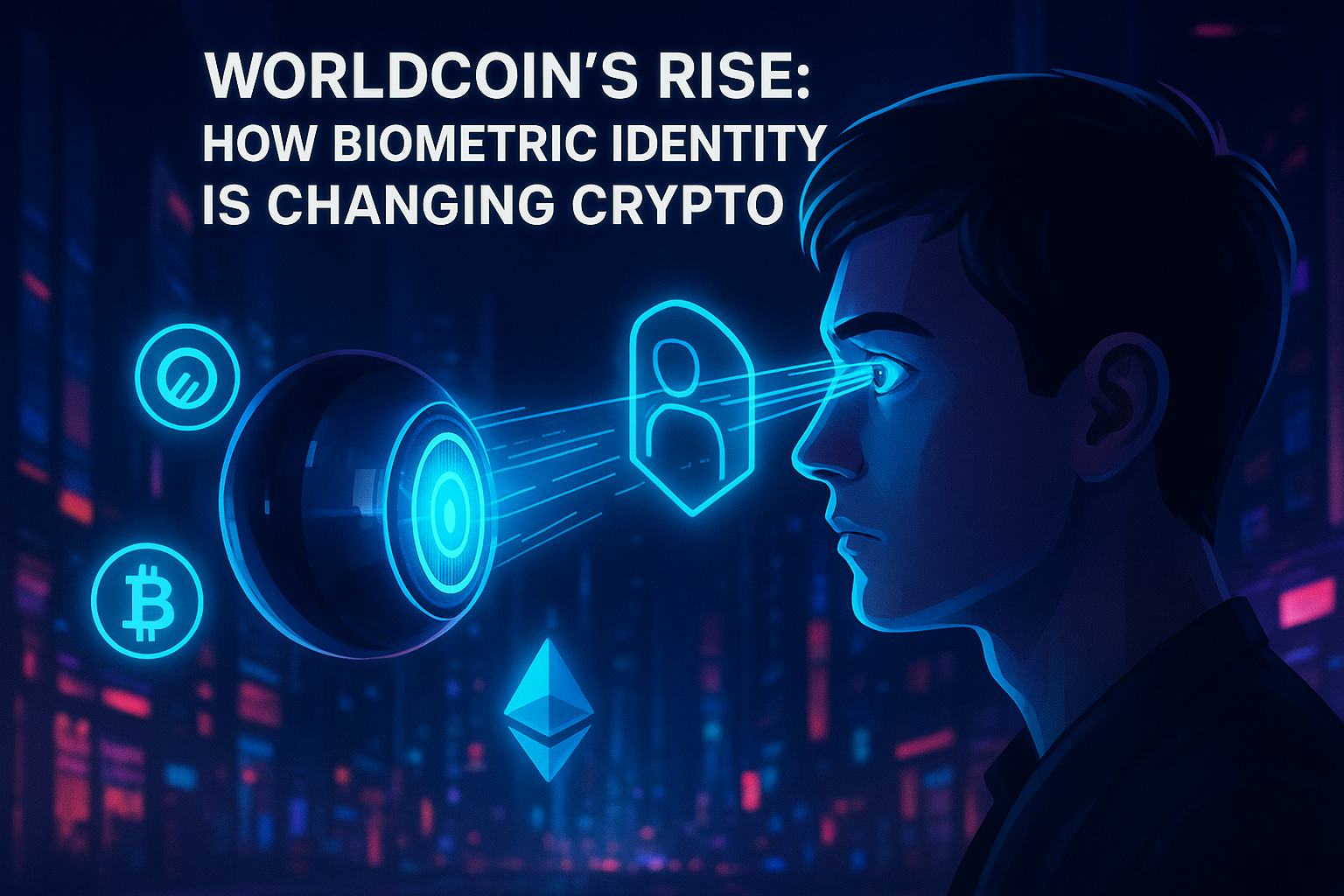
The verification process uses a device called the Orb, a spherical scanner that captures your iris pattern to confirm you are a unique, real individual. Once verified, users receive access to Worldcoin (WLD) tokens and a range of online services tied to their World ID.
- Each person can hold only one verified World ID, making it nearly impossible to create duplicate or fake accounts.
- The Orb scans the iris and converts it into an encrypted code — your eye essentially becomes your digital key.
- Verification is free and does not require a bank account or government document.
This approach — often called proof of humanness — is designed to distinguish real people from bots in an increasingly automated digital world.
Why Is Worldcoin Growing So Fast in 2025?
Worldcoin’s rapid expansion in 2025 is driven by several factors coming together at the right time.
- Massive user adoption: People across developing nations are signing up in large numbers because joining is free and requires minimal effort.
- Strong investor confidence: Worldcoin has raised $270 million from major venture capital firms, signalling serious financial backing from the global investment community.
- Growing need to verify real humans: As bots and automated systems become more sophisticated, platforms are struggling to tell humans apart from machines. Worldcoin’s iris-based verification directly addresses this challenge.
- Real-world utility beyond trading: Worldcoin is being explored for use cases such as helping unbanked populations access financial services, enabling governments to build secure digital ID systems, and allowing companies to verify users more reliably.
Key Advantages of Worldcoin’s Biometric Identity System
Worldcoin’s model offers several practical benefits that go beyond what traditional cryptocurrencies provide.
- Eliminates fake accounts: One person, one ID — this structure significantly reduces fraud, scams, and bot-driven manipulation.
- Financial inclusion: Billions of people without access to banks can now participate in the digital economy using only their iris scan.
- Stronger security for Web3: Decentralised apps, online games, and social platforms can use World ID to block bots and spam effectively.
- Future-ready infrastructure: As humans and AI systems increasingly interact online, a reliable way to verify human identity becomes critical.
| Feature | Worldcoin (WLD) | Bitcoin / Ethereum |
|---|---|---|
| Primary Purpose | Digital identity + cryptocurrency | Payments / decentralised apps |
| Identity Verification | Iris scan via Orb device | None |
| Fake Account Prevention | Yes — one ID per person | No built-in mechanism |
| Financial Inclusion Focus | Strong — targets unbanked users | Partial |
Concerns and Challenges Facing Worldcoin
Despite its promise, Worldcoin faces serious questions that could affect its long-term success.
- Privacy risks: Storing biometric data raises major concerns. Unlike a password, an iris scan cannot be changed if it is ever compromised or misused.
- Regulatory resistance: Several countries remain cautious about approving biometric identity systems linked to cryptocurrency, and regulatory hurdles could slow global expansion.
- Centralisation concerns: The Worldcoin Foundation controls the Orb devices used for verification. Critics argue this creates a central point of control that contradicts the decentralised principles of blockchain technology.
What Could Worldcoin Look Like in the Future?
If Worldcoin successfully addresses its privacy and regulatory challenges, its biometric identity system could reshape how people interact with the internet and financial systems.
- It could replace traditional passwords and CAPTCHA systems with iris-based human verification.
- Governments could adopt World ID as a foundation for secure, tamper-proof national digital identity programmes.
- Billions of unbanked individuals could gain access to financial services and online platforms without needing traditional documentation.
In essence, Worldcoin is positioning itself not just as a digital currency but as a foundational layer for proving human identity in a world where online interactions are increasingly dominated by automated systems.
Its long-term success will depend on how well it balances innovation with data protection, user trust, and compliance with global regulations. If it gets that balance right, Worldcoin could influence not just the crypto space but the broader future of digital identity on the internet.
Frequently Asked Questions
Worldcoin is a cryptocurrency and digital identity project that uses a device called the Orb to scan a person's iris. This creates a unique World ID, confirming the user is a real human. Each person can only have one verified ID, which helps prevent fake accounts and fraud.
Worldcoin's use of biometric data raises significant privacy concerns. Unlike passwords, iris scans cannot be changed if compromised. Critics also point out that the Worldcoin Foundation controls the Orb devices, creating a centralised point of control in what is supposed to be a decentralised system.
Worldcoin has raised $270 million from major venture capital firms. The project was co-founded by Sam Altman, the CEO of OpenAI, which has contributed to strong investor and public interest in the platform.