Blockchain technology is quietly reshaping how people invest in stocks, gold, oil, and other real-world assets. Through a process called tokenization, investors can now buy digital versions of these assets online — without going through traditional stock markets or banks. Whether you are a first-time investor or someone exploring new financial tools, understanding tokenized assets is becoming increasingly important.
What Are Tokenized Stocks?
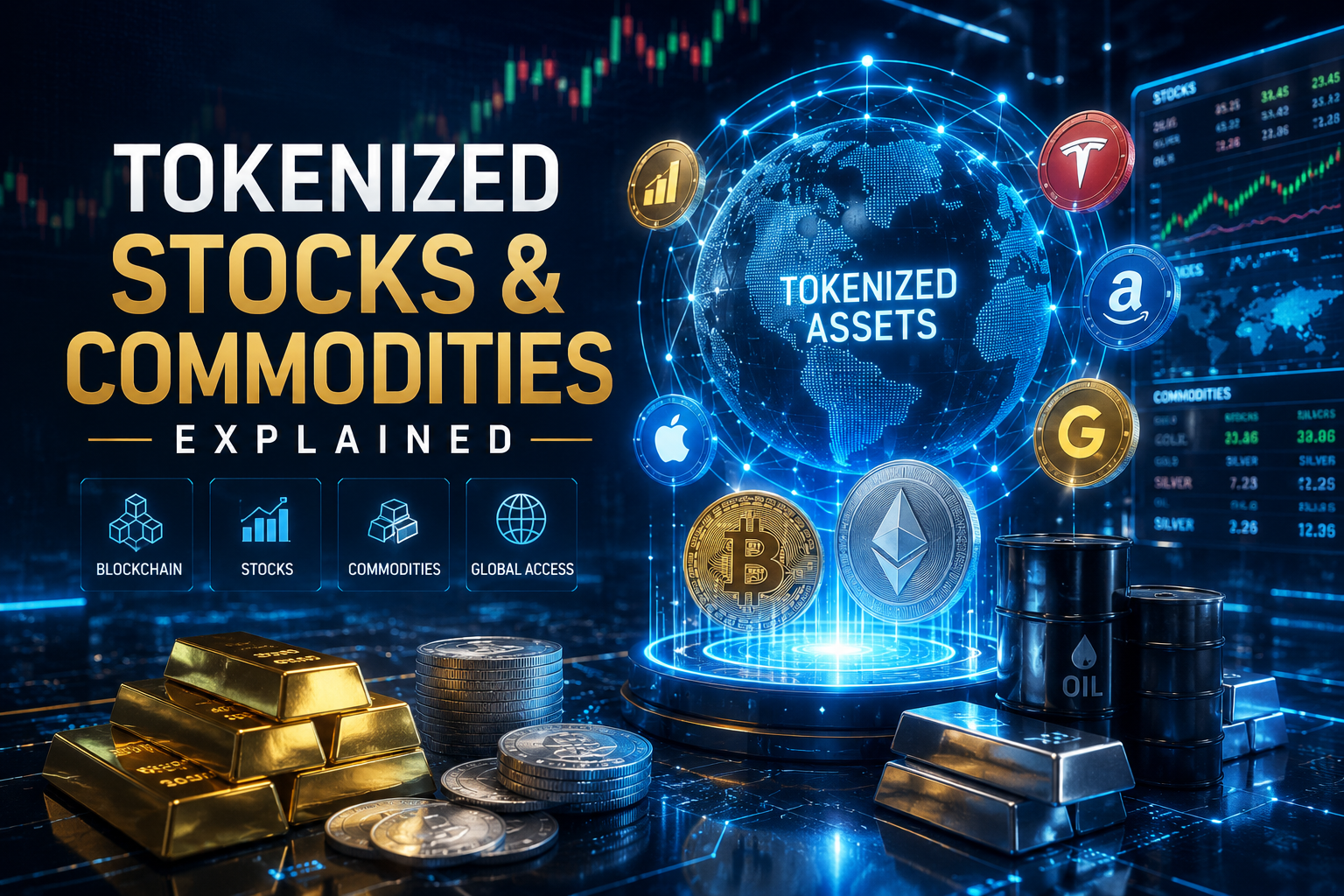
Tokenized stocks are digital tokens created on a blockchain network that represent real company shares. Instead of buying shares through a traditional stock exchange, investors purchase blockchain-based tokens that are directly linked to those shares.
The value of a tokenized stock typically mirrors the price of the actual share. So if a company like Tesla or Apple sees its stock price rise, the tokenized version rises in value too.
This approach gives investors access to global stock markets through crypto platforms, without depending entirely on conventional financial systems. It is especially useful for people in countries where access to international stock exchanges is limited or expensive.
What Are Tokenized Commodities?
Tokenized commodities work on the same principle, but instead of company shares, they represent physical goods. Common examples include:
- Gold — one token may represent one gram of real gold stored securely
- Silver — digital tokens backed by physical silver holdings
- Oil — tokens tied to crude oil market prices
- Natural gas — digital representation of energy commodities
Each token is backed by a real commodity held by a company or institution. Investors can buy and sell these tokens online without ever needing to physically store or transport the commodity. This makes commodity investing far more practical for everyday people.
How Does the Tokenization Process Work?
The tokenization process relies on two core technologies: blockchain networks and smart contracts.
Here is how it works step by step:
- A real-world asset such as gold or a company share is selected and verified
- Digital tokens representing that asset are created on a blockchain network
- Smart contracts automatically manage the rules of ownership and trading
- Investors can then buy, sell, or hold these tokens on crypto platforms
Because blockchain records are transparent and tamper-resistant, all transactions are publicly verifiable. This builds trust among investors and reduces the risk of fraud compared to some traditional systems.
Key Benefits and Risks of Tokenized Investing
Tokenized assets offer several clear advantages, but they also carry risks that every investor should understand before getting started.
| Benefits | Risks |
|---|---|
| Fractional ownership — invest with smaller budgets | Regulatory uncertainty in many countries |
| Faster transactions compared to traditional banking | Crypto platforms may face hacking or technical risks |
| Transparent and verifiable blockchain records | Market prices can be highly volatile |
| Lower broker and banking fees | Limited legal protections compared to traditional markets |
| Global access for investors across countries | Platform reliability and liquidity concerns |
One of the biggest draws is fractional ownership. Investors no longer need large sums of money to enter expensive markets. They can buy a small fraction of a gold token or a tokenized share of a high-value company with a modest amount.
On the risk side, government regulations around blockchain and crypto assets are still developing in many countries, including India. Future laws could affect how these assets are traded or taxed. Security is also a concern — while blockchain itself is robust, individual platforms can be vulnerable to cyberattacks.
The Future of Tokenized Assets
Financial experts widely believe that tokenization will play a major role in the future of global investing. The range of assets being tokenized is expected to grow significantly in the coming years, including:
- Real estate properties
- Company shares and equity
- Precious metals like gold and platinum
- Energy commodities
- Art, collectibles, and intellectual property
Large financial institutions and blockchain platforms are already investing heavily in tokenization infrastructure. As adoption increases and regulations become clearer, tokenized assets could fundamentally change how people around the world buy, sell, and manage their investments.
For Indian investors, this space is worth watching closely. As Web3 and DeFi (Decentralised Finance) ecosystems mature, tokenized investing could open up new opportunities that were previously available only to institutional players or wealthy individuals.
Tokenized stocks and commodities represent a significant shift in how financial markets operate. By combining the transparency of blockchain with the familiarity of traditional assets like stocks and gold, tokenization makes investing more accessible, faster, and potentially more affordable. However, like any investment, it comes with risks. Doing thorough research, understanding the platform you use, and staying updated on regulatory developments in your country are essential steps before putting money into tokenized assets.
Frequently Asked Questions
Regular stocks are bought and sold through traditional stock exchanges like NSE or NYSE. Tokenized stocks are digital tokens on a blockchain that represent the same shares. They track the same price but are traded on crypto platforms, often with lower fees and faster transactions.
Tokenized gold and other commodities are backed by real physical assets held by institutions, which adds a layer of security. However, risks include platform vulnerabilities, regulatory changes, and market price volatility. Always research the platform and regulations in your country before investing.
Indian investors can access tokenized assets through various international blockchain platforms. However, regulations around crypto and tokenized assets in India are still evolving. It is important to stay updated on RBI and SEBI guidelines and consult a financial advisor before investing.