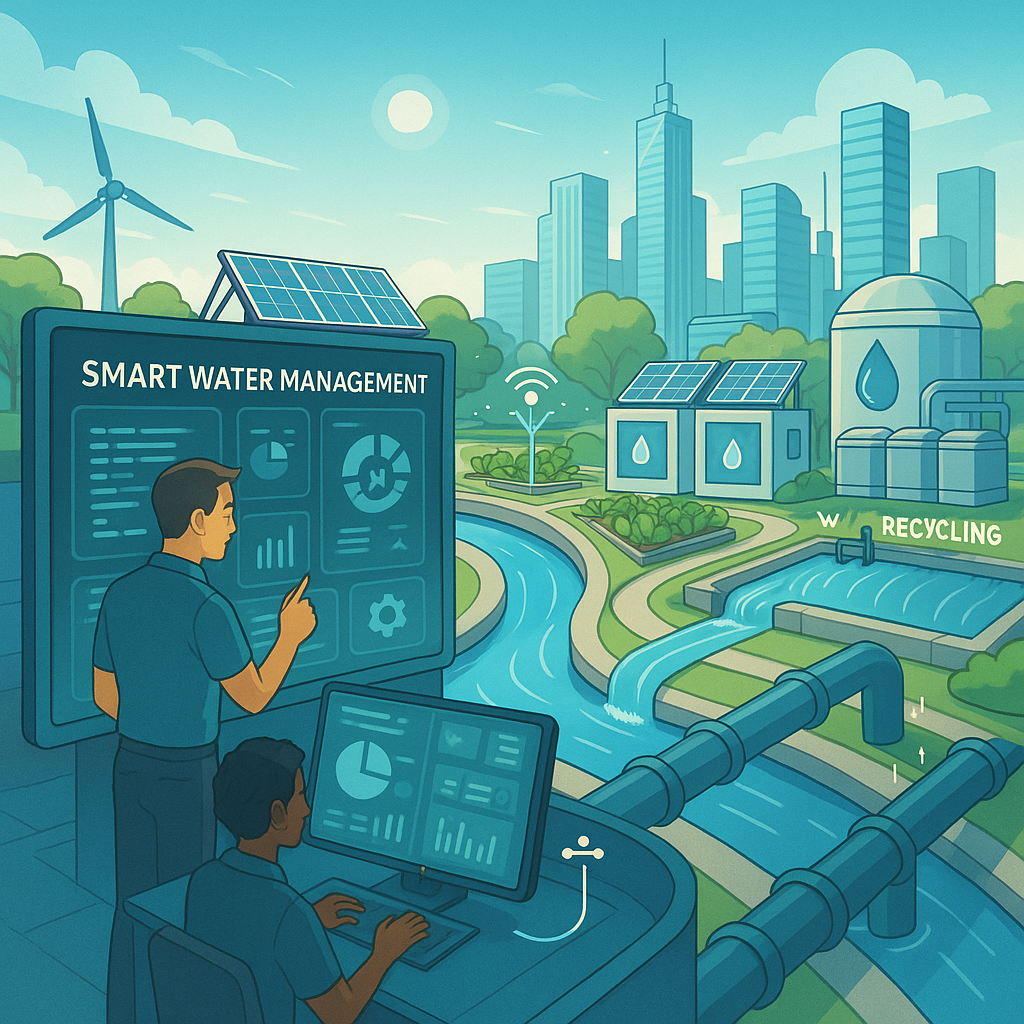
Water scarcity is no longer a distant problem. Across the world, cities, farms, and industries are struggling to secure enough clean water to meet daily needs. As populations grow and climate patterns shift, the gap between water demand and supply keeps widening. The good news is that engineers and technology experts are building practical, data-driven solutions to manage water more efficiently — and the results are already showing in places like Singapore, Israel, and Barcelona.
Understanding Water Scarcity: More Than Just a Drought Problem
Many people associate water scarcity with deserts or regions hit by drought. But the reality is more complex. Even cities with modern infrastructure can face serious water shortages. The causes are varied and often overlap:
- Excessive use and waste from households, agriculture, and industry
- Contamination of rivers, lakes, and groundwater sources
- Aging infrastructure that leaks millions of litres before water even reaches taps
- Poor distribution systems that fail to deliver water where it is needed most
The core issue is simple: demand is rising faster than supply can keep up. Without smarter systems, the problem will only deepen in the coming decades.
What Smart Water Management Actually Means
Smart water management refers to the use of technology, real-time data, and intelligent systems to make water networks more efficient and responsive. It is not just about installing new pipes — it is about giving existing and new infrastructure a digital layer that helps detect problems early, reduce waste, and optimise every drop of water used.
At its heart, smart water management connects physical infrastructure with digital tools — sensors, software, predictive models, and connected devices — to create systems that can monitor themselves and alert operators before small issues become major crises.
Key Engineering Technologies Driving Smarter Water Use
Engineers are deploying several powerful tools to address water scarcity at scale. Here are the most impactful ones:
- Smart Sensors and IoT Devices: Sensors placed inside pipes, storage tanks, and treatment plants continuously monitor leaks, water quality, and pressure levels. When something goes wrong, alerts are sent instantly, allowing teams to fix issues before significant water is lost.
- Predictive Analytics and Artificial Intelligence: Advanced software analyses usage patterns to forecast peak demand periods, predict pipe failures before they happen, and help cities prepare for dry seasons. This proactive approach saves both water and money.
- Precision Irrigation in Agriculture: Farming accounts for a large share of global water consumption. Smart irrigation systems use soil moisture sensors and real-time weather data to water crops only when necessary — reducing agricultural water waste significantly while keeping yields healthy.
- Smart Water Meters: These devices give homes and businesses live visibility into their water consumption. They can automatically flag unusual spikes in usage or detect hidden leaks, helping users cut costs and reduce waste without any extra effort.
| Technology | Primary Benefit | Where It Is Used |
|---|---|---|
| IoT Sensors | Leak detection and quality monitoring | Pipes, tanks, treatment plants |
| Predictive Analytics | Demand forecasting and failure prevention | City water networks |
| Precision Irrigation | Reduced agricultural water waste | Farms and rural areas |
| Smart Meters | Real-time consumption tracking | Homes and businesses |
Cities and Countries Already Leading the Way
Several nations have moved beyond pilot projects and are running smart water systems at a city-wide or national scale:
- Singapore has built one of the world’s most advanced water recycling programmes. The country treats and reuses wastewater through high-tech purification systems and uses smart meters across the city to track and reduce waste.
- Israel transformed arid land into productive agricultural zones by pioneering drip irrigation technology and using recycled water extensively. Today, Israel recycles a higher percentage of its wastewater than almost any other country.
- Barcelona manages its entire urban water supply through a city-wide network of sensors and monitoring software, saving millions of gallons of water every year while keeping operational costs under control.
These examples show that smart water management is not theoretical — it works at scale and delivers measurable results.
Benefits, Challenges, and the Road Ahead
The advantages of adopting smart water systems are clear and wide-ranging:
- Significant reduction in water waste across all sectors
- Lower operational costs for governments and utility providers
- Better water quality and improved public health outcomes
- Greater resilience against climate change, droughts, and supply disruptions
However, there are real challenges that slow down adoption, particularly in developing regions:
- High upfront costs for installing sensors, meters, and software systems
- Technical skill gaps in regions where trained engineers and technicians are scarce
- Data privacy concerns around connected devices that collect household usage information
The encouraging trend is that the cost of sensors and connected technology has been falling steadily. As these tools become more affordable and easier to deploy, more cities and countries will be able to adopt them — making smart water management a realistic option even for lower-income regions.
Water is a finite resource, and managing it wisely is one of the most important engineering challenges of our time. With the right combination of technology, policy, and investment, smart water management offers a credible path toward a future where clean water is available to everyone — not just those lucky enough to live in well-resourced cities.
Frequently Asked Questions
Smart water management refers to the use of digital technologies such as IoT sensors, predictive analytics, and smart meters to monitor, control, and optimise water distribution systems. The goal is to reduce waste, detect leaks early, and ensure efficient use of available water resources.
Singapore, Israel, and Barcelona are among the most advanced examples. Singapore recycles wastewater using high-tech purification, Israel pioneered drip irrigation and water recycling in agriculture, and Barcelona uses a city-wide sensor network to manage its entire urban water supply.
The biggest challenges include high upfront costs for installing sensors and software, a lack of technical expertise in some regions, and data privacy concerns related to connected devices. However, falling technology costs are gradually making these systems more accessible globally.