Wearable technology has come a long way — from bulky fitness bands to sleek smartwatches. But the next big shift in personal tech may not sit on your wrist at all. It may stick directly to your skin. Smart tattoos, also known as electronic skin or e-skin, are thin, flexible electronic patches that look like temporary tattoos but function like sophisticated smart devices. Here is everything you need to know about this emerging technology.
What Are Smart Tattoos?
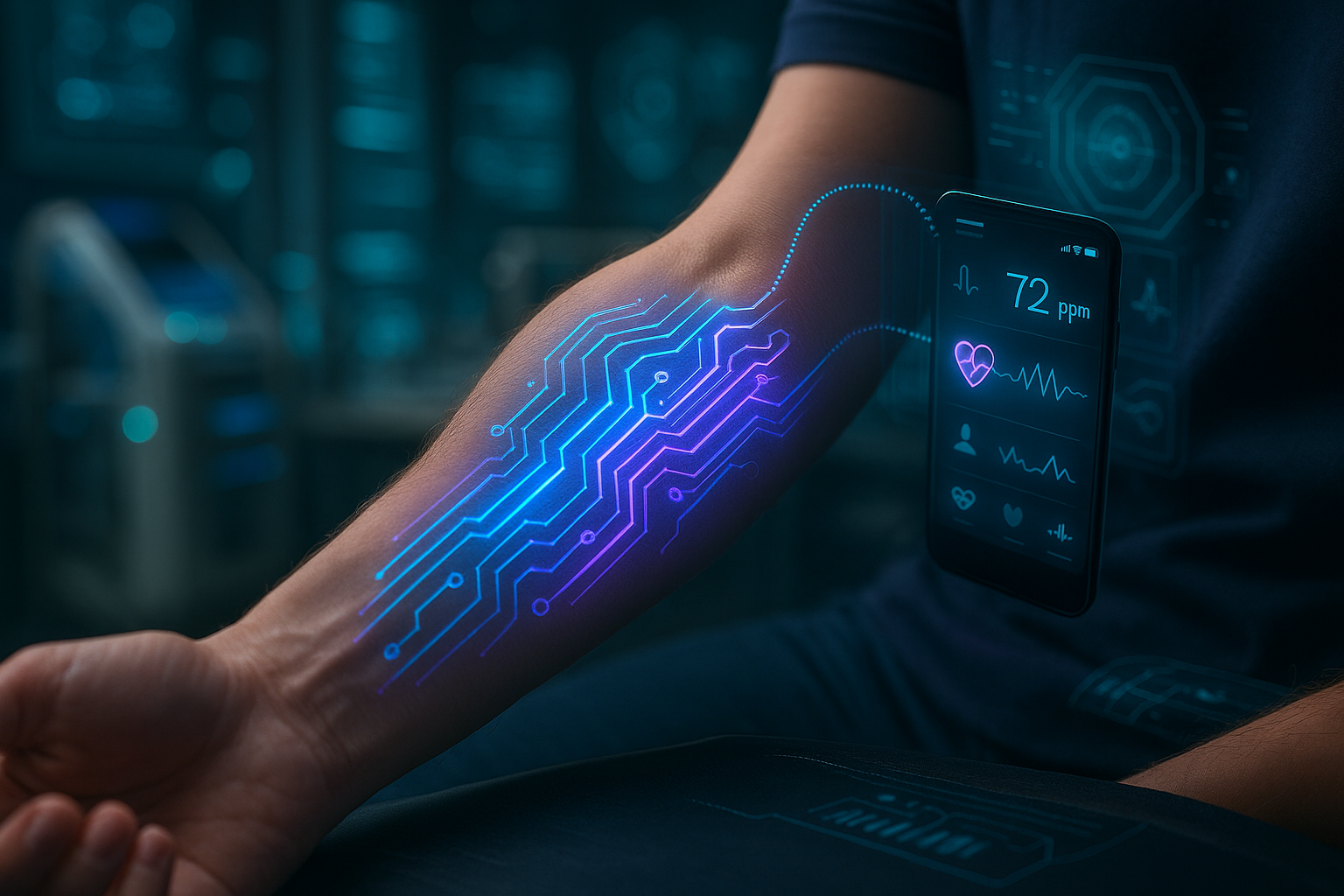
Smart tattoos are ultra-thin, bendable electronic patches designed to adhere to human skin. Unlike traditional tattoos, they are not permanent and do not involve needles. They work more like a high-tech sticker — one that can monitor your health, communicate with your smartphone, or even respond to your body’s signals in real time.
These devices are incredibly lightweight, cause no discomfort, and many versions operate without a conventional battery. The technology sits at the crossroads of materials science, biomedical engineering, and consumer electronics.
How Do Smart Tattoos Actually Work?
Smart tattoos are built using electrically conductive materials such as gold or graphene, printed onto a soft, flexible surface that conforms to the natural curves and movements of your skin. Here is a simple breakdown of how they function:
- Application: You apply the patch to your skin just like a regular temporary tattoo — no pain, no needles.
- Sensing: Built-in micro-sensors track biological signals such as body temperature, heart rate, hydration levels, or muscle activity.
- Wireless Communication: Many smart tattoos transmit collected data to a smartphone app or medical device using Bluetooth or NFC (Near Field Communication) technology.
- Visual Feedback: Some advanced versions can light up or change color in response to changes in your body or surrounding environment.
The circuits within these patches are printed using conductive ink, which allows them to stretch and flex without breaking — making them suitable for continuous wear on a moving body.
Key Applications Across Industries
Smart tattoos are not a single-use technology. Their potential spans multiple sectors, each with meaningful real-world impact.
| Application Area | What It Can Do |
|---|---|
| Health and Medical | Monitor heart rate, hydration, muscle activity in real time |
| Gaming and AR/VR | Deliver tactile feedback and enhance immersive experiences |
| Neurotechnology | Connect to nerve signals to help control prosthetic limbs |
| Digital Identity | Act as touchless payment tools or digital access keys |
In healthcare, doctors could use smart tattoos to track a patient’s vitals continuously without bulky hospital equipment. In gaming and augmented reality, players could physically feel in-game events on their skin. Researchers are also exploring how these patches could read nerve signals, potentially helping people with disabilities control prosthetic limbs through thought alone. On the security front, smart tattoos could replace passwords, ID cards, or fingerprint scanners entirely.
Materials That Make It Possible
The science behind smart tattoos depends on carefully chosen materials that are both functional and safe for human skin. The core components typically include:
- Graphene or gold: Highly conductive materials that allow electrical signals to pass through the patch efficiently.
- Biocompatible plastic or silicone: Soft, skin-safe substrates that give the patch its flexible, comfortable feel.
- Conductive ink: Used to print stretchable circuits directly onto the flexible base material.
Together, these materials allow smart tattoos to bend, stretch, and move with the body without losing their function — a critical requirement for any skin-worn device.
Challenges Researchers Are Working to Solve
Despite the exciting possibilities, smart tattoo technology is still in active development. Several practical challenges remain before these devices become widely available:
- Durability: The patches must withstand sweat, water exposure, and repeated physical movement over extended periods.
- Data Privacy: Continuous collection of personal health data raises serious questions about how that information is stored, shared, and protected.
- Affordability: For smart tattoos to reach everyday consumers, manufacturing costs need to come down significantly.
Researchers and technology companies are actively working on each of these areas, and progress has been steady over the past few years.
What the Future Looks Like for Smart Tattoos
The roadmap for smart tattoo technology is ambitious. In the coming years, these devices could potentially:
- Alert you when your body needs water or detects early signs of illness
- Let you control smart home devices or gadgets with simple hand gestures
- Change color or glow based on your emotional state or physical health
- Connect you directly to a healthcare provider without requiring a clinic visit
The long-term goal is to make smart tattoos as routine and accessible as wearing a smartwatch — but far more integrated with the body’s natural functions. As materials science and wireless communication technology continue to advance, the gap between concept and everyday reality is narrowing fast.
Smart tattoos represent a genuine shift in how humans might interact with technology — not through screens or buttons, but through their own skin. Whether for health monitoring, digital identity, or immersive entertainment, electronic skin is shaping up to be one of the most personal forms of technology ever created.
Frequently Asked Questions
No, smart tattoos are not permanent. They are applied like temporary tattoos — adhesive patches that stick to the skin without needles or ink injections. They can be removed or replaced as needed.
Many smart tattoos are designed to work without a conventional battery. They can harvest energy from body heat or movement, or receive power wirelessly through NFC technology from a nearby device.
Smart tattoos are made from biocompatible materials such as medical-grade silicone and skin-safe conductive inks, which are designed to be safe for skin contact. However, the technology is still being developed and tested for long-term safety and durability.