Imagine signing an agreement that executes itself the moment conditions are met — no lawyers, no paperwork, no waiting. That is exactly what smart contracts do. Built on blockchain technology, these self-executing digital agreements are changing how people and businesses handle transactions across finance, real estate, healthcare, and more.
What Is a Smart Contract?
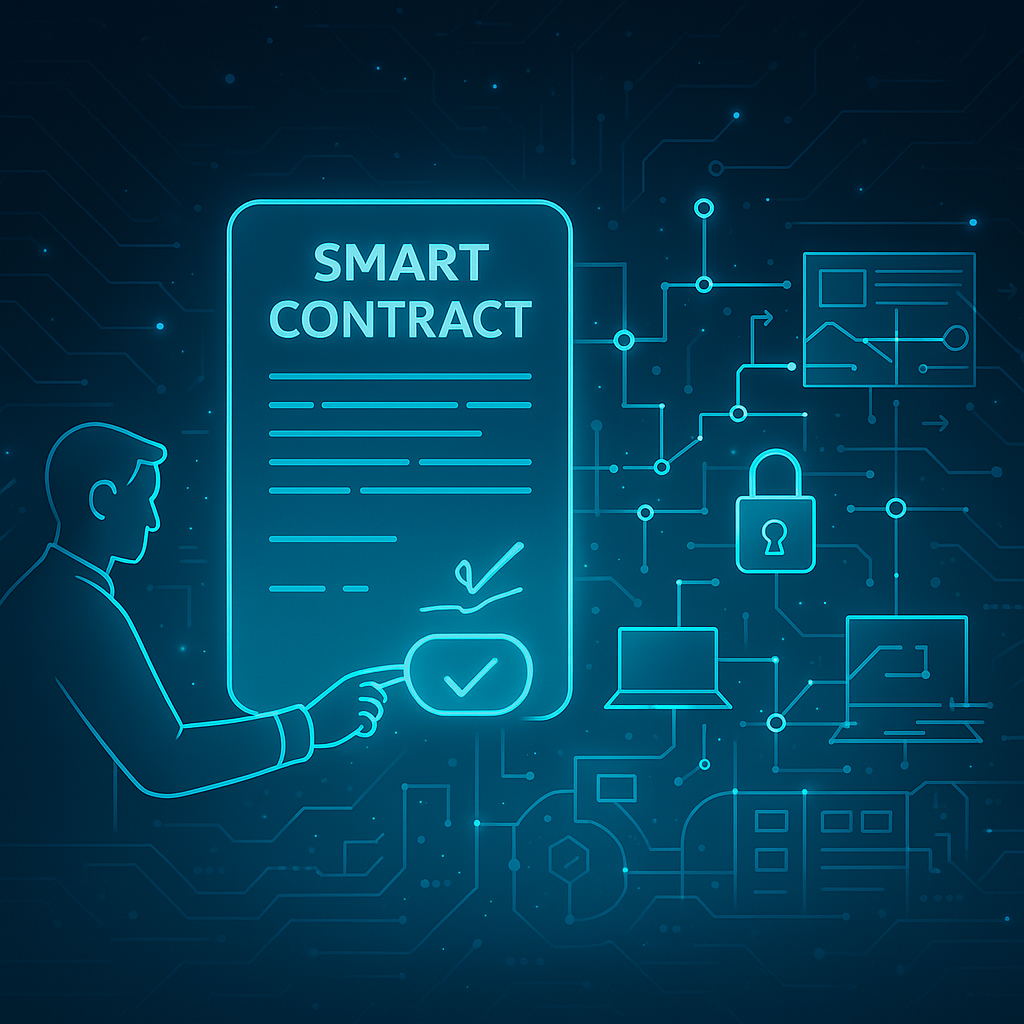
A smart contract is a piece of computer code stored on a blockchain network. It works like a traditional contract but removes the need for any human intermediary to enforce it. The contract automatically carries out its programmed instructions the moment the agreed conditions are fulfilled.
For example, if a buyer sends payment for a digital product, the smart contract instantly releases that product — no manual approval required. The entire process is transparent, traceable, and tamper-proof.
The concept was first proposed by computer scientist Nick Szabo in the 1990s, but it became practically usable with the rise of Ethereum, the blockchain platform that popularised smart contract deployment.
How Smart Contracts Work: A Step-by-Step Breakdown
Understanding smart contracts becomes easier when you break the process into simple stages:
- Write the Rules: Developers code the agreement terms using programming logic — essentially “if this condition is met, then do this action.”
- Deploy on Blockchain: The coded contract is uploaded to a blockchain network like Ethereum, making it permanent, secure, and visible to all relevant parties.
- Trigger Condition Met: When the pre-set condition is satisfied — such as receiving a payment or confirming delivery — the contract executes automatically.
- Action Completed: The outcome, whether it is a fund transfer, document release, or record update, happens instantly without any third-party involvement.
This “if-then” logic makes smart contracts highly reliable and consistent in execution.
Key Benefits of Smart Contracts
Smart contracts offer several practical advantages over traditional agreements:
- No Middleman Needed: Banks, lawyers, brokers, and agents are no longer required to process or verify transactions. The code handles everything.
- High Security: Once a smart contract is deployed on the blockchain, it cannot be altered or deleted. This makes fraud and tampering extremely difficult.
- Full Transparency: All parties can view the contract terms and every transaction is recorded on the blockchain, leaving no room for hidden steps or disputes.
- Faster Processing: Transactions that once took days due to manual processing can now be completed in seconds.
- Lower Costs: By removing intermediaries, smart contracts significantly reduce fees and administrative expenses.
| Feature | Traditional Contract | Smart Contract |
|---|---|---|
| Execution | Manual, requires human action | Automatic, code-driven |
| Intermediary | Lawyers, banks, agents | None required |
| Transparency | Limited to involved parties | Visible on blockchain |
| Speed | Days to weeks | Near-instant |
| Cost | High due to fees | Lower overall cost |
Real-World Use Cases of Smart Contracts
Smart contracts are already being used across multiple industries:
- Banking and Finance: Automating loan disbursements, insurance claim settlements, and cross-border payments without manual intervention.
- Real Estate: Simplifying property sales and rental agreements by replacing lengthy paperwork with blockchain-based contracts.
- Supply Chain and Logistics: Automatically triggering payments when goods are confirmed delivered at their destination.
- Healthcare: Securing patient records and streamlining insurance billing processes to reduce errors and fraud.
- Web3 and Decentralised Applications (dApps): Powering decentralised finance platforms, NFT marketplaces, and digital voting systems.
Limitations and Challenges of Smart Contracts
Despite their advantages, smart contracts come with real limitations that users and businesses should be aware of:
- Difficult to Modify: Once deployed, a smart contract cannot be edited. Any coding error or oversight becomes permanent unless a new contract is created.
- Requires Expert Development: Writing secure and accurate smart contract code demands skilled blockchain developers. Poorly written contracts can be exploited by hackers.
- Legal Uncertainty: Many countries have not yet established clear legal frameworks recognising smart contracts as legally binding agreements.
- Dependence on External Data: Smart contracts rely on external data sources called oracles to verify real-world events. If an oracle provides wrong data, the contract executes incorrectly.
As the technology matures, solutions to many of these challenges are actively being developed by blockchain communities and regulatory bodies worldwide.
Smart contracts are still in a relatively early phase of adoption, but their potential is enormous. As blockchain networks become faster, cheaper, and more widely accepted, smart contracts will likely become a standard tool in business, governance, and everyday digital transactions. Industries that embrace this technology early stand to gain significant efficiency and cost advantages in the years ahead.
Frequently Asked Questions
A smart contract is a digital agreement written as computer code and stored on a blockchain. It automatically executes its terms when the pre-set conditions are met, without needing any human intermediary like a lawyer or bank.
Ethereum is the most widely used blockchain platform for smart contracts. It was the first to make smart contract deployment practical and remains the most popular choice for developers building decentralised applications.
Smart contracts currently exist in a legal grey area in India. While the Information Technology Act recognises electronic contracts, there is no specific legislation yet that fully governs blockchain-based smart contracts. Legal clarity is expected to improve as regulations evolve.