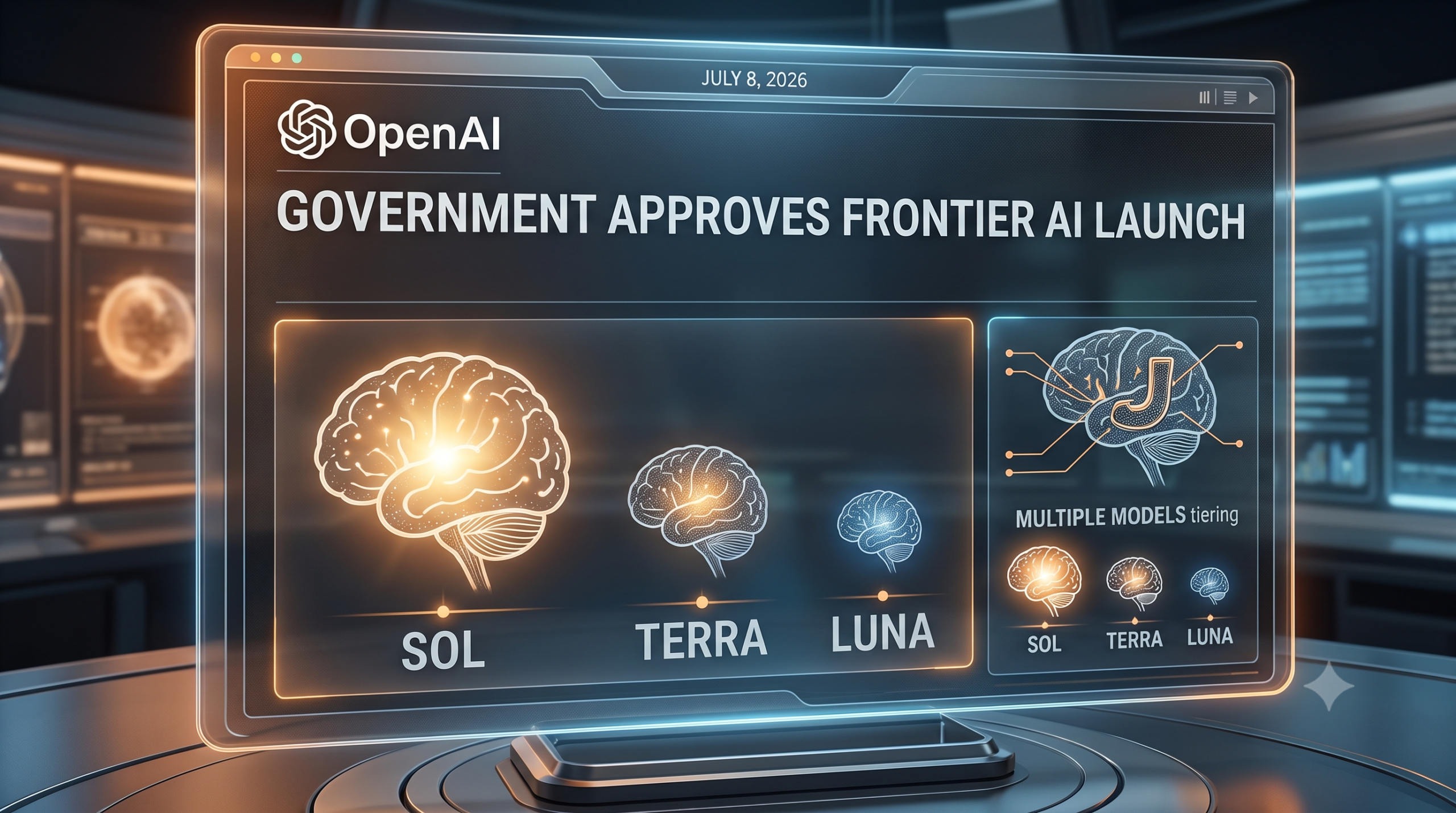
OpenAI will launch GPT-5.6 Sol, Terra, and Luna on Thursday after the US Department of Commerce approved a broad public release following additional government security testing.
OpenAI is set to publicly launch its most capable AI model family to date — GPT-5.6, comprising three distinct models named Sol, Terra, and Luna — on Thursday. The release had been delayed after the US government requested OpenAI hold back the launch over national security concerns. Following additional testing under Washington’s emerging AI oversight framework, the US Department of Commerce has now approved a broad public release, according to a report by Axios.
Why GPT-5.6 Was Delayed
The launch was initially postponed last month at the request of the US government, which flagged concerns that highly capable AI systems could potentially be misused by military or intelligence organisations in countries including China, Russia, and other nations of concern. Rather than a full block, OpenAI limited access to GPT-5.6 to a small group of vetted partners whose details were shared with federal authorities, allowing a controlled evaluation period before broader deployment.
The delay follows a broader pattern of increased government scrutiny over frontier AI releases. Washington’s new oversight framework, established under an executive order signed by US President Donald Trump, requires AI developers to offer access to what are termed “covered frontier models” to the US government for up to 30 days before releasing them to trusted partners. GPT-5.6 appears to be among the first major model releases processed under this framework.
The Department of Commerce approved the broad launch after completing additional government testing, Axios reported, citing a source familiar with the matter. The White House and the Department of Commerce had not responded to requests for comment at the time of publication.
GPT-5.6 Sol, Terra, and Luna: What Each Model Offers
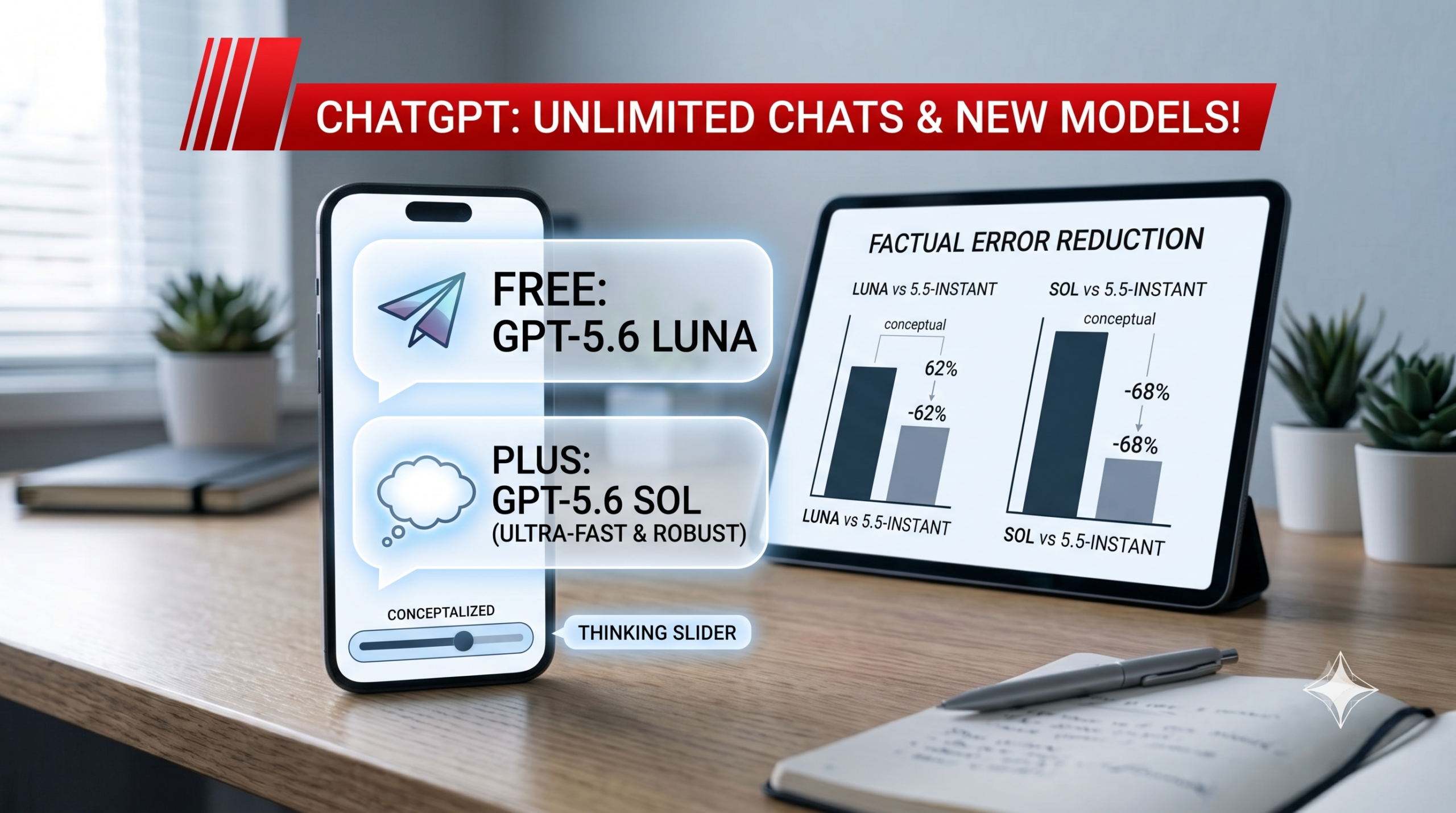
OpenAI confirmed the launch details in a post on X on Tuesday, revealing that GPT-5.6 will be released as a three-model family, each positioned at a different capability and cost tier:
| Model | Tier | Positioning |
|---|---|---|
| GPT-5.6 Sol | Flagship | OpenAI’s most advanced model to date |
| GPT-5.6 Terra | Mid-tier | Balanced capability at lower cost |
| GPT-5.6 Luna | Efficient | Most cost-efficient option in the family |
The three-tier structure mirrors the approach taken by other frontier AI labs, offering developers and businesses a choice between maximum capability, balanced performance, and cost-optimised deployment depending on their use case.
Part of a Wider Pattern of US AI Security Reviews
The GPT-5.6 delay and subsequent approval closely follows a similar sequence involving Anthropic. Last week, the US government lifted restrictions on Anthropic’s Claude Fable 5 and Mythos 5 models, less than three weeks after ordering the company to suspend access over comparable national security concerns. Anthropic agreed to proactively detect security risks, collaborate with the government on release protocols, and report any malicious activity as conditions of the reinstatement.
The back-to-back episodes involving OpenAI and Anthropic suggest the US government is actively and consistently applying its new oversight framework to the most capable AI models as they reach the point of public release. Both cases also suggest the framework is designed to delay rather than permanently block, provided developers can demonstrate adequate safety commitments and pass government testing.
The National Security Backdrop
Washington’s increased scrutiny of advanced AI is driven by concerns that frontier models could give adversarial states meaningful advantages in military planning, intelligence operations, autonomous weapons development, and cyberattack capabilities. The concern is not only about direct access by foreign governments but also about the use of commercially available AI by non-state actors and the risk of jailbreaks — techniques that bypass safety restrictions built into models.
Anthropic itself has warned publicly that it considers it “probably impossible” to make any AI model fully resistant to jailbreaks, and has noted the potential for a universal jailbreak capable of unblocking an entire category of harmful behaviors across a model. That acknowledgement adds weight to the government’s position that frontier models require review before broad deployment, regardless of the safety measures developers have already built in.
What GPT-5.6’s Launch Means for Developers and Businesses
For the developers, researchers, and businesses that have been waiting for access to OpenAI’s most capable model, Thursday’s launch ends a period of uncertainty that began when the initial release was delayed. The vetted partner group that had limited early access will now be joined by the broader public through OpenAI’s standard API and product channels.
The three-model structure of the GPT-5.6 family also means organisations have more flexibility in how they adopt the new generation. Those with demanding workloads requiring maximum reasoning and capability can opt for Sol, while teams working within tighter budgets or building cost-sensitive applications have Terra and Luna as practical alternatives.
As the US government’s AI oversight framework matures, future model launches from OpenAI, Anthropic, and other frontier labs will likely follow a similar path — government review first, phased partner access second, and broad public launch once security testing is complete.
Frequently Asked Questions
GPT-5.6 Sol is OpenAI's most capable model yet, designed for the most demanding AI workloads. GPT-5.6 Terra is a mid-tier option offering strong performance at a lower cost. GPT-5.6 Luna is the most cost-efficient model in the family, suited for applications where budget and speed are priorities over maximum capability.
Under a framework established by a presidential executive order, AI developers are required to give the US government access to advanced frontier models for up to 30 days before public or partner release. The Department of Commerce reviews the models for national security risks. In GPT-5.6's case, the Department approved a broad launch after completing additional testing following OpenAI's delay period.
The GPT-5.6 delay and approval follows a nearly identical pattern to Anthropic's recent experience with Claude Fable 5 and Mythos 5, which were suspended and then reinstated within three weeks after Anthropic agreed to government security conditions. Together the two cases suggest the US is consistently applying its new AI oversight framework to the most capable frontier models as they approach public release.