Blockchain technology holds enormous promise, but slow transaction speeds and high fees have long been barriers to widespread adoption. Layer-2 scaling solutions address these problems directly by building an additional processing layer on top of existing blockchains like Ethereum. The result is a faster, cheaper, and more practical experience for users, developers, and businesses alike.
What Are Layer-2 Scaling Solutions?
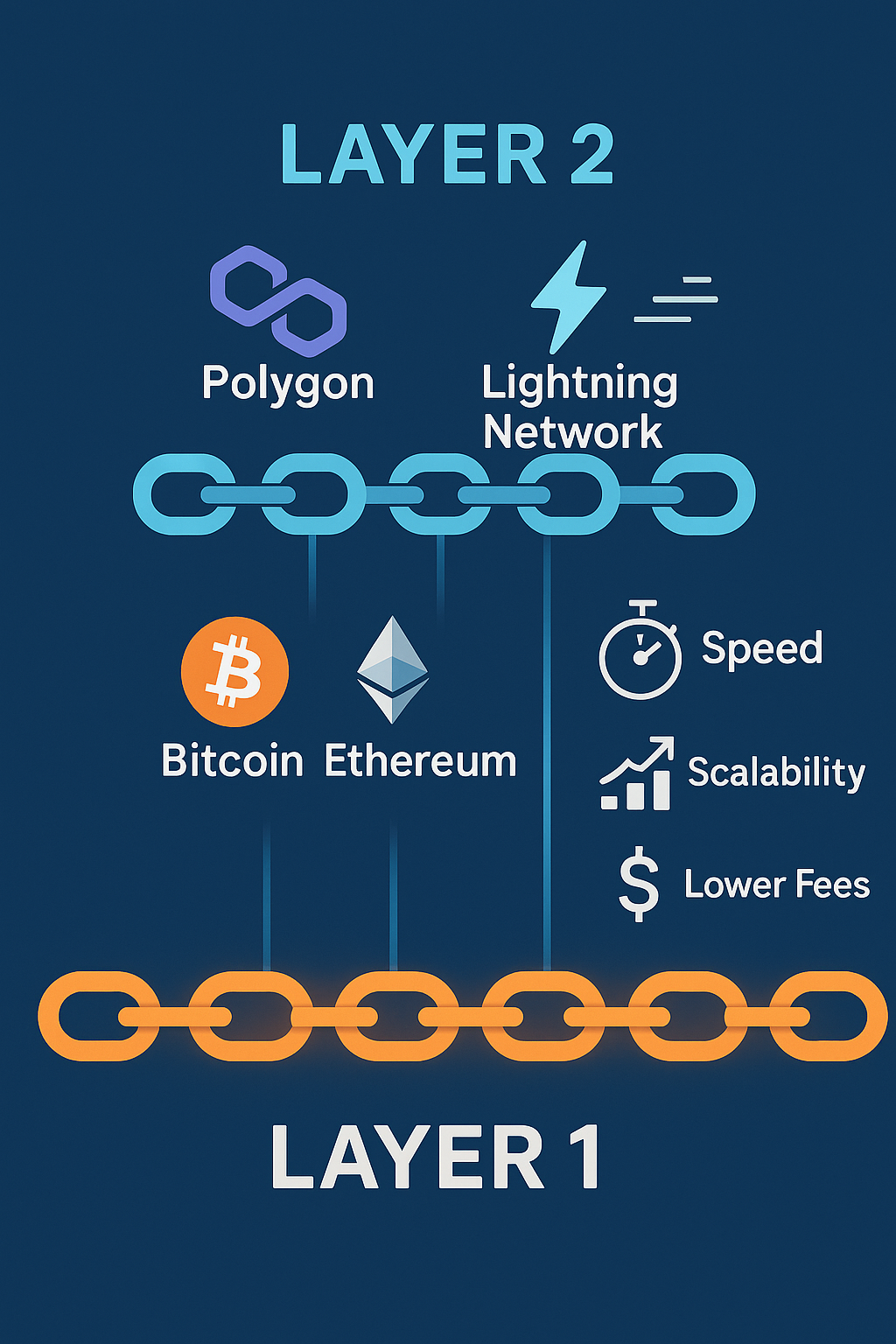
Layer-2 scaling solutions are technologies built on top of an existing blockchain, commonly referred to as Layer-1. Networks like Ethereum process every transaction directly on their main chain, which creates congestion when usage spikes.
Layer-2 works differently. It handles transactions separately, off the main chain, and then submits only a summary or cryptographic proof back to the Layer-1 network. This approach keeps the main blockchain secure and decentralised while dramatically reducing the load it carries.
Think of it like a highway with express lanes. The main blockchain is the highway, and Layer-2 solutions are the express lanes that keep traffic moving without widening the entire road.
Why Blockchain Networks Need Layer-2
Popular blockchains face a well-known problem called the scalability trilemma — balancing security, decentralisation, and speed at the same time is extremely difficult. When network activity surges, users experience:
- Slow transaction confirmation times — sometimes taking minutes or even hours
- High gas fees — costs that can make small transactions economically unviable
- Network congestion — leading to a poor user experience for decentralised applications
Layer-2 solutions tackle these issues without altering the core architecture of the main blockchain. They move most of the activity off-chain while still relying on the main network for final settlement and security.
Types of Layer-2 Scaling Solutions Explained
Several distinct approaches exist under the Layer-2 umbrella. Each has its own strengths depending on the use case.
| Type | How It Works | Best For |
|---|---|---|
| Optimistic Rollups | Bundles transactions and assumes they are valid unless challenged | General smart contracts, DeFi |
| Zero-Knowledge (ZK) Rollups | Uses cryptographic proofs to verify transaction batches instantly | Payments, high-speed transactions |
| State Channels | Opens a direct channel between two parties for off-chain transactions | Micropayments, gaming |
| Sidechains | Independent blockchains connected to the main chain via a bridge | Broader application ecosystems |
Each approach processes transactions off the main chain and submits results back to Layer-1, but the technical method and security guarantees differ between them.
Impact of Layer-2 on DeFi, NFTs, and Web3
Decentralised finance (DeFi) platforms, NFT marketplaces, and Web3 applications depend heavily on affordable and fast transactions. Without Layer-2 infrastructure, many of these platforms become too expensive for regular users to interact with.
- DeFi protocols benefit from lower transaction costs, making lending, borrowing, and trading accessible to a wider audience.
- NFT platforms can offer minting and trading at a fraction of the cost seen on congested Layer-1 networks.
- Blockchain gaming requires thousands of micro-transactions per session, which is only practical with Layer-2 speed and pricing.
- Web3 developers can build scalable decentralised applications without worrying about users abandoning them due to high fees.
Layer-2 networks are not just a technical upgrade — they are a practical enabler for the next generation of internet applications.
Challenges That Still Need to Be Addressed
Despite their advantages, Layer-2 solutions come with real challenges that users and developers must navigate.
- Asset bridging complexity — Moving funds between Layer-1 and Layer-2 requires using bridges, which can be confusing and carry security risks.
- Interoperability — Different Layer-2 networks do not always communicate easily with each other, creating fragmented ecosystems.
- Security considerations — Some Layer-2 approaches are still maturing, and vulnerabilities in bridge contracts have led to significant losses in the past.
- User experience gaps — Onboarding new users to Layer-2 networks still requires technical knowledge that mainstream audiences may not have.
These challenges are being actively worked on by development teams across the blockchain industry, and progress has been consistent over recent years.
What the Future Holds for Layer-2 Technology
Layer-2 scaling is increasingly becoming a foundational part of the blockchain ecosystem rather than an optional add-on. As more users, businesses, and governments explore blockchain applications, the demand for scalable infrastructure will only grow.
Projects building on Ethereum and other major blockchains are already deploying Layer-2 networks to support millions of transactions daily. The technology is maturing rapidly, with improvements in security, user experience, and cross-network compatibility arriving regularly.
In the coming years, users may interact with Layer-2 networks without even realising it — much like how people use the internet today without thinking about the underlying infrastructure that makes it work.
Layer-2 scaling solutions are not a temporary fix. They represent a long-term architectural shift that will define how blockchains scale to meet global demand.
As blockchain adoption expands across finance, gaming, supply chain, and digital identity, Layer-2 networks will serve as the backbone that makes it all possible — faster, cheaper, and accessible to everyone.
Frequently Asked Questions
A Layer-2 scaling solution is a technology built on top of an existing blockchain like Ethereum. It processes transactions off the main chain and submits only a summary or proof back to the main network, reducing congestion and lowering transaction fees.
The main types include optimistic rollups, zero-knowledge (ZK) rollups, state channels, and sidechains. Each handles off-chain transaction processing differently, with varying trade-offs in speed, security, and use case suitability.
Most Layer-2 solutions inherit the security of the underlying Layer-1 blockchain. However, risks exist in areas like asset bridges and smart contract vulnerabilities. It is important to use well-audited and established Layer-2 networks and exercise caution when bridging assets between chains.