Robots are getting better at understanding the world around them, and sensor fusion is a big reason why. By combining data from multiple sensors at once, robots can perceive their environment far more accurately than any single sensor allows. This technology is now central to modern robotics, automation, and autonomous machines across industries.
What Is Sensor Fusion and How Does It Work?
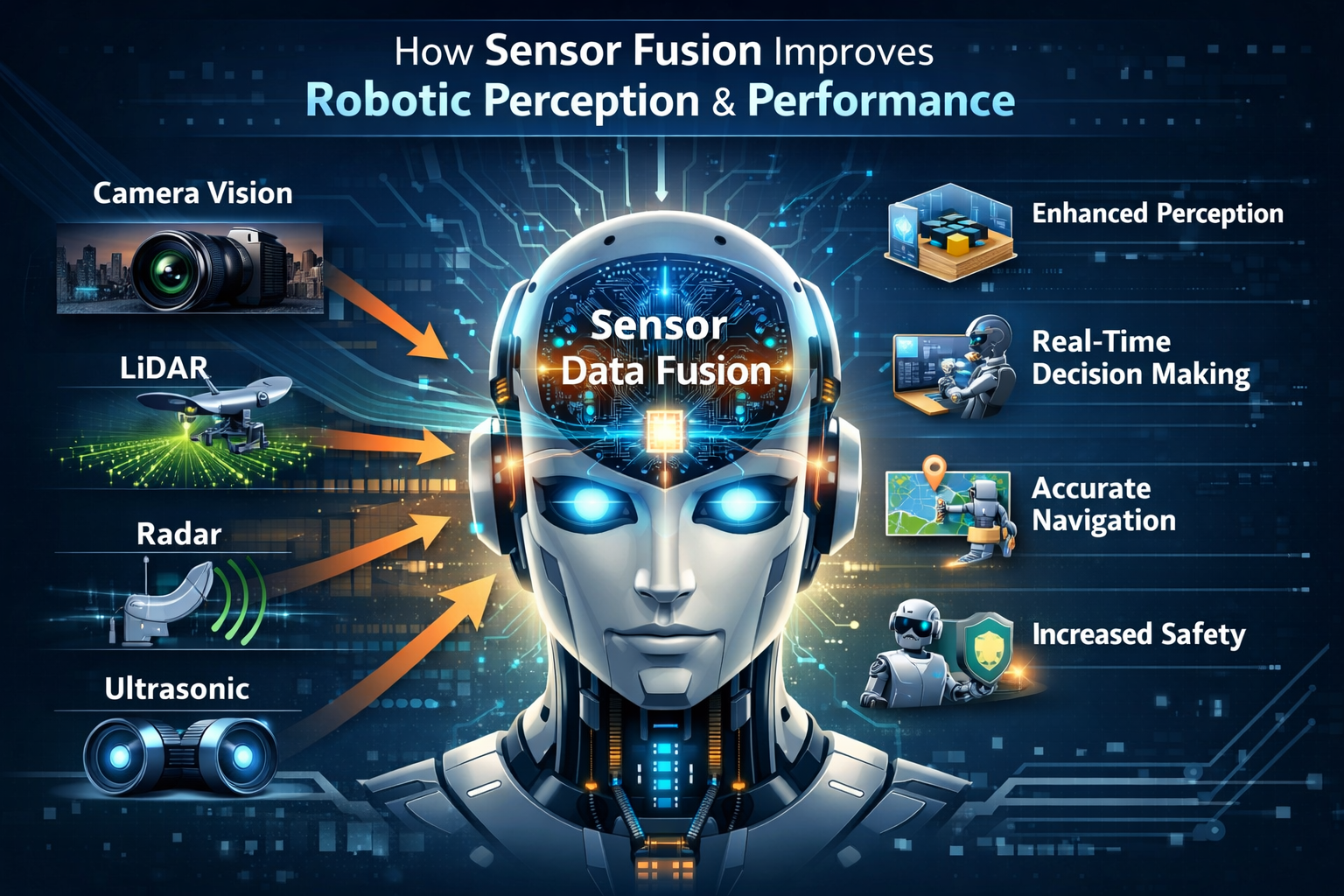
Sensor fusion is the process of combining data from multiple sensors to create a single, more accurate picture of the environment. Instead of relying on one source of information, a robot gathers input from cameras, LiDAR, radar, motion sensors, and other devices, then processes all of it together.
Think of it like human perception. People do not rely only on their eyes or only on their ears. They use sight, sound, and touch together to understand what is happening. Robots use sensor fusion in the same way to make smarter, faster decisions.
The combined data is processed by special algorithms that filter out noise, track movement, and help the robot decide what to do next. Many modern systems also use machine learning to improve how sensor data is interpreted over time.
Why One Sensor Is Never Enough
Every sensor type has its own strengths and weaknesses. No single sensor can handle every situation well. Here is a quick comparison:
| Sensor Type | Strength | Weakness |
|---|---|---|
| Camera | Detects colors, shapes, and textures | Struggles in low light or darkness |
| LiDAR | Measures distance with high accuracy | Cannot detect surface textures well |
| Radar | Works in rain, fog, and poor visibility | Lacks fine detail and resolution |
| Motion Sensor | Tracks movement and orientation | Cannot identify objects or surroundings |
Sensor fusion balances these limitations. When one sensor fails or gives incomplete data, others fill the gap. This makes the overall system far more dependable.
Key Benefits of Sensor Fusion in Robotics
Sensor fusion delivers several important advantages that directly improve how robots perform in real-world conditions:
- Clearer environmental awareness: A camera identifies an object while LiDAR confirms its exact distance, giving the robot a complete and accurate picture.
- Better reliability and safety: If one sensor malfunctions, others continue providing correct data. This backup effect is critical in factories, hospitals, and warehouses where safety matters most.
- Faster real-time decisions: Robots process combined sensor data instantly, allowing them to avoid obstacles, adjust movement, and react to changes without delay.
- Accurate navigation and position tracking: By merging data from motion sensors, cameras, and distance sensors, robots can track their exact location and move confidently even in unfamiliar spaces.
- Safer human-robot collaboration: In workplaces where robots and humans work side by side, sensor fusion helps robots detect human presence and movement accurately, allowing them to slow down or stop to prevent accidents.
Where Sensor Fusion Is Already Being Used
Sensor fusion is not a future concept. It is already powering robotic systems across many sectors today:
- Warehouse and logistics robots use sensor fusion to navigate shelves, pick items, and avoid workers safely.
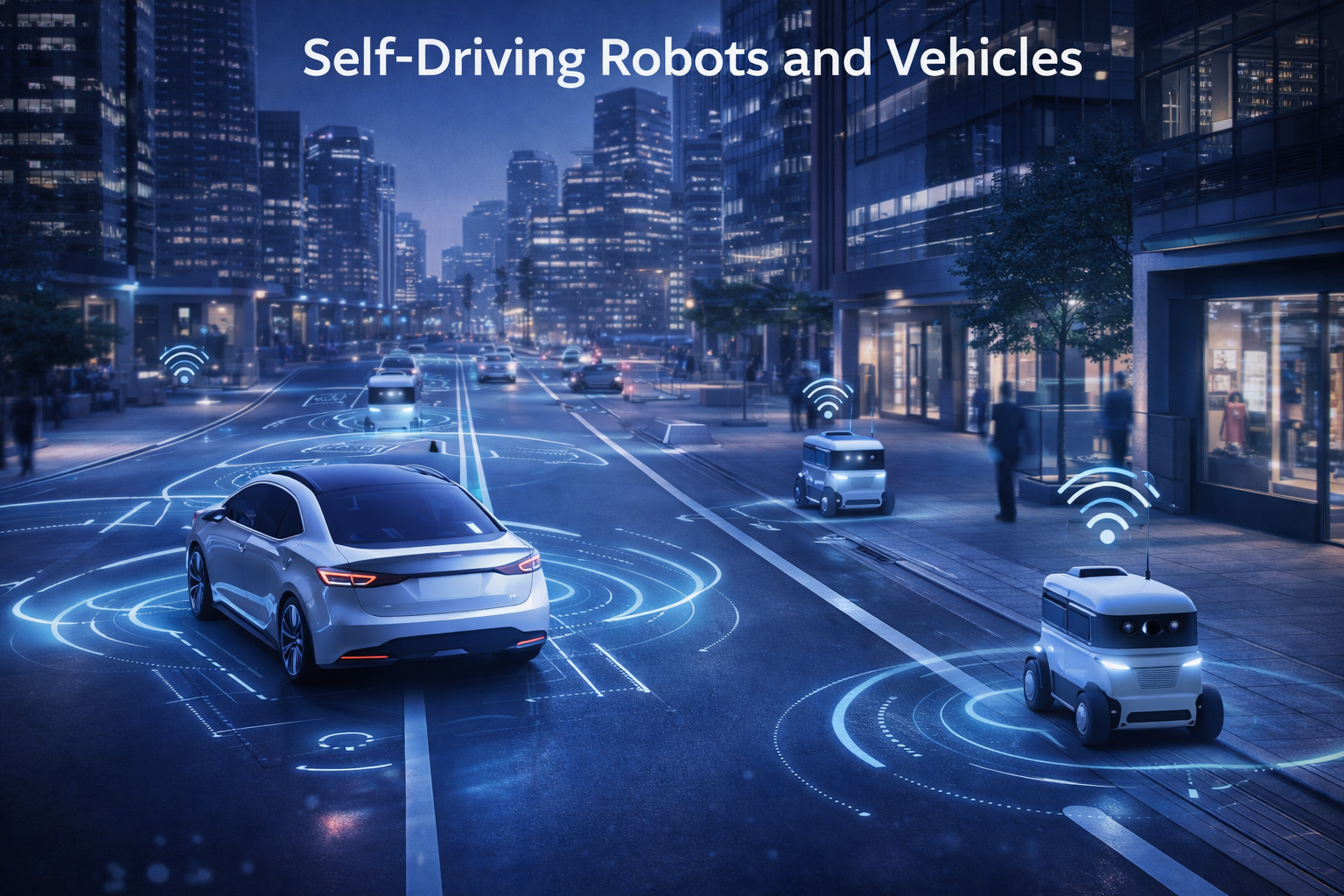
- Self-driving vehicles rely on fused camera, LiDAR, and radar data to navigate roads in real time.
- Medical robots use precise sensor data to assist in surgeries and patient care.
- Agricultural machines combine GPS, cameras, and soil sensors to manage crops efficiently.
- Industrial automation systems use sensor fusion to monitor equipment, detect faults, and maintain production quality.
Any robotic system that requires accuracy, autonomy, or safety benefits directly from sensor fusion technology.
The Road Ahead for Sensor Fusion Technology
As edge computing and machine learning continue to advance, sensor fusion will become even more capable. Future robots will use smarter fusion techniques to operate independently in complex, unpredictable environments without human intervention.
Smaller and more energy-efficient sensors are also making it easier to build sensor fusion into compact robotic systems. This means the technology will spread beyond large industrial machines into everyday devices and consumer robotics.
Sensor fusion will remain a core building block for the next generation of autonomous systems, from delivery drones to surgical robots to smart manufacturing lines.
In short, sensor fusion helps robots see better, think faster, and act more safely. It turns raw data from multiple sources into clear, actionable understanding. In modern robotics and automation, it is not an optional feature — it is a fundamental requirement for any robot expected to perform reliably in the real world.
Frequently Asked Questions
Sensor fusion in robotics is the process of combining data from multiple sensors such as cameras, LiDAR, radar, and motion sensors into a single, unified and more accurate understanding of the environment. This helps robots make better decisions than they could with any one sensor alone.
Sensor fusion improves robot safety by providing a backup system. If one sensor fails or gives incorrect data, other sensors continue to supply accurate information. This is especially important in environments where robots work alongside humans, such as factories, hospitals, and warehouses.
Sensor fusion is used across many industries including logistics and warehousing, self-driving vehicles, medical robotics, agricultural automation, and industrial manufacturing. Any robotic system that requires precision, safety, or autonomous operation benefits from sensor fusion.