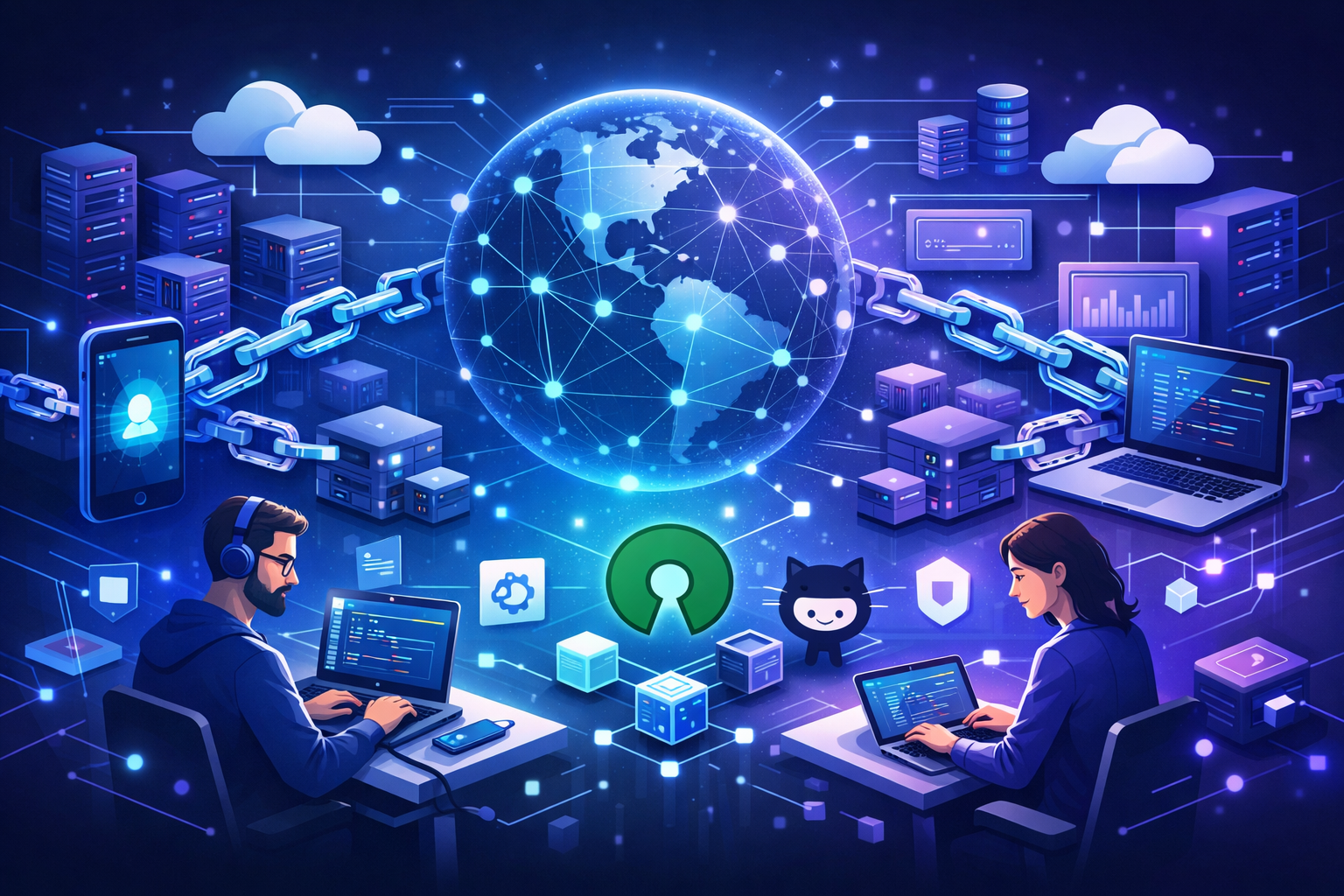
The way software is built and used is changing fast. For decades, most digital systems relied on a single company or central server to store data and run operations. Today, a growing number of developers, businesses, and users are shifting toward decentralized software — systems that spread control, data, and power across many computers and users. This shift is not just a technical trend. It is changing how people think about privacy, security, and digital freedom.
What Is Decentralized Software?
Decentralized software does not depend on a single server or owner. Instead, it runs across many computers connected through a shared network. No one company controls everything, and the system keeps working even if one part of the network fails.
Common examples include:
- Blockchain applications — where records are stored across thousands of computers
- Peer-to-peer (P2P) software — where users communicate directly without a middleman
- Open-source platforms — where code is publicly available and community-maintained
- Decentralized applications (dApps) — apps that run on blockchain networks instead of company-owned servers
This model is a direct contrast to centralized platforms like traditional social media, cloud storage, or banking apps, where one company holds all the data and makes all the decisions.
Why More Users and Developers Are Choosing Decentralization
The shift toward decentralized software is driven by real frustrations with centralized systems. Data breaches, server outages, and lack of user control have pushed people to look for better alternatives.
Decentralized software addresses these concerns by offering:
- Stronger data security, since there is no single point of attack for hackers
- Greater user control over personal information
- Lower risk of system-wide failures or downtime
- Transparency through open code and shared records
As privacy awareness grows — especially in countries like India where data protection laws are evolving — more users are actively seeking software that does not hand over their data to a single corporation.
Key Technologies Powering Decentralized Systems
Several core technologies work together to make decentralized software possible. Understanding them helps explain why this model is gaining serious traction.
| Technology | What It Does |
|---|---|
| Blockchain | Provides secure, transparent, and tamper-proof record keeping across a distributed network |
| Peer-to-Peer Networks | Enables direct communication between users without a central server |
| Decentralized Storage | Stores files across multiple locations instead of one central data center |
| Decentralized Identity | Lets users own and manage their digital identity without relying on a third party |
These technologies are already being used in finance, communication, cloud storage, and media platforms around the world.
Open-Source Development and Community-Driven Innovation
Most decentralized software is built on open-source principles. This means the code is publicly available for anyone to view, audit, improve, or contribute to. Developers from across the globe collaborate to build stronger, more reliable systems.
This approach brings clear advantages:
- Faster innovation, since many contributors work on improvements simultaneously
- Higher software quality through community review and testing
- A transparent development process that builds user trust
- No single company can secretly change how the software works
Open-source decentralized projects like those built on Ethereum, IPFS (InterPlanetary File System), and various P2P protocols have shown that community-driven development can produce powerful, widely-used software without corporate backing.
Real-World Uses of Decentralized Software Today
Decentralized software is no longer just a concept discussed in developer forums. It is actively used across several industries:
- Cryptocurrency and DeFi platforms — enabling financial transactions without banks
- Privacy-focused messaging apps — where messages are not stored on company servers
- Distributed cloud storage — where files are split and stored across many nodes
- Open-source media platforms — where creators publish content without platform censorship
- Decentralized identity systems — giving users control over their own login credentials and personal data
Challenges That Still Need to Be Solved
Despite its clear benefits, decentralized software is not without problems. Developers and researchers are still working through several real challenges:
- Complex development: Building decentralized systems requires more technical knowledge than traditional software
- Speed and cost: Some blockchain-based systems are slower and more expensive to run than centralized alternatives
- User experience: Many decentralized apps are still difficult for non-technical users to navigate
- Regulatory uncertainty: Laws around decentralized finance, identity, and data storage are still unclear in many countries, including India
These are not reasons to dismiss decentralization. They are active areas of improvement, and progress is being made steadily.
What the Future Looks Like for Decentralized Software
Decentralization is unlikely to fully replace traditional software anytime soon. The future will likely be shaped by hybrid software models — systems that combine the speed and convenience of centralized platforms with the security and transparency of decentralized networks.
As demand for data privacy, system reliability, and user freedom continues to grow, decentralized software will take on a larger role in how applications are built and how digital services are delivered. For developers, businesses, and everyday users, understanding this shift is becoming increasingly important.
The move toward decentralization is not just a technical upgrade. It represents a broader change in who controls the digital world — and that conversation is only getting louder.
Frequently Asked Questions
Decentralized software runs across many computers in a network instead of relying on a single central server or company. Unlike traditional software where one entity controls all data and operations, decentralized systems distribute control among many users and nodes, making them more secure and resistant to failure.
Real-life examples include cryptocurrency and DeFi platforms, privacy-focused messaging apps, distributed cloud storage services, open-source media platforms, and decentralized applications (dApps) built on blockchain networks like Ethereum.
The main challenges include a more complex development process, slower speeds and higher costs in some blockchain-based systems, a steeper learning curve for everyday users, and unclear legal regulations in many countries around decentralized finance and data storage.