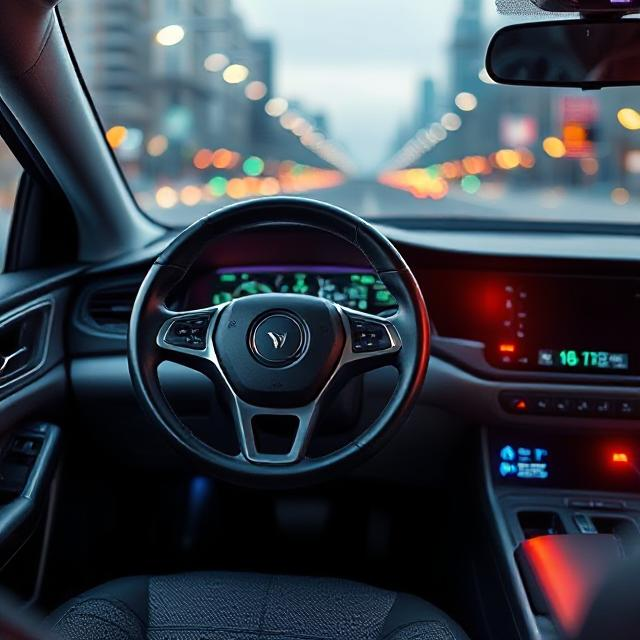
Self-driving cars are no longer just a concept from science fiction. Autonomous vehicles are now being tested and deployed on real roads across the world. At the heart of this technology is Artificial Intelligence, which acts as the brain behind every decision a driverless car makes. Here is a clear breakdown of how AI makes autonomous driving possible.
What AI Actually Does Inside a Self-Driving Car
A self-driving car does not simply follow a pre-programmed route. It constantly reads its environment, processes data in real time, and makes split-second decisions. AI handles all of this by combining inputs from multiple systems working together. Without AI, the car would have no way to respond to the unpredictable nature of real-world roads.
The key AI-powered systems inside an autonomous vehicle include:
- Computer Vision: Cameras mounted on the car capture live images and video. AI analyzes this footage to identify traffic lights, stop signs, road markings, pedestrians, cyclists, and other vehicles.
- Sensor Fusion: The car uses cameras, radar, and LiDAR (a laser-based scanning system) simultaneously. AI combines data from all these sensors to build a complete, accurate picture of the surroundings, even in low light or bad weather.
- Machine Learning: The car learns from millions of real driving scenarios. Over time, AI gets better at predicting how other drivers and pedestrians will behave, and it adapts to new roads and environments.
- Path Planning: AI calculates the safest and most efficient route in real time. It decides when to change lanes, when to brake, and how to handle complex situations like merging onto a highway.
- Vehicle Control: Once a decision is made, AI sends direct instructions to the car’s steering, acceleration, and braking systems to execute the move safely.
How These Technologies Work Together
Each of these systems works in a continuous loop. The sensors collect data, AI processes it, a decision is made, and the car acts on that decision — all within fractions of a second. This cycle repeats constantly while the vehicle is in motion.
Here is a simple comparison of the key sensor technologies used in autonomous vehicles:
| Technology | Function | Strength |
|---|---|---|
| Camera | Captures visual images and video | Reads signs, lane markings, faces |
| Radar | Detects objects using radio waves | Works well in rain and fog |
| LiDAR | Creates 3D maps using laser pulses | High precision distance measurement |
Challenges That Still Hold Back Autonomous Vehicles
Despite major progress, self-driving cars still face real obstacles before they can be used by everyone on public roads:
- Unpredictable Human Behaviour: AI can struggle when human drivers or pedestrians act in unexpected ways, such as sudden lane changes or jaywalking.
- Regulatory and Legal Gaps: Most countries are still working on laws that govern how autonomous vehicles can operate safely on public roads.
- High Computing Demands: Processing massive amounts of sensor data in real time requires powerful and expensive hardware, which adds to the overall cost of the vehicle.
- Edge Cases: Rare or unusual road situations — like flooded roads, unusual traffic signals, or construction zones — can still confuse AI systems.
What the Future of Self-Driving Cars Looks Like
The technology is advancing steadily. Researchers and automakers are working toward a future where autonomous vehicles are safer, more affordable, and widely available. Some developments expected in the coming years include:
- Vehicle-to-vehicle communication, where cars share real-time data with each other to avoid collisions and improve traffic flow.
- AI systems capable of handling dense urban traffic without human intervention.
- Fully driverless ride-hailing services available to the general public.
- Reduced road accidents, as human error accounts for the majority of crashes today.
Companies like Waymo, Tesla, and several traditional automakers are already investing heavily in making these possibilities a reality.
Why This Technology Matters for Everyday Commuters
For the average person, self-driving cars could mean shorter commute times, fewer accidents, and greater mobility for elderly or differently-abled individuals who cannot drive. The shift toward autonomous transport also has implications for urban planning, fuel efficiency, and public safety.
As AI continues to improve, the gap between what self-driving cars can do today and what they will be capable of tomorrow is closing faster than many expected.
Self-driving technology is not just about convenience — it represents a fundamental change in how people and goods move from one place to another. Understanding how AI drives these vehicles helps us appreciate both the promise and the responsibility that comes with putting intelligent machines behind the wheel.
Frequently Asked Questions
Self-driving cars use cameras, radar, and LiDAR sensors to collect data about their surroundings. AI processes this data using computer vision to identify road signs, pedestrians, other vehicles, and obstacles in real time.
Sensor fusion is the process where AI combines data from multiple sensors — including cameras, radar, and LiDAR — to create a complete and accurate picture of the environment around the car, improving safety and reliability.
Self-driving cars have shown strong safety results in testing, but challenges like unpredictable human behaviour, legal regulations, and rare road situations mean fully autonomous vehicles are still being refined before widespread public use.