If you have used ChatGPT, Google Bard, or DALL·E, you have already interacted with a foundation model — even if you never heard the term before. Foundation models are now at the heart of modern artificial intelligence, powering tools that millions of people use every day. Here is a clear, straightforward look at what they are, how they work, and why they are shaping the future of technology.
What Is a Foundation Model in AI?
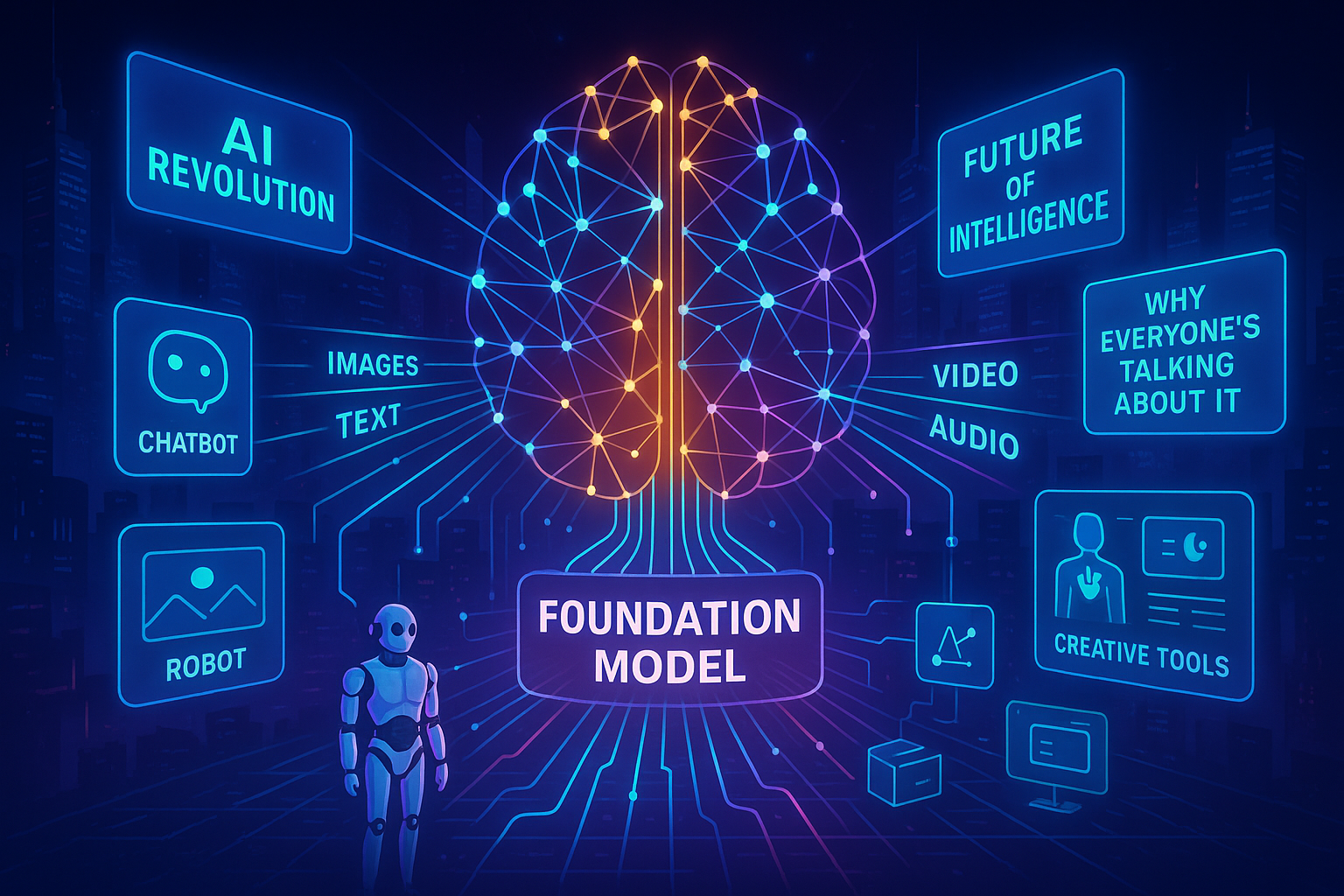
A foundation model is a large, general-purpose AI system trained on massive amounts of data. Unlike older AI systems built for a single specific task, a foundation model is designed to be flexible. Once trained, it can be adapted for many different uses — writing text, recognising images, generating code, translating languages, and much more.
Think of it like building a strong base structure. Once the foundation is solid, you can build different things on top of it without starting from zero every time. This adaptability is what makes foundation models so powerful and widely used across industries.
How Do Foundation Models Actually Work?
Foundation models are built using a technique called deep learning, specifically through a system known as transformers. Transformers are designed to detect patterns in large volumes of data — whether that data is text, images, or audio.
Here is how the process works step by step:
- The model is trained on enormous datasets — books, websites, images, research papers, and more.
- During training, it learns to understand context, meaning, and patterns in that data.
- Once training is complete, the model can be used directly or fine-tuned for specific tasks without starting the training process again.
This ability to reuse one trained model for many purposes is what separates foundation models from traditional AI systems, which had to be built and trained separately for each task.
Why Foundation Models Are a Big Deal
Foundation models have changed how companies and developers build AI-powered products. Here are the key reasons they matter:
- One model, many tasks: A single foundation model can handle text generation, image recognition, language translation, and more — without needing separate systems for each.
- Faster development: Developers do not have to build AI from scratch. They can take an existing foundation model and adapt it quickly for their specific needs.
- Better understanding of language: These models grasp human speech and context far better than older AI systems, making their outputs more accurate and useful.
- Cost efficiency over time: While training a foundation model requires significant computing resources, using or fine-tuning it afterward is much cheaper than building a new model entirely.
Real-World Applications of Foundation Models
Foundation models are already embedded in products and services that people use daily. Some of the most common applications include:
- Chatbots and AI assistants: Tools like ChatGPT by OpenAI, Google Bard, and Microsoft Copilot are all built on foundation models.
- Image generation: Platforms like DALL·E and Midjourney use foundation models to turn text descriptions into detailed images.
- Content creation: Writers, marketers, and businesses use AI tools powered by these models to draft blogs, emails, scripts, and social media posts.
- Healthcare and legal sectors: Foundation models help doctors and legal professionals analyse complex documents faster and more accurately.
- Education and personalised learning: AI-powered tutoring tools use foundation models to adapt content to each student’s pace and learning style.
| Application Area | Example Tools |
|---|---|
| AI Chatbots | ChatGPT, Google Bard, Microsoft Copilot |
| Image Generation | DALL·E, Midjourney |
| Content Writing | Various AI writing assistants |
| Healthcare | Document analysis tools |
| Education | Personalised AI tutoring platforms |
Challenges and Concerns Around Foundation Models
Like any powerful technology, foundation models come with real challenges that researchers, companies, and governments are actively working to address:
- Bias and misinformation: If the training data contains biased or inaccurate information, the model can produce unfair or incorrect outputs.
- High energy consumption: Training large foundation models requires enormous computing power and electricity, raising environmental concerns.
- Data privacy risks: There are valid concerns about how personal or sensitive data is handled during training and deployment.
- Lack of clear regulation: Governments and regulatory bodies around the world are still working out how to oversee and govern the use of foundation models responsibly.
What Lies Ahead for Foundation Model AI
The growth of foundation models shows no signs of slowing down. Major technology companies including OpenAI, Google, Meta, and Amazon are investing heavily in developing more capable and efficient models. At the same time, the rise of open-source AI is making it possible for smaller companies and independent developers to build smart tools using these powerful systems.
As foundation models become more efficient and accessible, they are expected to appear in more everyday products — from smartphones and search engines to healthcare platforms and educational software. The key challenge going forward will be ensuring these systems are used responsibly, with proper safeguards around bias, privacy, and accountability.
Foundation models are not just a technical milestone — they represent a fundamental shift in how AI is built and used. Understanding them helps anyone, from students to business owners, make better sense of the AI-powered world we are already living in.
Frequently Asked Questions
A foundation model is a large AI system trained on massive amounts of data that can be adapted for many different tasks — such as writing text, generating images, or answering questions — without being rebuilt from scratch each time.
Well-known examples include OpenAI's GPT series (which powers ChatGPT), DALL·E for image generation, Google's Bard, and Microsoft Copilot. These tools are all built on or use foundation models as their core technology.
Foundation models are generally safe for everyday use, but they do carry risks such as producing biased outputs, spreading misinformation, or mishandling private data. Responsible use, proper oversight, and ongoing regulation are important to address these concerns.