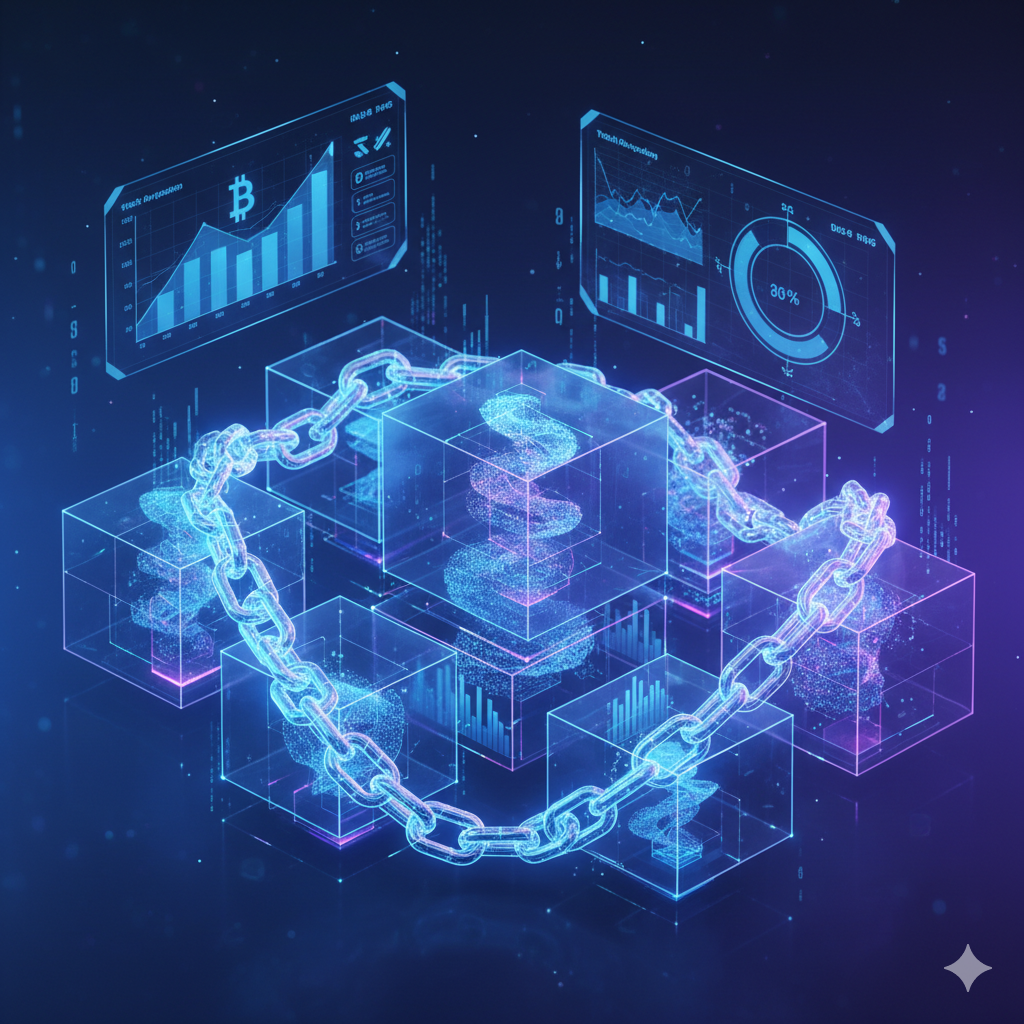
Blockchain technology has made financial transactions more transparent than ever before. Every time someone sends or receives cryptocurrency on networks like Bitcoin or Ethereum, that transaction is permanently recorded on a public ledger. But raw data alone is not enough. Blockchain data analytics and on-chain intelligence help turn that data into actionable insights — for investors, businesses, regulators, and security experts alike.
What Is Blockchain Data Analytics?
A blockchain is essentially a public digital ledger that records every transaction in a permanent and transparent way. Anyone can view who sent coins, who received them, and when the transaction happened.
Blockchain data analytics is the process of studying this on-chain information to uncover meaningful patterns and trends. Think of it as reading the blockchain like a story — one that reveals how money moves across the network.
Some key questions blockchain analytics can answer include:
- Are users buying more or selling more cryptocurrency?
- How much money is moving between wallets at any given time?
- Are there any suspicious or unusual transactions that need attention?
By answering these questions, analysts can better understand market behaviour, user activity, and potential risks in the crypto ecosystem.
What Is On-Chain Intelligence?
On-chain intelligence takes blockchain analytics a step further by monitoring blockchain activity in real time. Instead of waiting for news reports or market updates, on-chain intelligence tools let you see what is happening on the blockchain right now.
Here are some practical examples of on-chain intelligence in action:
- Whale movements: When a large investor transfers a significant amount of Bitcoin to a crypto exchange, it may signal an upcoming sell-off — and prices could drop.
- DeFi adoption: When a large number of wallets start interacting with a decentralised finance (DeFi) application, it suggests that app is gaining popularity.
- Smart contract alerts: Unusual activity on a smart contract could indicate a potential hack or exploit before it becomes public knowledge.
On-chain intelligence gives traders, developers, and security teams a real-time edge that traditional financial tools simply cannot provide.
Why Blockchain Analytics and On-Chain Intelligence Are Important
The value of blockchain data analytics goes well beyond just tracking prices. Here is why it matters across different sectors:
- Transparency: All blockchain data is publicly accessible, meaning anyone can verify transactions independently.
- Smarter investments: Traders use on-chain data to anticipate price movements before they happen.
- Security: Fraud, scams, and hacks can be detected faster when unusual patterns are spotted early.
- Regulatory compliance: Governments and financial regulators can track illegal transactions and enforce compliance more effectively.
- Business insights: Companies offering crypto services can study how users interact with their platforms to improve products and services.
Real-World Applications Across Industries
Blockchain analytics is not just for crypto traders. It has practical uses across a wide range of industries:
| Industry | How Blockchain Analytics Is Used |
|---|---|
| Crypto Exchanges | Detect suspicious activity and protect users from fraud |
| DeFi Platforms | Monitor loan repayments, liquidity flows, and protocol health |
| NFT Marketplaces | Verify the authenticity of NFTs and track ownership history |
| Banks and Enterprises | Use blockchain data for auditing and cross-border payments |
Popular Tools Used for Blockchain Data Analytics
Several platforms have become go-to resources for professionals working with on-chain data. Here are the most widely used tools:
- Glassnode: Provides detailed on-chain metrics for Bitcoin, Ethereum, and other major cryptocurrencies. Widely used by institutional investors and analysts.
- Nansen: Tracks wallet activity, DeFi trends, and NFT market movements. Known for labelling wallets to identify smart money flows.
- Chainalysis: Primarily used by law enforcement agencies and financial institutions to detect fraud, money laundering, and ensure regulatory compliance.
- Dune Analytics: Allows users to build custom blockchain dashboards using SQL queries. Popular among developers and researchers in the Web3 space.
Each of these tools serves a different purpose, but together they form a powerful ecosystem for understanding what is happening on public blockchains at any moment.
The Future of Blockchain Data Analytics
As the crypto industry matures, blockchain data analytics is expected to become as essential as stock market analysis is in traditional finance. The rapid growth of DeFi protocols, NFT platforms, tokenised real-world assets, and Web3 applications means there will be more on-chain data to analyse than ever before.
Institutions, regulators, and individual investors will increasingly rely on on-chain intelligence to make informed decisions, manage risk, and stay ahead of market trends. The ability to read and interpret blockchain data in real time will become a critical skill — and a major competitive advantage — in the years ahead.
In short, blockchain data analytics is not just a technical tool. It is becoming a fundamental part of how the global financial system understands and responds to the rise of decentralised networks.
Frequently Asked Questions
Blockchain data analytics involves studying historical transaction data recorded on a public blockchain to identify trends and patterns. On-chain intelligence focuses on monitoring this data in real time, allowing users to react to market movements, whale activity, or security threats as they happen.
Some of the most popular blockchain analytics tools include Glassnode for on-chain metrics, Nansen for wallet and DeFi tracking, Chainalysis for fraud detection and compliance, and Dune Analytics for building custom blockchain dashboards.
On-chain intelligence gives investors real-time visibility into blockchain activity, such as large wallet movements, exchange inflows, and DeFi usage trends. This data can help traders anticipate price changes and make more informed investment decisions before news reaches mainstream media.