Autonomous Mobile Robots, commonly known as AMRs, are changing the way businesses operate across industries. Unlike traditional robots that follow fixed, pre-programmed paths, AMRs use advanced sensors and intelligent software to navigate their environment independently, making real-time decisions without human intervention. From warehouses to hospitals, these robots are becoming a practical solution for companies looking to improve efficiency and reduce operational costs.
Why AMRs Are Gaining Popularity Across Industries
The rapid adoption of AMRs comes down to three core strengths: flexibility, efficiency, and autonomy. Advances in robotics and machine learning have made these systems more affordable and accessible than ever before. Businesses of all sizes — from large e-commerce giants to mid-sized manufacturers — are now deploying AMRs to speed up workflows, reduce dependency on manual labour, and increase overall output.
The growing demand for faster order fulfilment, especially in e-commerce and logistics, has further pushed companies to invest in AMR technology. As labour costs rise globally, AMRs offer a cost-effective alternative that delivers consistent performance around the clock.
Key Benefits of Using Autonomous Mobile Robots
- Higher Productivity: AMRs operate continuously without breaks, significantly increasing throughput in warehouses and production facilities.
- Lower Operational Costs: By reducing reliance on human workers for repetitive tasks, companies can cut long-term labour expenses.
- Adaptability: AMRs can be reprogrammed to handle different tasks and adjust to changing environments without major infrastructure changes.
- Improved Worker Safety: By taking over hazardous, repetitive, or physically demanding tasks, AMRs help reduce workplace injuries and accidents.
- Accuracy: With sensor-driven navigation and machine learning, AMRs make fewer errors in tasks like inventory management and goods transport.
How Autonomous Mobile Robots Actually Work
AMRs rely on a combination of sensors — including cameras, laser scanners (LiDAR), and infrared detectors — to build real-time maps of their surroundings. This process, known as Simultaneous Localisation and Mapping (SLAM), allows them to understand where they are and plan the most efficient route to their destination.
Their onboard machine learning systems continuously process data to detect obstacles, adjust routes, and make navigation decisions on the fly. This is what sets AMRs apart from older Automated Guided Vehicles (AGVs), which require fixed tracks or magnetic strips to move. AMRs can operate in dynamic, unpredictable environments — a critical advantage in busy warehouses or hospital corridors.
| Feature | AMR | Traditional AGV |
|---|---|---|
| Navigation | Sensor-based, autonomous | Fixed tracks or magnetic strips |
| Flexibility | High — adapts to environment | Low — requires infrastructure changes |
| Obstacle Avoidance | Real-time detection | Limited or none |
| Reprogramming | Easy via software | Requires physical changes |
Real-World Applications of AMRs
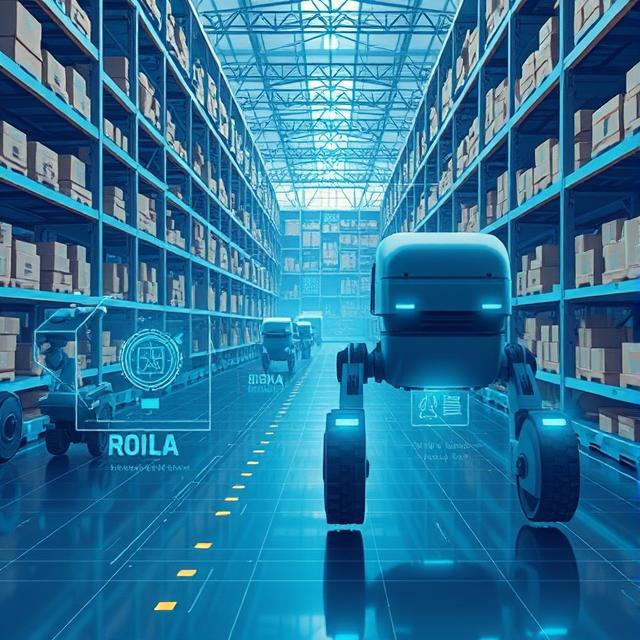
- Warehouse Automation: Major e-commerce companies like Amazon and Alibaba use AMRs extensively to manage inventory, pick orders, and streamline fulfilment operations. These robots reduce the time it takes to process orders and minimise human error in large-scale warehouses.
- Healthcare: Hospitals deploy AMRs to transport medical supplies, laboratory samples, and medications between departments. This reduces the risk of human error, frees up nursing staff for patient care, and helps maintain hygiene standards.
- Retail: Retail chains use AMRs for shelf scanning, restocking products, and even assisting customers. This leads to more accurate inventory tracking and a better in-store experience.
- Manufacturing: On factory floors, AMRs move raw materials and finished goods between workstations, supporting lean manufacturing processes.
Types of Autonomous Mobile Robots
- Goods-to-Person AMRs: These bring products directly to human workers for picking, packing, or assembly, reducing the time workers spend walking across large warehouse floors.
- Autonomous Forklifts: Designed for industrial environments, these robots lift and transport heavy loads safely without a human operator.
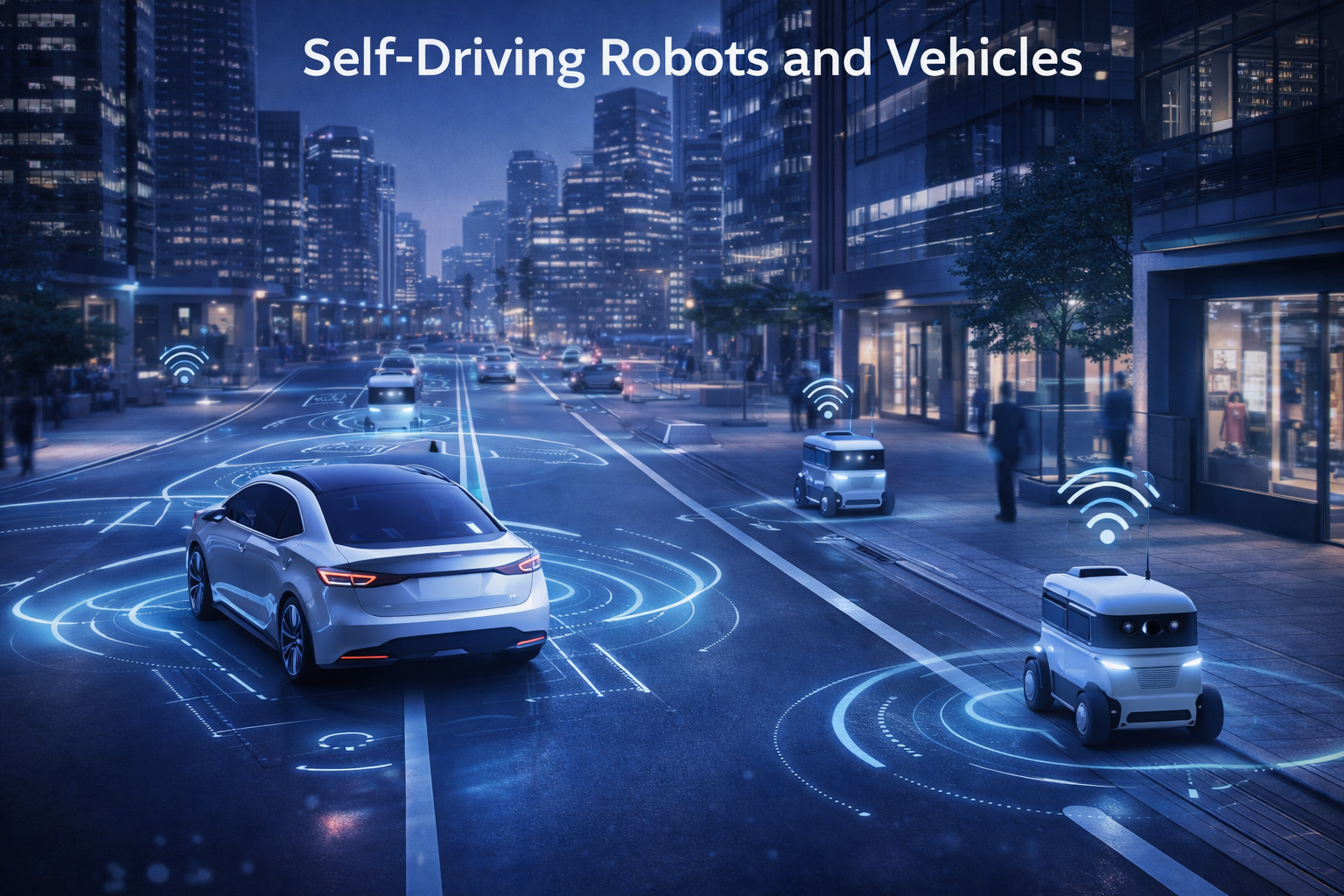
- Delivery Robots: Used for last-mile delivery within buildings or across short urban distances, these robots are increasingly common in hospitals, offices, and campuses.
- Cleaning Robots: Autonomous floor-cleaning robots are widely used in hospitals, shopping malls, airports, and large office spaces to maintain hygiene with minimal human effort.
What the Future Holds for AMR Technology
As robotics and machine learning continue to advance, AMRs are expected to become significantly smarter and more capable. Future models will likely feature better decision-making abilities, improved collaboration with human workers, and deeper integration with enterprise software systems like warehouse management platforms and ERP tools.
Industries that adopt AMR technology early are positioning themselves for a competitive advantage. With falling hardware costs and improving software capabilities, AMRs are set to move beyond large enterprises and become a viable option for small and medium-sized businesses as well.
In conclusion, Autonomous Mobile Robots represent a major shift in how physical tasks are handled across industries. Their ability to navigate independently, adapt to changing conditions, and operate continuously makes them a valuable asset for any business looking to improve productivity, safety, and cost efficiency. As the technology matures, their role in everyday operations will only grow stronger.
Frequently Asked Questions
An Autonomous Mobile Robot (AMR) uses onboard sensors and machine learning to navigate its environment independently and avoid obstacles in real time. A traditional Automated Guided Vehicle (AGV) follows fixed paths like magnetic strips or tracks and cannot adapt to changes in its environment without physical modifications.
AMRs are widely used in warehousing and logistics, healthcare, retail, and manufacturing. Companies like Amazon and Alibaba use them for order fulfilment, while hospitals deploy them to transport medical supplies and reduce staff workload.
While AMRs were initially expensive and mainly adopted by large enterprises, advances in robotics technology and falling hardware costs are making them increasingly accessible to small and medium-sized businesses. Many providers now offer flexible deployment models to suit different budget levels.