
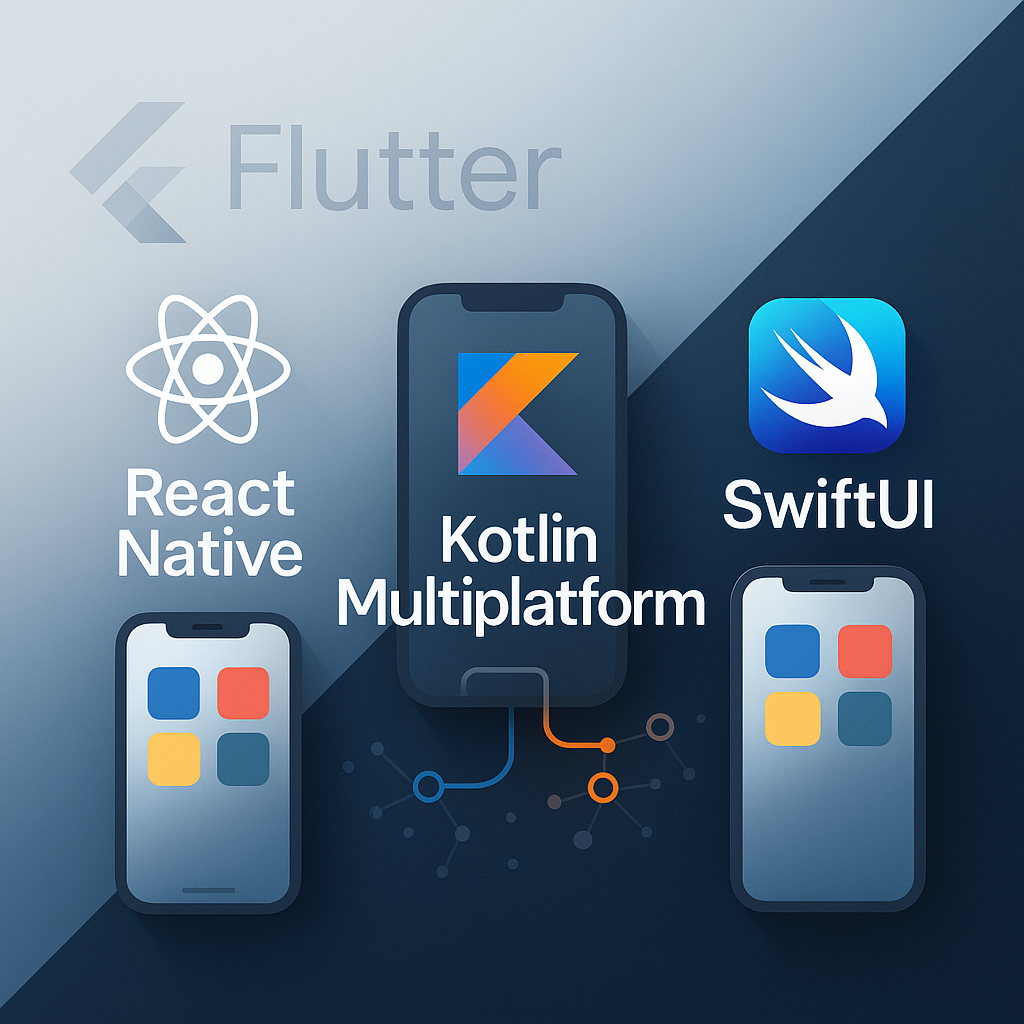
Flutter was once the most talked-about framework for building cross-platform mobile apps. Backed by Google and praised for its smooth UI and fast development cycle, it attracted developers worldwide. But in 2025, the conversation has shifted. Developers are asking whether Flutter still holds up — and what tools are worth using instead.
What Is Flutter and Why Did It Become Popular?
Flutter is a Google-built open-source framework that lets developers write a single codebase in Dart and deploy it across Android, iOS, web, and desktop platforms. It became popular because it removed the need to build separate apps for each platform, saving both time and cost.
Key reasons developers adopted Flutter include:
- Smooth, high-performance animations
- Visually consistent UI across platforms
- Faster development and prototyping
- Strong support from Google and an active community
For startups and small teams, Flutter was a practical way to launch a product quickly without hiring separate iOS and Android developers.
Why Developers Are Questioning Flutter’s Future
Flutter is not dead — but its growth has clearly slowed. Several real concerns have pushed developers to explore other options.
- Dart’s limited adoption: Dart is not widely used outside Flutter. Finding experienced Dart developers is harder compared to JavaScript or Python talent pools.
- Larger app file sizes: Flutter apps tend to be heavier than native apps, which can be a problem for users with limited device storage.
- Slower startup times: Some Flutter apps take longer to launch compared to apps built with native tools.
- Low adoption by large enterprises: Most major companies have not moved their core apps to Flutter, which limits its credibility at scale.
- Growing competition: New and improved frameworks now offer better performance, flexibility, or a more familiar language stack.
Top Flutter Alternatives Developers Are Using in 2025
As Flutter’s momentum has levelled off, several frameworks have stepped up. Here is a comparison of the leading alternatives:
| Framework | Language | Best For | Backed By |
|---|---|---|---|
| React Native | JavaScript / TypeScript | Cross-platform apps with large JS teams | Meta (Facebook) |
| Kotlin Multiplatform (KMP) | Kotlin | Shared business logic with native UI | JetBrains / Google |
| SwiftUI + Jetpack Compose | Swift / Kotlin | Maximum performance and native control | Apple / Google |
| Tauri / Capacitor | HTML, CSS, JavaScript | Web-first apps on mobile and desktop | Open Source |
React Native, created by Meta, remains one of the most widely used cross-platform frameworks. Its updated architecture has improved performance, and it supports JavaScript and TypeScript — languages already familiar to millions of developers.
Kotlin Multiplatform (KMP) is gaining traction among Android developers. It allows teams to share business logic across iOS and Android while keeping native UI flexibility. This makes it a strong choice for scalable, maintainable apps.
SwiftUI and Jetpack Compose represent the dual-native approach. Teams build separate apps for iOS and Android using Apple’s SwiftUI and Google’s Jetpack Compose respectively. This takes more effort but delivers the best possible performance and platform-specific experience.
Tauri and Capacitor are web-technology-based tools that let developers build mobile and desktop apps using HTML, CSS, and JavaScript. Tauri, in particular, is known for producing apps with very small file sizes and near-native performance.
Should You Still Learn or Use Flutter in 2025?
Flutter is still a valid choice in specific situations. It is not a framework to avoid — it is simply one option among several, and the right choice depends on your project goals.
Flutter works well when:
- You are building a startup MVP and need to ship fast
- Your team already knows Dart and Flutter
- You want a consistent UI across platforms without much customisation
- Budget and team size are limited
However, if you are starting a new project in 2025 with no existing Flutter investment, it is worth evaluating React Native for JavaScript-heavy teams or Kotlin Multiplatform for Android-first teams. Both offer strong community support and growing enterprise adoption.
Where Is Cross-Platform Mobile Development Heading?
The idea of one perfect framework for all use cases is fading. The mobile development space is moving toward a more practical, project-specific approach. Developers are choosing tools based on team skills, performance requirements, and long-term maintainability rather than trends.
A quick guide to choosing the right tool:
- Need web and mobile from one codebase? Consider Capacitor or Tauri.
- Want full native performance and control? Use SwiftUI for iOS and Jetpack Compose for Android.
- Need shared logic with native UI flexibility? Kotlin Multiplatform is a strong fit.
- Working with a large JavaScript team? React Native remains a reliable option.
Flutter still has a place in this landscape, especially for teams already invested in it. But the days of Flutter being the default answer for cross-platform development are behind us.
The best framework is the one that fits your team, your timeline, and your users’ expectations. In 2025, that answer looks different for every project.
Frequently Asked Questions
No, Flutter is not dead. It is still actively maintained by Google and used by many developers, especially for startups and MVPs. However, its growth has slowed and several strong alternatives have emerged, making it less of a default choice for new projects.
The best alternative depends on your team and project. React Native is ideal for JavaScript teams, Kotlin Multiplatform suits Android-first developers, and SwiftUI with Jetpack Compose offers the best native performance for teams willing to maintain two codebases.
Flutter is still a good starting point for beginners interested in cross-platform development. It is easy to learn, well-documented, and backed by Google. However, learning JavaScript alongside React Native may offer broader career opportunities given JavaScript's widespread use.