Fake videos and manipulated audio clips are spreading faster than ever across social media platforms. As deepfakes become more convincing and harder to spot with the naked eye, artificial intelligence has stepped up as the most powerful weapon to detect and fight them. Here is a clear look at how deepfake detection works, why it matters, and what you can do to protect yourself.
What Exactly Are Deepfakes?
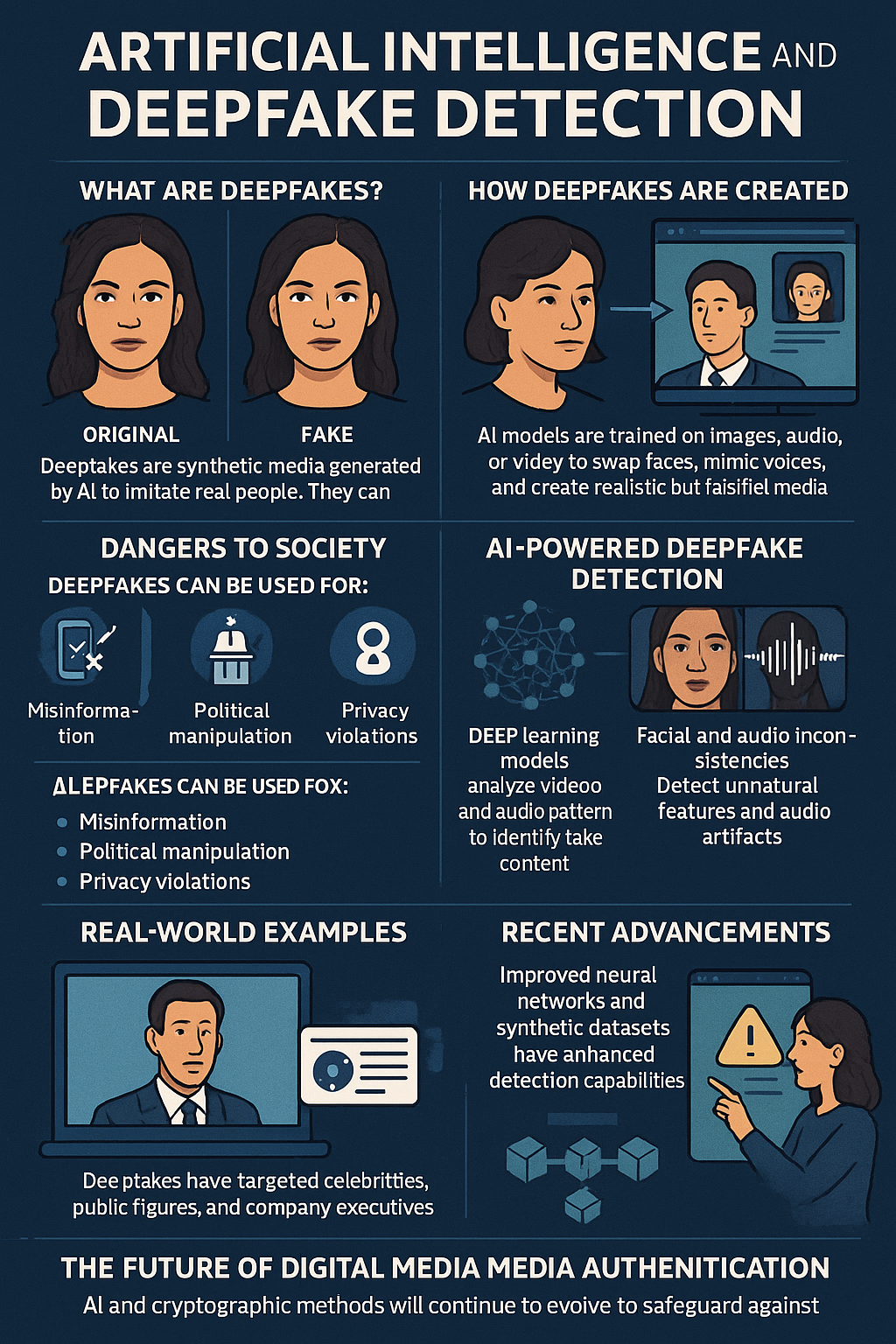
Deepfakes are fabricated videos, images, or audio recordings generated using artificial intelligence. They are designed to make real people appear to say or do things they never actually did. The technology behind them is called Generative Adversarial Networks (GANs) — a system where one AI model creates the fake content while another tries to detect whether it is real or not. Over time, this back-and-forth process makes the output increasingly convincing and difficult to identify.
While some deepfakes are created for harmless entertainment, a large number are made with harmful intent — to mislead, manipulate, or damage reputations.
Why Deepfakes Are a Growing Concern
The risks posed by deepfakes go far beyond a simple prank. Here is why they are considered a serious threat:
- Misinformation spreads rapidly — A fake video of a politician or public figure can go viral within hours before anyone fact-checks it.
- Identity fraud — Scammers can impersonate business leaders or celebrities to deceive people into financial transactions.
- Blackmail and harassment — Deepfake content is increasingly used to target individuals, especially women, through non-consensual fake videos.
- Erosion of trust — When people cannot tell what is real, trust in digital media, journalism, and institutions breaks down.
- Election interference — Fake audio or video of candidates can influence public opinion during critical election periods.
How AI Detects Deepfakes
The same technology that creates deepfakes is also used to catch them. AI-powered detection tools analyze media at a level far beyond what the human eye can process. Here are the main methods used:
- Facial and eye movement analysis: AI checks for unnatural blinking patterns, lip sync mismatches, or irregular facial muscle movements that real humans would not produce.
- Audio pattern examination: Detection tools study voice tone, speech rhythm, and sound quality. A voice that sounds slightly robotic or inconsistent with the speaker’s known patterns raises a red flag.
- Pixel-level visual inspection: Deepfakes often have subtle flaws — blurry edges around the face, inconsistent lighting, or odd shadows. AI scans individual pixels to catch these imperfections.
- Frame-by-frame video analysis: AI reviews how a face or body moves across every single frame of a video. Unnatural rigidity or sudden shifts in appearance can indicate manipulation.
| Detection Method | What It Checks | Common Red Flags |
|---|---|---|
| Facial Movement Analysis | Eyes, lips, facial muscles | Abnormal blinking, lip-sync errors |
| Audio Analysis | Voice tone, speech patterns | Robotic sound, unnatural pauses |
| Visual Pixel Inspection | Lighting, edges, shadows | Blurry borders, inconsistent shadows |
| Frame-by-Frame Analysis | Body and face movement across frames | Rigid or unnatural motion |
Key AI Tools Built to Identify Fake Media
Several major technology companies and research institutions have developed dedicated tools to detect deepfakes:
- Microsoft Video Authenticator: Analyzes videos and images for signs of digital manipulation, providing a confidence score on whether content has been altered.
- Sensity AI: Monitors deepfake activity across the internet and helps organizations identify fake media before it spreads widely.
- Facebook’s Deepfake Detection Challenge: Meta launched this initiative to encourage developers worldwide to build better and more accurate detection models by providing a large dataset of deepfake videos for training.
Beyond these tools, researchers are also combining AI detection with blockchain verification — a method that creates a tamper-proof record of when and where a video was originally created, making it easier to confirm authenticity.
How You Can Spot and Avoid Deepfakes
While detection tools do much of the heavy lifting, individuals also play an important role in stopping the spread of fake media. Here are practical steps you can take:
- Always question viral videos or audio clips before sharing them — check trusted news sources for verification.
- Look for visual oddities such as unnatural facial expressions, mismatched lip movements, or strange lighting around the face.
- Use reverse image or video search tools to trace the original source of suspicious content.
- Avoid sharing content you cannot verify, even if it appears to come from a known person or account.
- Stay updated on deepfake trends so you know what to watch out for.
As deepfake creators continue to improve their methods, detection technology must keep pace. This ongoing battle between creators and detectors makes public awareness just as important as any technical solution.
Deepfake detection is no longer a niche concern — it is a critical part of maintaining trust in digital media. With the right tools and a cautious mindset, both technology and individuals can work together to keep fake content from causing real-world harm.
Frequently Asked Questions
A deepfake is a fake video, image, or audio clip made using artificial intelligence, specifically a technology called Generative Adversarial Networks (GANs). One AI model generates the fake content while another tries to detect it, making the output more realistic over time.
Some of the most well-known deepfake detection tools include Microsoft Video Authenticator, Sensity AI, and models developed through Facebook's Deepfake Detection Challenge. Researchers are also using blockchain verification to confirm video authenticity.
You can protect yourself by verifying viral videos through trusted news sources, looking for visual oddities like unnatural blinking or lip-sync errors, using reverse video search tools, and avoiding sharing content you cannot confirm as genuine.