Federated learning is changing the way artificial intelligence models are trained — and it does so without ever moving your personal data off your device. As privacy concerns grow globally, this approach offers a practical way to build smarter AI systems while keeping sensitive information exactly where it belongs: with the user.
What Makes Federated Learning Different from Traditional Machine Learning?
In standard machine learning, data from thousands or millions of users is collected and sent to a central server. There, it is used to train a model. While effective, this method creates serious privacy risks — your personal messages, health records, or financial transactions could be exposed during transfer or storage.
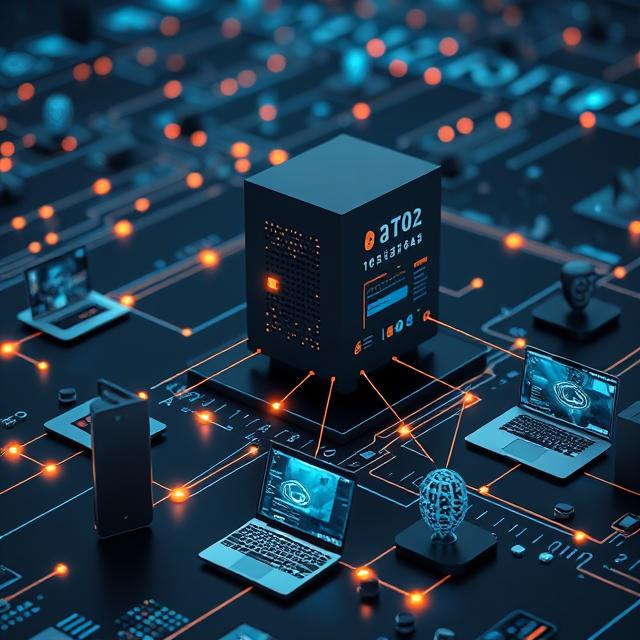
Federated learning takes a completely different path. Instead of sending raw data to a server, the model training happens directly on your device — whether that is a smartphone, a hospital computer, or an IoT gadget. Only the model updates, which are small mathematical adjustments, are shared with a central server. Your actual data never leaves your device.
Here is a quick comparison of both approaches:
| Feature | Traditional Machine Learning | Federated Learning |
|---|---|---|
| Data Location | Sent to central server | Stays on device |
| Privacy Risk | Higher | Lower |
| Model Training | Centralized | Distributed across devices |
| Data Sharing | Raw data shared | Only model updates shared |
How Does Federated Learning Actually Work?
The process follows a clear, repeating cycle that gradually improves the AI model over time:
- Local training: Each participating device trains a portion of the model using its own data. For example, your phone may use your typing history to improve its predictive text feature — all without sending that data anywhere.
- Sharing model updates: Once local training is complete, the device sends only the mathematical changes — not the data itself — to a central server. These updates are anonymous and contain no personal details.
- Global model improvement: The central server collects updates from all participating devices and combines them to build a stronger, more accurate global model.
- Updated model returned: The improved model is sent back to each device. Over time, this cycle makes the model smarter and more accurate for every user.
Throughout this entire process, personal data remains private and secure on the original device.
Real-World Applications of Federated Learning
Federated learning is already being used across several important sectors in India and globally. Its ability to protect privacy while enabling collaboration makes it especially valuable in data-sensitive industries.
Healthcare: Hospitals and medical research institutions can jointly train AI diagnostic models without sharing patient records. This means better disease prediction and treatment recommendations, while patient confidentiality is fully maintained. Multiple hospitals can contribute to a shared model without ever exposing individual health data.
Banking and Finance: Banks use federated learning to detect fraud across multiple branches and regions. By learning from transaction patterns at different locations, the fraud detection system becomes sharper — all without exposing sensitive customer financial data to any central system.
Smartphones and IoT Devices: Features like predictive text, voice assistants, and smart home devices benefit directly from federated learning. As your device learns from your usage patterns, it becomes more personalised and accurate — whether it is predicting your next word or adjusting how it responds to your commands — without compromising your privacy.
Key Benefits and Challenges of Federated Learning
Federated learning brings several clear advantages, but it also comes with its own set of challenges that researchers and developers continue to work on.
Benefits:
- Strong data privacy — raw data never leaves the user’s device
- Reduced risk of large-scale data breaches
- Enables collaboration between organisations without data sharing agreements
- Supports compliance with data protection laws like India’s DPDP Act and Europe’s GDPR
- Works well for edge devices with limited connectivity
Challenges:
- Training across many devices can be slower than centralised methods
- Devices with poor internet connectivity may struggle to send updates reliably
- Ensuring the quality and consistency of model updates from diverse devices is complex
- Protecting against malicious updates from compromised devices remains an active area of research
Why Federated Learning Matters for the Future of Privacy-First AI
As governments tighten data protection regulations and users become more aware of how their information is used, the demand for privacy-respecting AI solutions is growing fast. Federated learning directly addresses this need by making it possible to build powerful AI models without centralising sensitive data.
For India, where digital adoption is expanding rapidly across healthcare, fintech, and consumer technology, federated learning offers a path to building trustworthy AI systems that respect user rights. Companies developing AI-powered products — from health apps to banking platforms — stand to gain significantly by adopting this approach.
In conclusion, federated learning represents a meaningful shift in how AI is built and deployed. It proves that powerful, accurate machine learning models do not require sacrificing user privacy. As the technology matures, its adoption across industries is expected to grow, making privacy-first AI a standard rather than an exception.
Frequently Asked Questions
Federated learning is a method of training AI models where the learning happens directly on each user's device. Instead of sending personal data to a central server, only small mathematical updates are shared. This keeps your data private while still helping improve the overall AI model.
In federated learning, raw personal data never leaves your device. Only anonymous model updates — which contain no identifiable information — are sent to a central server. This significantly reduces the risk of data breaches and helps comply with privacy laws like India's DPDP Act and Europe's GDPR.
Federated learning is actively used in healthcare, where hospitals collaborate on AI diagnostics without sharing patient records. Banks use it for fraud detection across branches. Consumer technology companies apply it to improve features like predictive text and voice assistants on smartphones and IoT devices.