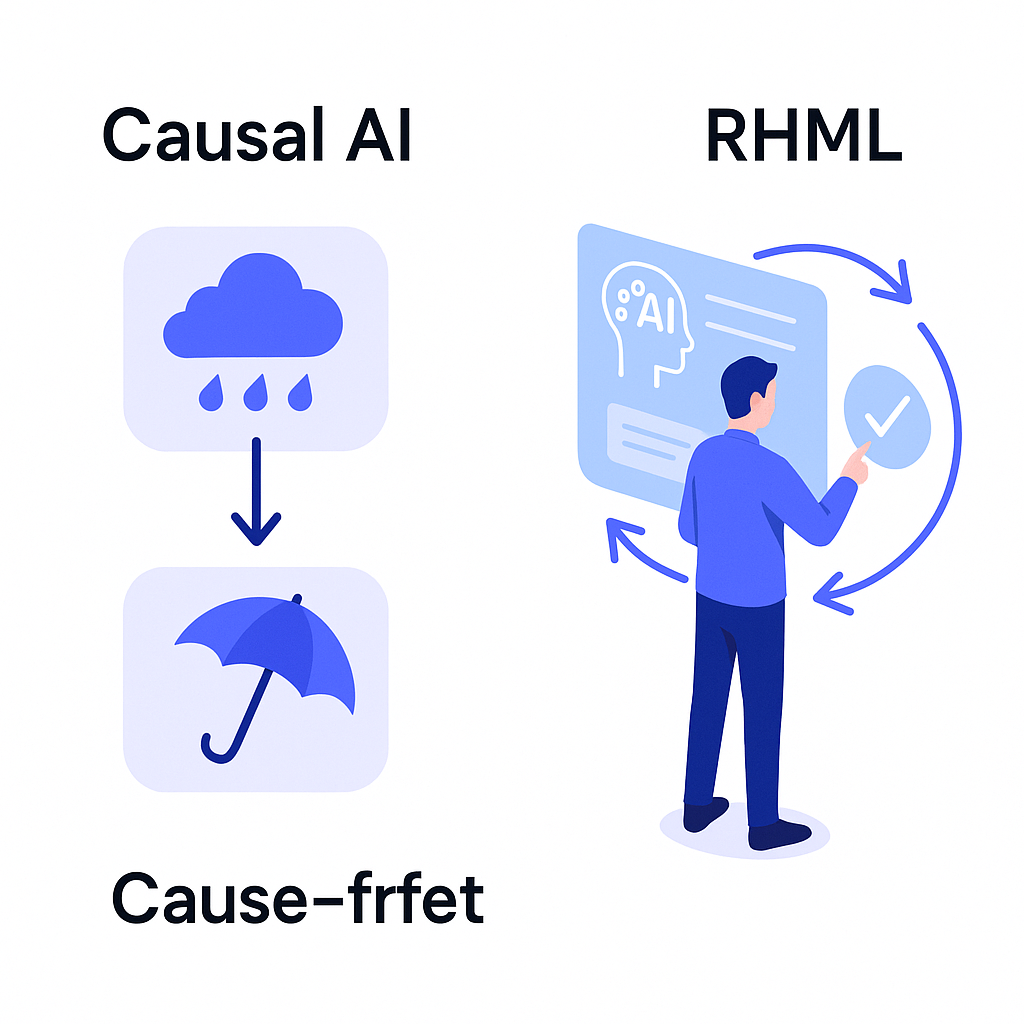

Artificial Intelligence now shapes decisions in healthcare, banking, law, and beyond. But as AI systems grow more complex, a critical question arises — how do we know if their decisions are fair, accurate, and unbiased? Explainable AI (XAI) addresses this challenge directly by making AI models transparent, understandable, and accountable to the people they affect.
Why Explainable AI Matters in the Real World
AI systems today influence life-changing decisions. They help banks decide who qualifies for a loan. They assist doctors in diagnosing diseases. They support courts in assessing legal risks. Yet, most people have no idea how these systems reach their conclusions.
This lack of clarity creates a serious trust gap. When an AI rejects a loan application or recommends a medical treatment, people deserve to know why. XAI fills this gap by revealing the factors and logic behind AI decisions, making the process visible rather than hidden inside a black box.
- Trust in AI systems increases when users can see how decisions are made.
- Doctors and financial advisors can verify AI recommendations before acting on them.
- Ordinary users feel more confident accepting AI-driven outcomes when explanations are provided.
Legal Compliance and Ethical Accountability
Governments and regulators are paying close attention to how AI makes automated decisions. In Europe, the General Data Protection Regulation (GDPR) gives individuals the right to understand automated decisions that affect them. Similar frameworks are emerging across the world.
XAI helps organisations meet these legal requirements by providing clear, documented explanations of how AI models work. This is not just about following rules — it is about ensuring that AI systems respect human rights and operate within ethical boundaries.
Without explainability, AI systems risk being challenged in courts, rejected by regulators, or abandoned by users who simply do not trust them. XAI acts as a safeguard against these outcomes.
Identifying and Reducing Bias in AI Systems
One of the most serious concerns with AI is bias. When AI models are trained on historical data, they can absorb and repeat the biases present in that data. This can lead to unfair outcomes — for example, an AI that consistently disadvantages certain communities in hiring, lending, or healthcare decisions.
XAI helps identify these biases by showing which data points or features most influenced a particular decision. Once a bias is visible, developers and organisations can take steps to correct it.
- XAI tools can highlight if gender, race, or income data is unfairly influencing AI outcomes.
- Developers can retrain models using corrected or balanced datasets.
- Organisations can audit AI systems regularly to ensure fair treatment across all user groups.
This makes XAI not just a technical tool, but a key instrument for building fairer and more equitable AI systems.
How Explainable AI Works: Key Methods
XAI uses several practical techniques to make AI decisions easier to understand. Here is a comparison of the most widely used approaches:
| Method | How It Works | Best Used For |
|---|---|---|
| Visual Explanations | Charts, heatmaps, and graphs show which features most influenced a decision | Medical imaging, fraud detection |
| Human-Readable Summaries | Plain language explanations break down complex model outputs | Loan decisions, insurance claims |
| Feature Importance Scores | Ranks the data inputs that had the most impact on the AI’s output | Credit scoring, hiring tools |
| Transparent Model Design | Uses simpler, interpretable models instead of complex black-box systems | Legal and regulatory environments |
Each of these methods serves a different purpose, but all share the same goal — making AI decisions understandable to both technical experts and everyday users.
The Road Ahead for Explainable AI
The future of AI is not just about building smarter systems. It is about building systems that people can understand, question, and trust. As AI takes on more responsibility in critical sectors, the demand for explainability will only grow stronger.
Regulators, businesses, and researchers are already investing heavily in XAI research and tools. The goal is to create AI that is not only powerful but also open, fair, and aligned with human values. For AI to truly benefit society, it must be explainable — and that is exactly what XAI is working to achieve.
In short, Explainable AI is not a luxury feature. It is a fundamental requirement for responsible AI deployment in the modern world.
Frequently Asked Questions
Explainable AI (XAI) refers to methods and techniques that make AI systems' decisions transparent and understandable to humans. It helps users, developers, and regulators see how an AI model reached a particular conclusion, making AI more trustworthy and accountable.
Laws like the General Data Protection Regulation (GDPR) in Europe require that individuals be given clear explanations when automated AI systems make decisions about them. XAI helps organisations meet these legal requirements by documenting and communicating how AI models make decisions.
XAI tools can identify which data features most influenced an AI decision, making it easier to spot unfair patterns or biases. Once identified, developers can correct the training data or adjust the model to ensure fairer outcomes for all user groups.