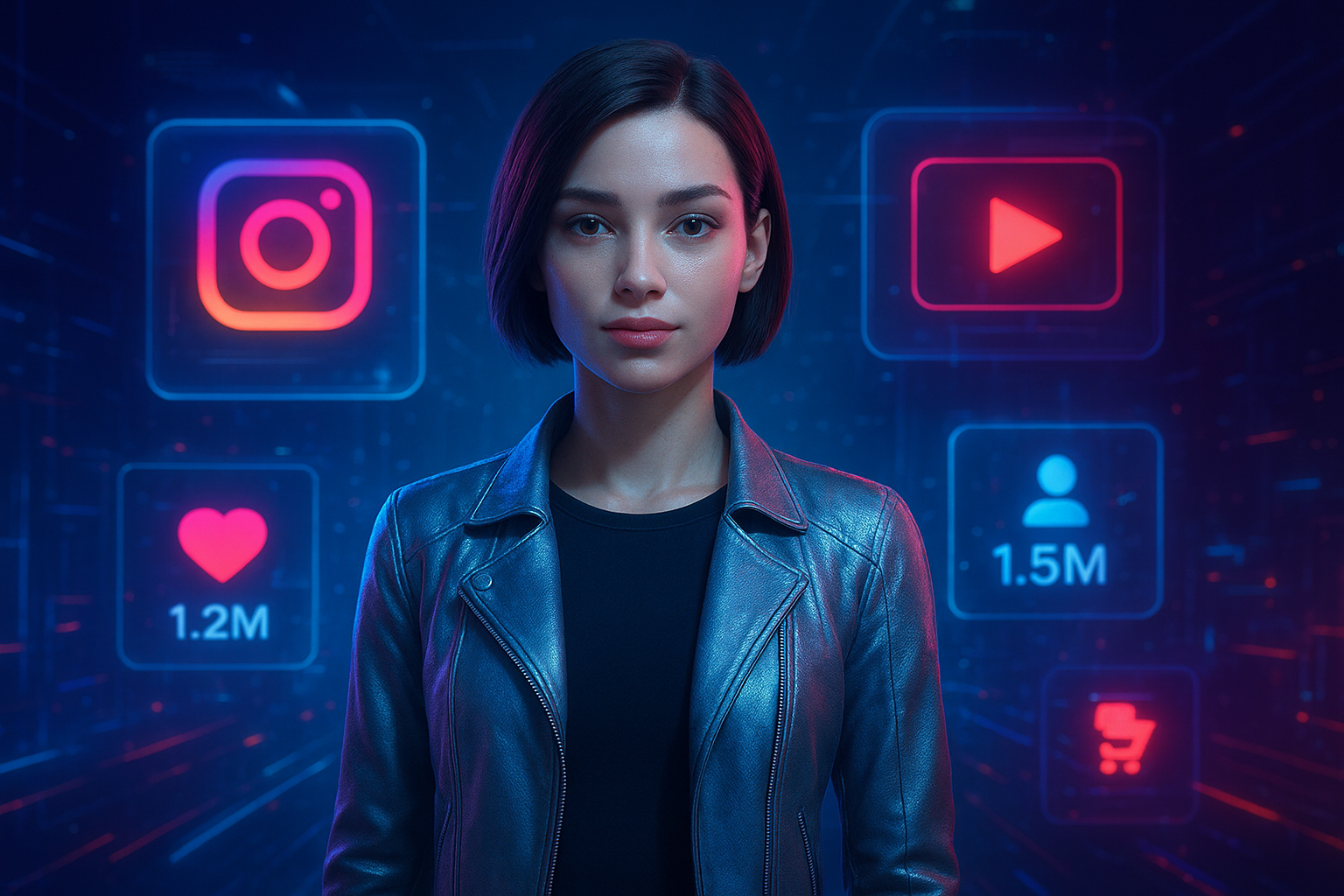
Virtual personalities created through advanced design tools and machine learning are no longer a novelty. AI influencers are now active participants in brand campaigns, social media feeds, and digital marketing strategies worldwide. From fashion runways to product launches, these computer-generated characters are changing how brands connect with audiences.
What Are AI Influencers?
AI influencers are virtual personalities built using 3D design software, machine learning, and realistic animation tools. They do not exist in the physical world, yet they post content, interact with followers, and collaborate with major brands online.
Some of the most well-known examples include:
- Lil Miquela – a computer-generated character with millions of social media followers who has worked with top fashion and lifestyle brands.
- Shudu – widely regarded as the world’s first digital supermodel, created by photographer Cameron-James Wilson.
These characters have their own names, personalities, backstories, and visual identities. To many followers, they feel just as real and relatable as human creators.
How Technology Brings Digital Personas to Life
Creating a convincing AI influencer requires a combination of tools and techniques. Designers use 3D modeling software, motion capture, and machine learning to build characters that look, speak, and behave like real people.
Key features of these synthetic personas include:
- Photorealistic appearances that can be difficult to distinguish from actual humans.
- Unique voices, speaking styles, and defined personality traits.
- Customisable backstories and visual aesthetics tailored to match a brand’s identity.
- The ability to communicate in multiple languages, making them suitable for global campaigns.
Once created, these personas can be updated, repositioned, or adapted without the complications that come with managing real human talent.
Why Brands Are Choosing AI Influencers Over Human Ones
The appeal for brands is straightforward. AI influencers offer a level of control and consistency that human influencers simply cannot match. Here is a quick comparison:
| Factor | Human Influencer | AI Influencer |
|---|---|---|
| Availability | Limited by time and contracts | Available 24/7 with no downtime |
| Brand Consistency | Can vary with personal opinions | Always on-message and on-brand |
| Cost Over Time | Ongoing fees per campaign | Lower long-term cost after setup |
| Global Reach | Language and cultural barriers | Can be adapted for any market |
| Reputation Risk | Personal controversies possible | Fully controlled by the brand |
Fashion brands, in particular, have adopted computer-generated models to showcase digital clothing collections and promote new product lines without the cost and logistics of traditional photo shoots.
The Ethical Questions Surrounding Synthetic Personas
The rise of AI influencers is not without controversy. As these virtual characters become more convincing, important questions about transparency and trust are coming to the surface.
- Should platforms require clear labels identifying content posted by virtual or AI-generated personas?
- Is it ethical for brands to build emotional connections with audiences through non-human characters without full disclosure?
- Could widespread use of AI influencers reduce opportunities for human creators and content professionals?
- Can audiences form genuine emotional bonds with entities that have no real lived experience?
Many digital marketing experts and consumer advocacy groups argue that audiences deserve to know when they are engaging with a virtual character rather than a real person. Transparency, they say, is essential for maintaining trust in online spaces.
What the Future Holds for AI-Driven Influence
The growth of synthetic personas points to a broader shift in how brands will communicate with consumers in the years ahead. Several trends are already taking shape:
- Brands are developing their own proprietary AI characters to serve as permanent digital ambassadors and customer-facing representatives.
- AI influencers are being tailored for niche audiences, with specific cultural references, languages, and aesthetic styles built in from the start.
- As virtual reality and metaverse platforms expand, AI influencers are expected to engage with users in fully immersive three-dimensional environments.
- Smaller businesses may eventually use affordable AI persona tools to run influencer-style campaigns without large marketing budgets.
The intersection of AI-generated content, social media, and brand storytelling is still in its early stages. But the direction is clear: virtual personalities will play an increasingly significant role in digital marketing strategies globally.
Human creativity and genuine storytelling still hold value, and audiences continue to seek authentic connections. However, the line between real and virtual is blurring, and brands, creators, and platforms will all need to adapt to this new reality thoughtfully and responsibly.
Frequently Asked Questions
An AI influencer is a virtual personality created using 3D design software, machine learning, and animation tools. These characters do not exist in the real world but can post content, interact with followers, and collaborate with brands on social media. Examples include Lil Miquela and Shudu.
Brands prefer AI influencers because they are available around the clock, maintain consistent messaging, carry no personal reputation risks, and cost less over time after the initial creation. They can also be adapted to communicate in multiple languages for global campaigns.
Currently, disclosure rules vary by platform and country. Many digital marketing experts and consumer groups argue that AI influencers should be clearly labelled as virtual to maintain transparency and audience trust. Some platforms are beginning to introduce guidelines around this issue.