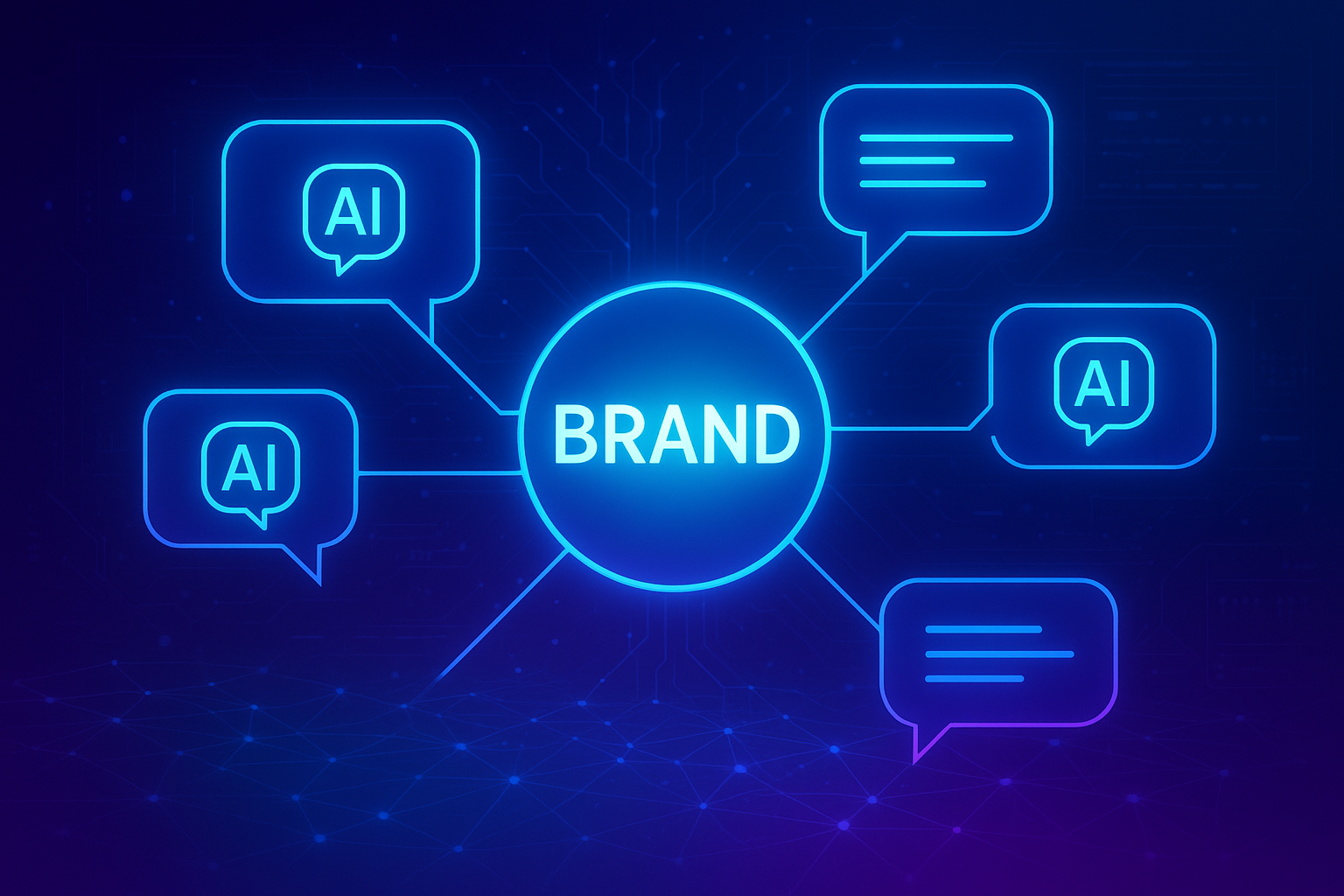
Search behaviour is shifting fast. Millions of people now turn to AI chatbots like ChatGPT, Gemini, and Claude instead of typing queries into Google. These tools don’t just list links — they give direct, conversational answers. For brands, this creates a new challenge: if your business isn’t mentioned in those AI-generated responses, you’re effectively invisible to a growing segment of users.
What Is AI-Driven Brand Visibility?
AI-driven brand visibility refers to how often and how prominently your brand appears in responses generated by AI chatbots. When someone asks ChatGPT to recommend the best project management tools, the best skincare brands, or the top digital marketing agencies in India, the brands that get named are the ones winning in this new landscape.
Unlike traditional search, where users scroll through a list of results and choose what to click, AI chatbots deliver a single, synthesised answer. If your brand isn’t part of that answer, you don’t just rank lower — you don’t exist in that conversation at all.
This is why marketers and SEO professionals are now talking about Generative Engine Optimisation (GEO) — a strategy focused on making your brand visible inside AI-generated content, not just on search engine results pages.
Why AI Chatbot Visibility Matters for Your Brand
The importance of appearing in AI chatbot responses goes beyond simple awareness. Here’s why brands need to pay attention now:
- Chatbots are becoming the first stop for answers: Younger users in particular are increasingly using AI tools as their primary research method, often skipping search engines entirely.
- Zero-click answers cut off traditional traffic: When an AI gives a complete answer, users have no reason to visit a website. If your brand isn’t named in that answer, you lose both visibility and potential traffic.
- Being mentioned builds trust: When a chatbot recommends your brand, users perceive it as a neutral, credible endorsement. This significantly increases the likelihood of them exploring your product or service.
- Early movers gain a lasting edge: Brands that optimise for AI visibility now will establish authority in their category before competitors catch up.
How Traditional SEO and AI Visibility Compare
| Factor | Traditional SEO | AI Chatbot Visibility (GEO) |
|---|---|---|
| Goal | Rank high on Google SERPs | Get mentioned in AI responses |
| User Behaviour | User clicks on a link | User reads a direct answer |
| Content Style | Keyword-optimised pages | Conversational, structured, factual |
| Trust Signal | Backlinks and domain authority | Cited by credible sources, clear expertise |
| Tracking Tools | Google Search Console, Ahrefs | Profound, Otterly.ai |
Practical Steps to Improve Your Brand’s Visibility in AI Chatbots
Getting your brand mentioned by AI tools isn’t random. It requires deliberate content and authority-building strategies. Here’s what works:
- Write AI-friendly content: Create content that is clear, factual, and well-structured. Include question-and-answer formats, use simple language, and cover topics thoroughly. AI models pull from content that is easy to parse and trust.
- Build genuine authority: Publish research-backed articles, earn mentions from reputable websites, and consistently produce high-quality content in your niche. AI systems favour sources that are widely cited and trusted.
- Use a conversational tone: Since chatbots operate in a question-and-answer format, your content should mirror that style. Write the way your audience actually speaks and searches.
- Monitor your AI mentions: Tools like Profound and Otterly.ai allow brands to track whether and how they are being mentioned in AI chatbot responses. Use these insights to identify gaps and refine your strategy.
- Structure your data clearly: Use headings, bullet points, and organised information so AI models can easily extract and reference your content in responses.
The Future of SEO Includes AI Chatbot Optimisation
Traditional SEO is not disappearing. Google search remains a dominant channel, and ranking well on search engine results pages still drives significant traffic. But the definition of online visibility is expanding.
In the coming years, a brand’s digital presence will be measured not just by its Google rankings but also by how frequently it appears in AI-generated conversations. Businesses that treat GEO as a separate, important discipline alongside traditional SEO will be better positioned to capture attention across both channels.
The brands that act now — building credible content, earning authoritative mentions, and structuring their digital presence for AI readability — will have a clear advantage as chatbot usage continues to grow across India and globally.
The core question every brand should be asking today is simple: When someone asks ChatGPT or Gemini about my industry, does my brand come up? If the answer is no, it’s time to change that.
Frequently Asked Questions
AI-driven brand visibility refers to how often your brand is mentioned in responses generated by AI chatbots like ChatGPT, Gemini, and Claude. It is part of a broader strategy called Generative Engine Optimisation (GEO), which focuses on making your brand appear in AI-generated answers rather than just on traditional search engine results pages.
Tools like Profound and Otterly.ai are specifically designed to track whether and how your brand appears in AI chatbot responses. These platforms give you insight into your current AI visibility and help you identify areas where your brand is missing from relevant conversations.
Yes, traditional SEO remains important as Google search still drives significant traffic. However, AI chatbot visibility is becoming an equally important channel. Brands that combine traditional SEO with GEO strategies will have the strongest overall digital presence as user behaviour continues to shift toward AI-powered tools.