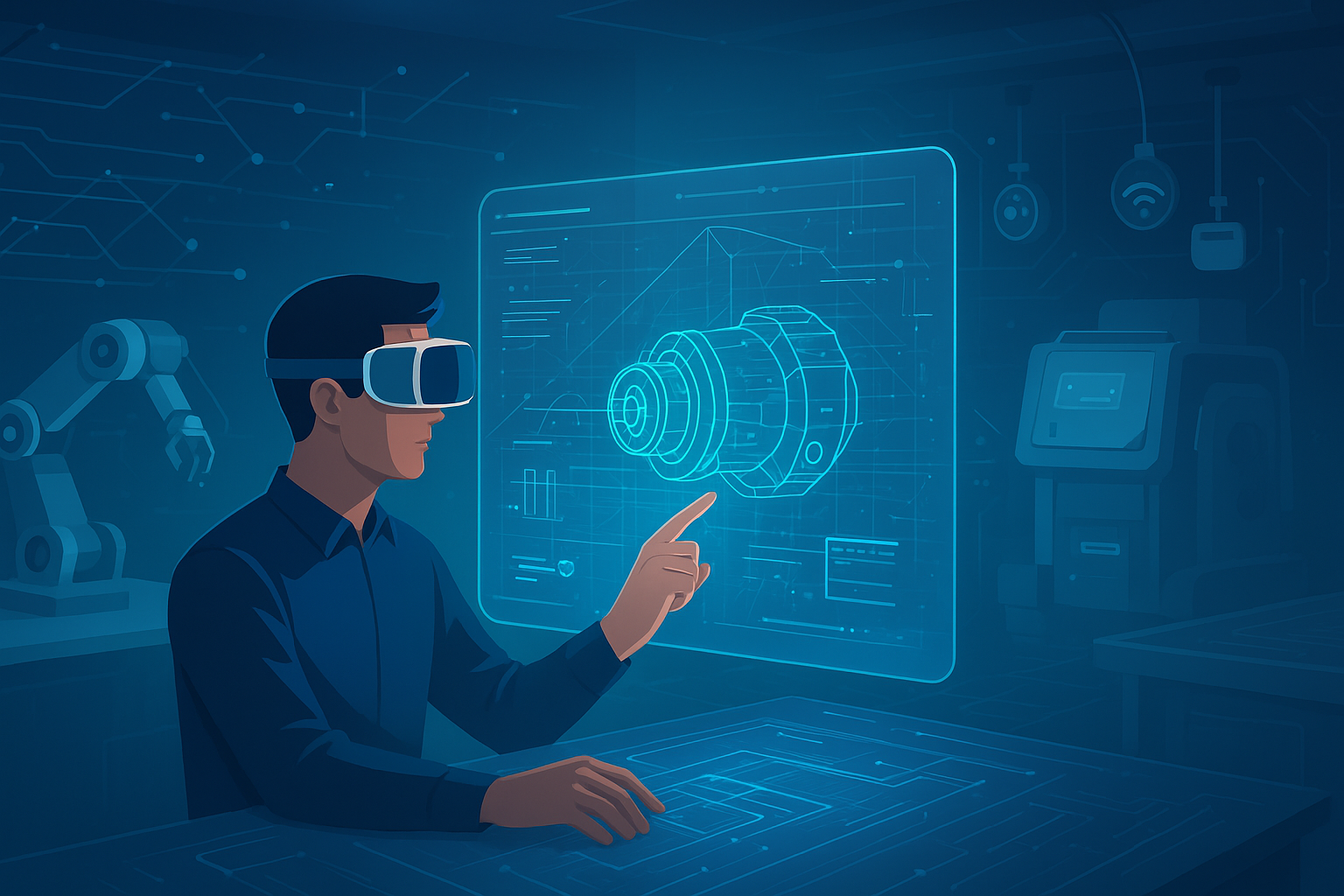

Engineering design has always demanded precision, creativity, and long hours of problem-solving. Now, a new generation of smart software tools called AI copilots is stepping in to support engineers at every stage of the design process — from early concepts to final testing. These tools are not replacing engineers; they are working alongside them to make the job faster, smarter, and more accurate.
What Is an AI Copilot in Engineering?
An AI copilot is an intelligent software assistant that works with engineers in real time while they design, model, or build systems. It understands the context of what the engineer is doing and offers helpful suggestions, flags potential errors, and can even complete certain tasks automatically.
Think of it as a knowledgeable colleague who is always available, never gets tired, and has studied thousands of engineering projects. When you are building a mechanical component or writing code for an embedded system, the AI copilot watches your work and steps in with useful input exactly when you need it.
How AI Copilots Make the Design Process Faster and Better
One of the biggest advantages of AI copilots is their ability to process large volumes of data quickly and translate that into practical guidance for engineers. Here is how they help:
- Smarter suggestions: They recommend better design approaches based on past data and engineering best practices.
- Error detection: They catch small mistakes early before they become costly problems.
- Faster prototyping: Engineers can test multiple ideas quickly and pick the best one without spending days on each option.
- Performance improvement: AI tools analyze designs and suggest changes that improve efficiency, strength, or energy use.
- Automation of repetitive tasks: Routine steps that used to take hours can now be handled automatically, freeing engineers to focus on complex challenges.
The result is a design process that is not only quicker but also produces higher-quality outcomes with fewer revisions.
Where AI Copilots Are Being Used Across Engineering Fields
AI copilots are not limited to one branch of engineering. They are being adopted across multiple disciplines, each benefiting in its own way.
| Engineering Field | How AI Copilots Help |
|---|---|
| Mechanical Engineering | Assists in designing machines, optimizing components, and improving performance |
| Civil Engineering | Supports planning of buildings, infrastructure, and smart city projects |
| Software Engineering | Helps write, review, and improve code with real-time suggestions |
| Electronics Engineering | Aids in circuit design, simulation, and testing |
This wide adoption shows that AI copilots are not a niche trend — they are becoming a standard part of the engineering toolkit across industries.
Challenges Engineers Should Be Aware Of
Despite their clear benefits, AI copilots come with limitations that engineers must keep in mind.
- Data dependency: These tools are only as good as the data they are trained on. Poor or biased training data can lead to incorrect suggestions.
- Need for human oversight: Engineers must always review and verify AI-generated outputs. Blind trust in any automated tool can lead to serious design flaws.
- Skill development risk: Over-reliance on AI assistance could slow the development of core engineering skills, especially for junior professionals.
- Integration challenges: Adopting new AI tools within existing workflows and legacy systems can require time, training, and investment.
The key is to treat AI copilots as a support system, not a replacement for engineering judgment and expertise.
What the Future Holds for AI Copilots in Engineering
The trajectory for AI copilots in engineering is clearly upward. As these tools become more advanced, they will handle increasingly complex design tasks with greater accuracy. Future versions may be able to generate full design drafts based on high-level requirements, run simulations independently, and learn from each project to improve over time.
The most powerful outcome will come from the combination of human creativity and AI capability. Engineers will bring vision, innovation, and critical thinking, while AI copilots handle the heavy lifting of data analysis, pattern recognition, and task execution. Together, this partnership has the potential to produce engineering solutions that are faster to develop, more reliable, and better suited to real-world needs.
For engineering students and professionals in India and around the world, understanding and working with AI copilot tools is quickly becoming an essential skill — one that will define the next generation of engineering practice.
Frequently Asked Questions
An AI copilot in engineering design is a smart software tool that works alongside engineers in real time. It understands the design context, suggests improvements, detects errors, and can automate certain repetitive tasks to help engineers work faster and more accurately.
AI copilots are being used across several engineering fields including mechanical engineering for machine design, civil engineering for building and infrastructure planning, software engineering for code writing and review, and electronics engineering for circuit design and testing.
No, AI copilots are not replacing engineers. They are designed to support and assist engineers by handling data-heavy and repetitive tasks. Human judgment, creativity, and expertise remain essential, and engineers must always review and verify AI-generated suggestions.