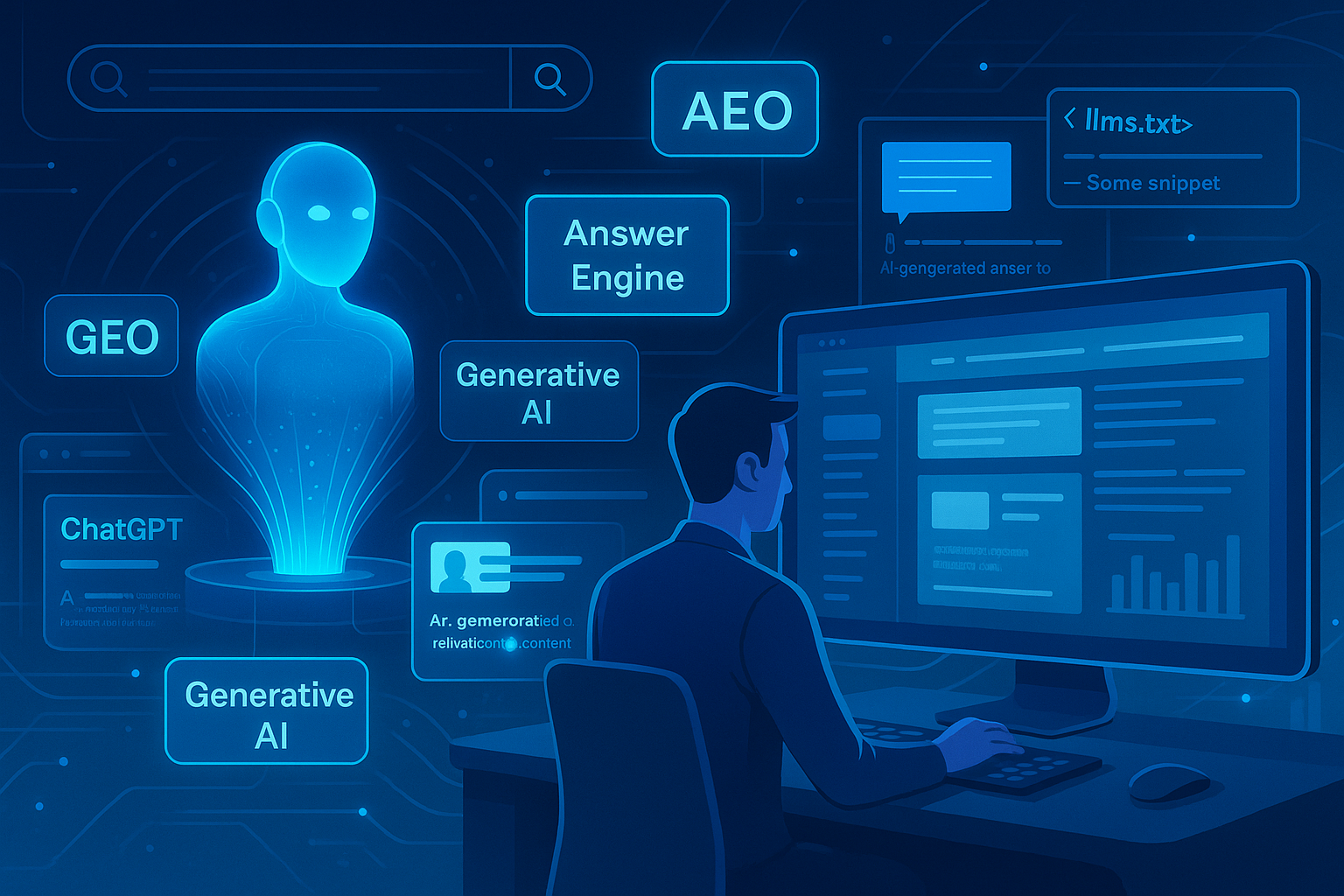
Search behavior is changing fast. People are no longer just typing keywords into Google — they are asking questions directly to AI tools like ChatGPT, Google SGE, and Bing AI. These tools skip the list of links and deliver direct answers. If your content is not structured to appear in those answers, you are missing a growing share of web traffic. That is where AEO (Answer Engine Optimization) and GEO (Generative Engine Optimization) come in.
What Is AEO — Answer Engine Optimization?
AEO is the practice of structuring your website content so that AI-powered answer engines can easily find, read, and use it in their responses. The goal is not just to rank on a search results page — it is to get your content quoted, cited, or referenced by AI assistants when users ask relevant questions.
For example, if someone asks ChatGPT “What is green nanotechnology?”, and your blog has a clear, concise answer written in plain language, the AI may pull that content and display it as part of its response. That kind of visibility is what AEO targets.
Here is how to apply AEO to your content:
- Write answers that are direct and easy to understand
- Use question-based headings such as “What is…?” or “How does…?”
- Include FAQ sections and short summaries at the top of articles
- Build topical authority by covering subjects in depth
- Add structured data like FAQ Schema to help search engines and AI tools parse your content
What Is GEO — Generative Engine Optimization?
GEO focuses on making your website easy for AI systems to crawl, interpret, and use when generating responses. Think of these AI systems as researchers — they scan your site, try to understand what it is about, and then use that information to answer user queries.
GEO is less about the words you write and more about how your website is built and organized. A clean, well-structured site is far easier for AI to process than one cluttered with pop-ups, heavy scripts, or confusing layouts.
Key practices for GEO include:
- Use simple, clean HTML with a clear page layout
- Avoid excessive ads, pop-ups, or JavaScript-heavy designs that block content
- Add an llms.txt file to your site — similar to robots.txt — to guide AI crawlers
- Organize content with proper headings, bullet lists, and clearly defined sections
- Keep content updated regularly so AI tools access accurate, current information
- Write with enough context so AI can understand the full meaning of your topic
AEO vs GEO: Key Differences at a Glance
| Task | Needed for AEO | Needed for GEO |
|---|---|---|
| Use question-based headings | Yes | Yes |
| Write short, direct answers | Yes | Yes |
| Use FAQ schema or structured lists | Yes | Yes |
| Use clean HTML with no clutter | No | Yes |
| Add llms.txt for AI bots | No | Yes |
| Use internal links strategically | Yes | Yes |
| Publish expert, authoritative content | Yes | Yes |
Why AEO and GEO Matter More Than Ever in 2025
Traditional SEO focused on ranking high in Google’s blue links. But the search landscape has shifted significantly. More users now turn to AI tools for quick, reliable answers rather than scrolling through a page of search results.
Here is why AEO and GEO have become essential for any content strategy:
- A growing number of users prefer AI-generated answers over traditional search results
- AI tools provide direct responses, reducing the need to click through to websites — unless your content is cited
- Websites optimized for AI visibility gain more credibility and organic reach
- Content that follows AEO and GEO best practices tends to attract more visitors, build trust faster, and maintain traffic over time
Websites and blogs that have already adopted these strategies are reporting stronger performance compared to those relying solely on traditional SEO methods.
Practical Steps to Get Started with AEO and GEO Today
You do not need to rebuild your entire website to start benefiting from these strategies. Small, consistent changes can make a real difference. Here is where to begin:
- Audit your existing content — identify pages that answer common questions and reformat them with clear headings and short answers
- Add FAQ sections to key pages and implement FAQ Schema markup
- Create an llms.txt file and place it in your site’s root directory to help AI crawlers understand your content structure
- Simplify your site design — remove unnecessary scripts, reduce pop-ups, and ensure fast page load times
- Update older content regularly to keep it accurate and relevant for AI systems that prioritize fresh information
As AI-powered search tools become the default for millions of users, optimizing for AEO and GEO is no longer optional — it is a core part of any forward-thinking content strategy. Websites that adapt now will be better positioned to capture traffic, build authority, and stay visible in an increasingly AI-driven search environment.
Frequently Asked Questions
AEO (Answer Engine Optimization) focuses on structuring content so AI tools like ChatGPT can quote or reference it in their answers. GEO (Generative Engine Optimization) focuses on making your website technically easy for AI systems to crawl and interpret, including clean HTML, proper structure, and files like llms.txt.
No. You can start with small changes like adding FAQ sections, using question-based headings, implementing FAQ Schema, simplifying your site layout, and creating an llms.txt file. These steps can significantly improve your content's visibility in AI-generated responses.
More users are now using AI tools like ChatGPT, Google SGE, and Bing AI to get direct answers instead of browsing search results. If your content is not optimized for these tools, you miss out on a growing source of traffic and visibility. AEO and GEO help ensure your content gets cited and referenced by these AI systems.