
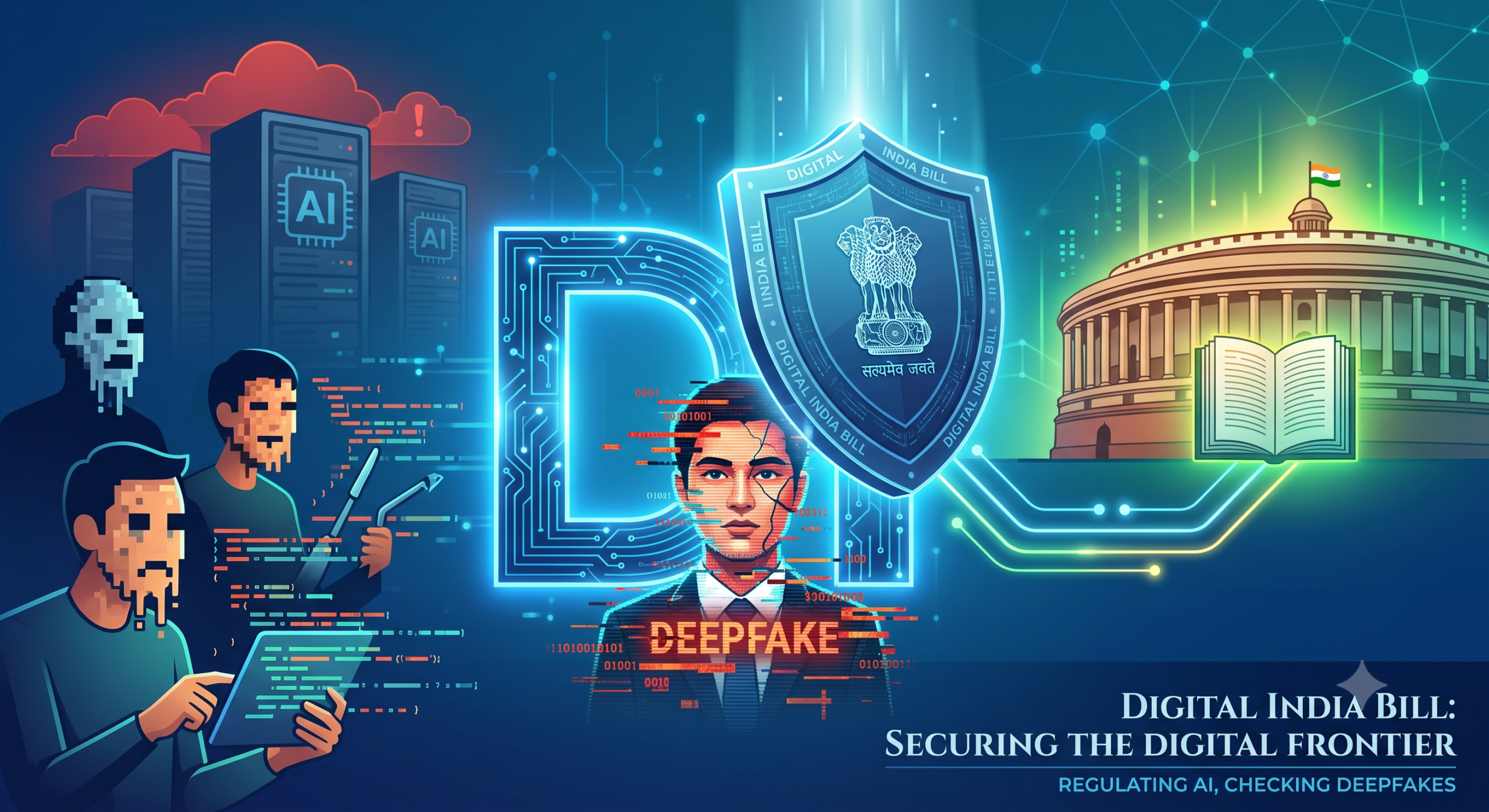
The government is preparing to introduce the Digital India Bill in Parliament to address the growing risks of AI-generated deepfake videos and online misinformation.
The government is preparing to introduce a new law aimed at tackling the growing threat of AI-generated deepfake videos and other manipulated online content. According to sources, the proposed Digital India Bill will be taken up during an upcoming session of Parliament and will also look at ways to encourage responsible use of artificial intelligence technology.
What the Digital India Bill Aims to Address
Sources have indicated that the Digital India Bill will focus on the risks associated with deepfake videos and other AI-generated content circulating online. The legislation is also expected to explore how AI technology can be used constructively, rather than focusing only on restrictions.
As part of the broader plan, the government is also working on legislation to regulate video content across online platforms, including YouTube. Officials are reportedly aiming to build cross-party consensus before formally introducing the bill in Parliament.
Parliament Session Timeline
The bill is expected to be discussed during the first session of the 18th Lok Sabha, which is scheduled to run from June 24 to July 3. A separate Monsoon Session is expected to follow, tentatively from July 22 to August 9, offering another window for further discussion or passage of related legislation.
Background: Why Deepfakes Have Become a Concern
Deepfake technology uses AI to create realistic but fabricated videos or images, often making it appear as though a person said or did something they never actually did. This has raised concerns globally, including in India, about:
- Spread of false or misleading information
- Fabricated videos involving public figures and politicians
- Potential invasion of personal privacy
- Erosion of public trust in genuine video content
Earlier Signals From the Government
Discussions around such a law are not new. The previous Union Minister of State for Electronics and Information Technology had earlier indicated that this kind of legislation was being planned, noting that extensive consultation and debate would be required before it could be finalized. At the time, officials said a broader roadmap for policy goals and principles around safety and trust in the digital space was already being worked on.
A Recent Real-World Example
The concerns around deepfakes were highlighted earlier this year when Mumbai police registered a case against a political party’s youth wing social media handle and several other individuals for allegedly sharing a deepfake video. The video falsely appeared to show a senior Union minister making comments about reservation rights for Scheduled Castes, Scheduled Tribes, and Other Backward Classes.
This incident is seen as one of several examples pushing lawmakers to prioritize a legal framework specifically addressing AI-manipulated content.
What This Could Mean Going Forward
If introduced and passed, the Digital India Bill could have a significant impact on how online platforms handle AI-generated content in India. Possible outcomes may include:
- Clearer accountability for platforms hosting manipulated content
- Defined processes for flagging and removing deepfake videos
- Guidelines encouraging responsible development and use of AI tools
- Greater public awareness around identifying manipulated media
At the same time, any such regulation will likely need to balance content moderation with concerns around free speech and innovation in the AI sector.
Conclusion
The proposed Digital India Bill reflects a growing recognition that AI-generated content, particularly deepfakes, requires a dedicated legal response. With Parliament sessions scheduled in the coming months, the bill’s progress will be closely watched by policymakers, tech platforms, and the public alike.
Frequently Asked Questions
It is a proposed law reportedly being planned by the government to address risks from AI-generated deepfake videos and to guide responsible use of AI technology.
Sources indicate it may be taken up during the upcoming Parliament sessions, including the first session of the 18th Lok Sabha and the subsequent Monsoon Session.
Deepfake videos can spread false information, misrepresent public figures, and invade personal privacy, making regulation important for maintaining trust in online content.