
OpenAI has expanded ChatGPT Health to all U.S. users over 18, letting them connect medical records and health apps for more personalized answers.
OpenAI has announced that ChatGPT Health, a feature designed to help users with health-related questions, is now available to all U.S.-based users over the age of 18, across every subscription plan. The rollout comes a day after a Florida-based pastor filed a lawsuit against the company over a near-fatal suggestion not to consult a doctor.
From Testing to Full Rollout
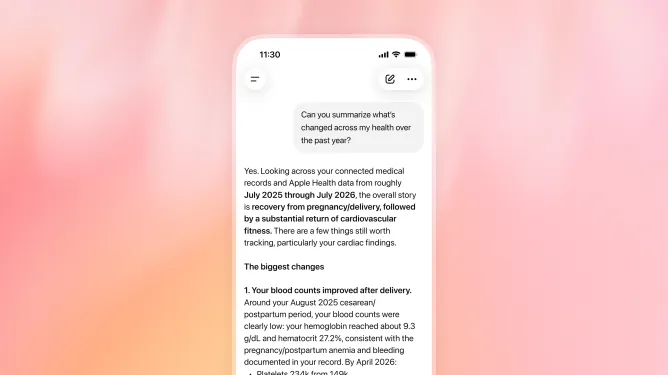
OpenAI first began testing ChatGPT Health through a dedicated hub in January, allowing users to link data from outside services and personal health information from platforms such as Apple Health, Function, and MyFitnessPal.
- The feature launched in a limited testing phase through a dedicated health hub
- Users could initially connect apps like Apple Health, Function, and MyFitnessPal
- The feature is now expanding to all logged-in U.S. users
Health Queries Are Growing Fast
At the time of the initial test, OpenAI said users were sending 230 million health-related queries every week. That figure has since climbed to 300 million, reflecting a sharp rise in how often people turn to the chatbot for health information.
Connecting Medical Records and Health Platforms
Beyond fitness and wellness apps, users can now link medical records from hospital systems such as Epic and Oracle Health, along with health platforms like One Medical and Function Health. This expands the range of personal health data ChatGPT can draw on when answering questions.
Previously, OpenAI required users to ask health-related questions within the dedicated hub. Now, the company is allowing connected health information to inform answers across all types of conversations, not just those inside the health section.
- Medical records from Epic and Oracle Health can now be linked
- Health platforms like One Medical and Function Health are also supported
- Connected data can now inform answers outside the dedicated health hub
OpenAI said that during testing, it found that 70% of health-related queries were happening outside the dedicated hub. With this update, users can, for example, ask general questions about food or allergies and get answers informed by their connected health data.
Model Performance and Safety Measures
OpenAI said its models have improved at answering health-related queries. The company pointed to GPT 5.6-Luna, the smallest model in its latest release, which reportedly performs better than GPT 5.5 on HealthBench, an open-source benchmark OpenAI developed to evaluate how well language models handle health-related questions.
The company also said it does not use user data to train its models and works with physicians to refine how its systems handle health topics.
| Metric | Detail |
|---|---|
| Weekly Health Queries (Earlier) | 230 million |
| Weekly Health Queries (Now) | 300 million |
| Queries Outside Health Hub | 70% |
Legal and Safety Context
Despite these performance improvements, OpenAI’s terms of service state that its products are not intended for diagnosing or treating any health condition. The company referenced these terms in response to the recent lawsuit and told The New York Times that it is working to make health and medicine-related answers safer.
With this expanded rollout, OpenAI said it wants users to verify information independently and base medical decisions on professional advice rather than solely on chatbot responses.
A Broader Industry Trend
Several studies have raised concerns about the reliability of AI chatbots for medical advice. Even so, this has not stopped companies including Anthropic and Google from developing their own health-related AI features, signaling a broader industry push into this space despite the risks.
ChatGPT Health is rolling out this week to logged-in U.S. users on free, Go, Plus, and Pro plans, available on both the web and iOS.
Frequently Asked Questions
ChatGPT Health is now available to all logged-in U.S. users over 18 across free, Go, Plus, and Pro plans, on both web and iOS.
Users can connect data from apps like Apple Health, Function, and MyFitnessPal, along with medical records from Epic, Oracle Health, One Medical, and Function Health.
No, OpenAI states in its terms that its services are not intended for diagnosing or treating health conditions, and it encourages users to verify information with medical professionals.