
A new phishing scam on X sends DMs from known accounts asking users to “vote for me,” tricking them into giving up their login credentials.
A new phishing scam is spreading across X, formerly known as Twitter, with users reporting suspicious direct messages coming from accounts they know and follow. The messages ask for a simple favor, but clicking the included link can lead to a stolen account.
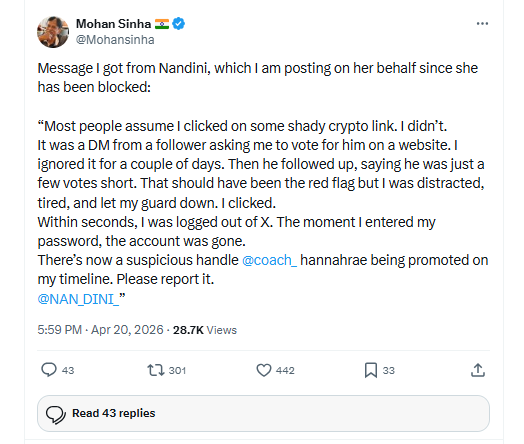
What Users Are Reporting
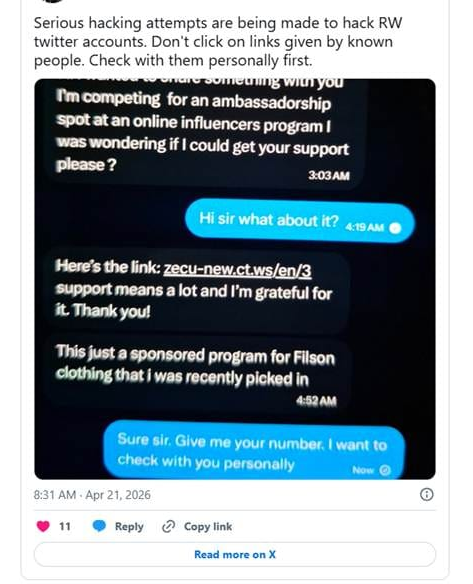
Multiple X users say they have received direct messages from familiar accounts asking for a quick favor, such as “Can you vote for me?” or “Can you help me with this?” The messages appear harmless at first glance, which is exactly what makes them effective.
One user shared a public warning describing the pattern: DMs containing a plea to vote, often paired with a praying-hands emoji, are usually a sign that the sender’s account has been compromised. The advice was direct: never click the link, and always verify with the sender through another channel first.
How the Scam Actually Works
This is a straightforward account takeover scheme that depends on people reacting quickly without thinking it through. Here is the typical sequence:
- You receive a DM from someone you know or follow
- The message asks for a small favor, like voting on a website or in an influencer contest, with a link attached
- Clicking the link takes you to a page designed to look legitimate
- You are prompted to log in
- The login page is fake, and your credentials are captured by the attacker
Once attackers have access to an account, they rarely stop there. The compromised account is often used to send the same scam to more people, and in many cases, to post content promoting cryptocurrency schemes or other fraudulent offers. Because the account already has an established, trusted history, followers are more likely to click on these posts and, in some cases, lose money.
A Familiar Pattern Across Platforms
This tactic is not new. A nearly identical scam has previously circulated on Instagram, where attackers sent messages urging people to vote in fake contests. The structure is almost the same in both cases:
- A message from someone you trust
- A simple, low-effort request
- A link leading to a phishing page
A similar message format has also circulated on WhatsApp for years, often framed as a request to “vote for my child” or help someone win a contest. The recurring use of this technique shows how effective it remains, even as awareness of phishing scams grows.
How to Protect Your Account
A few simple habits can significantly reduce the risk of falling for this type of scam:
- Be cautious of unexpected DMs, even from accounts you know
- Avoid clicking links immediately; pause and consider whether the message makes sense
- Verify with the sender through a separate channel if something feels off
- Check the website’s URL carefully before entering any login details
- Enable two-factor authentication and other account security tools
- If you have already entered your details on a suspicious page, change your password immediately and review your account for unfamiliar logins or activity
Using reputable mobile security software and link-scanning tools can also help flag malicious links before they cause damage, particularly for those who manage accounts professionally or rely on social media for work.
Why This Matters
Attackers rarely limit themselves to a single platform. Once an account is compromised, the same login details are often tested across other services, especially if a user reuses passwords. That is why quick action and strong account hygiene matter as much on X as they do anywhere else.
As phishing tactics continue to reappear in slightly new forms across different platforms, staying alert to small, low-effort requests from familiar accounts remains one of the simplest ways users can protect themselves.
Frequently Asked Questions
It is a phishing scam where compromised X accounts send DMs asking contacts to vote for them via a link, which actually leads to a fake login page designed to steal credentials.
Be suspicious of any unexpected request for a quick favor involving a link, even from accounts you know, and verify with the sender through another channel before clicking.
Change your password immediately, enable two-factor authentication, and check your account for any unfamiliar activity or logins.